July 27, 2026
Artist Boudoir Photoshoot: A Creative Fine Art Concept
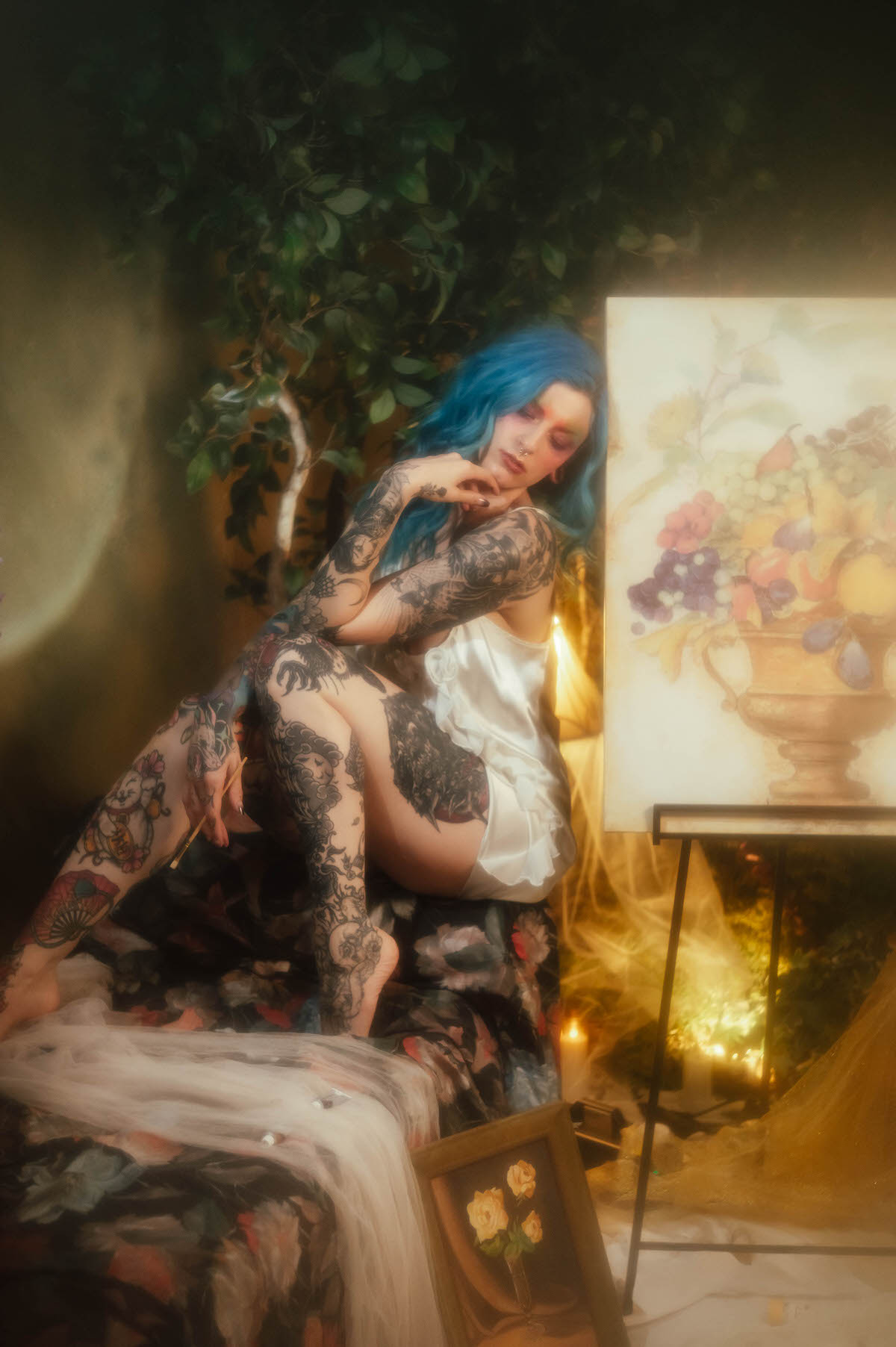
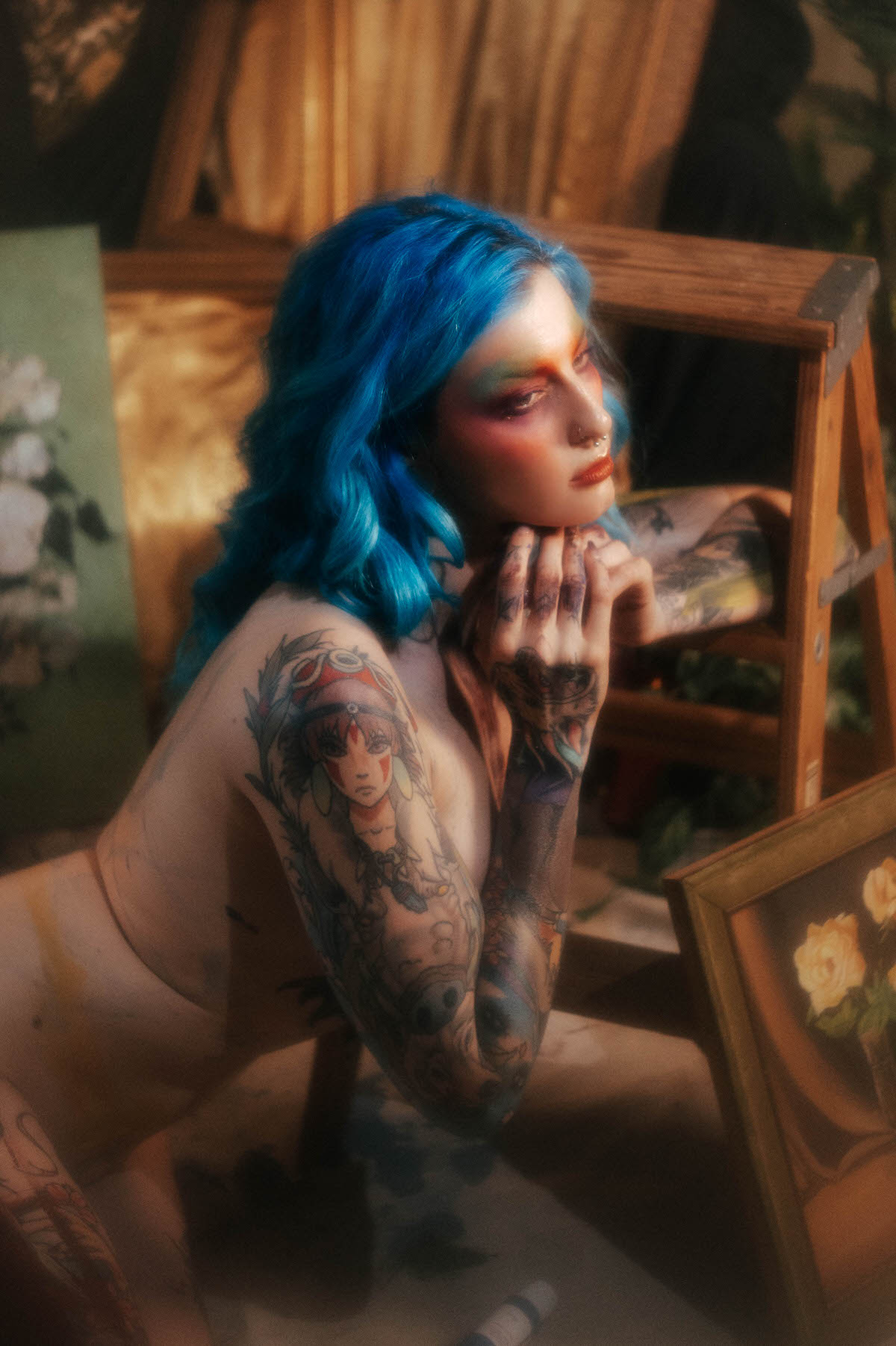
Every concept session, like this artist boudoir photoshoot, I ask myself: how does the setting set the mood and how can I style my subject to fit into the scene? For this session, I turned my personal studio space, Royal Lune Studio, into a working painter’s studio for a single afternoon with real paint, paint brushes, and a vintage step ladder pulled straight from an actual art supply room. My muse, Whitley, became the art herself for this artist photoshoot concept.
As a Dallas fine art photographer, that question is the standard I hold every session to. The paintings, the frames, even the drop cloth under her feet: none of it was decoration. Each set design element, prop, and styling choice had a purpose.
What Inspired This Artist Boudoir Photoshoot at Royal Lune Studio?
This session started with a simple idea. What does it look like when the artist becomes so absorbed in her own painting that she forgets anyone is watching? Not a woman dressed up as a painter for a costume. An artist caught mid session, paint smudged on on her body and an array of emotions based on her inspiration.
I’ve built entire sessions before around a single art movement: Mucha’s Art Nouveau line work, Renaissance staging, Pre Raphaelite color palettes. This one was different. Instead of recreating a specific painter’s style, I wanted to recreate the studio itself, the mess, the tools, the half finished canvases leaning against the wall. My own studio, dressed for one afternoon only.
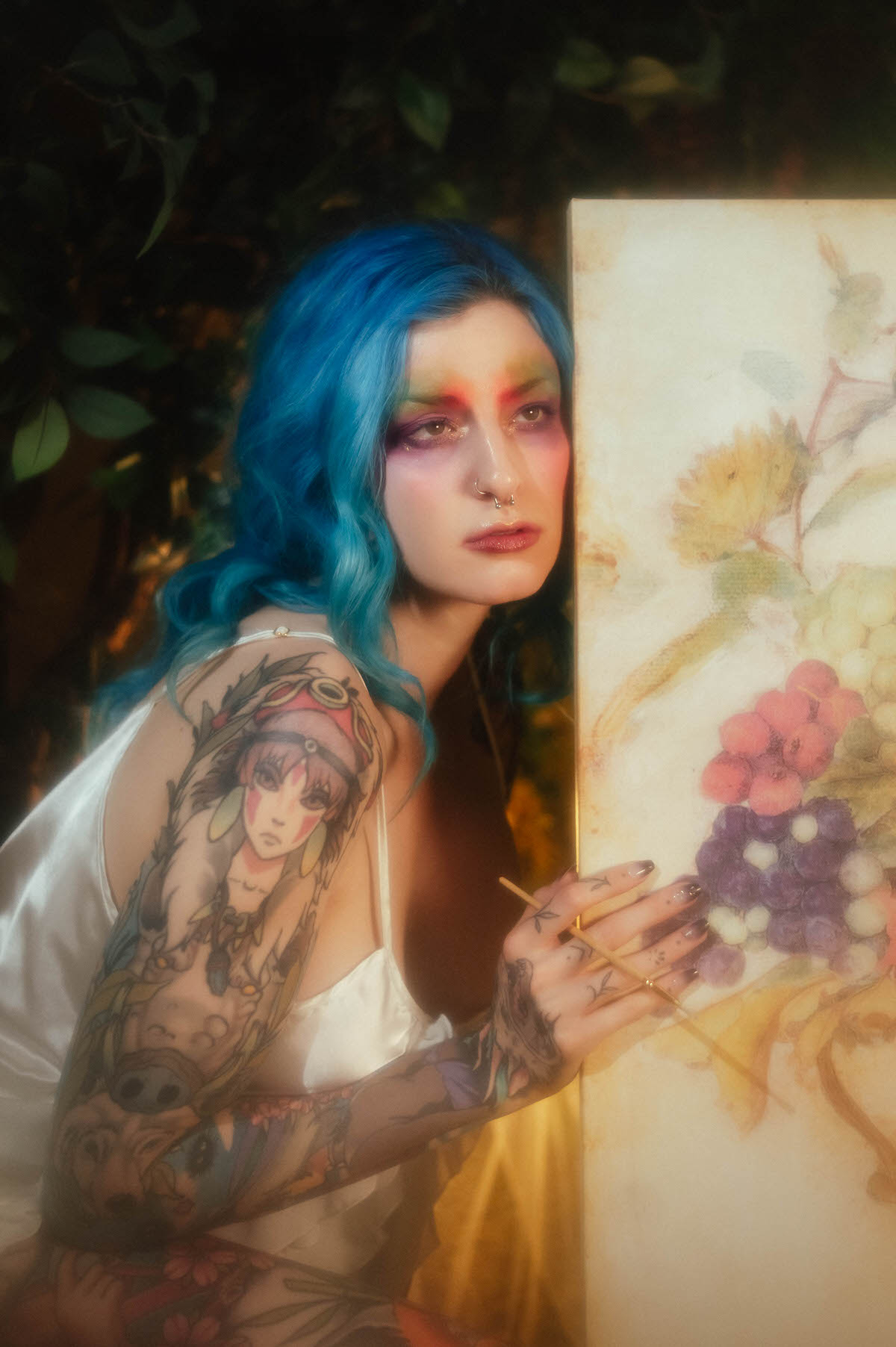
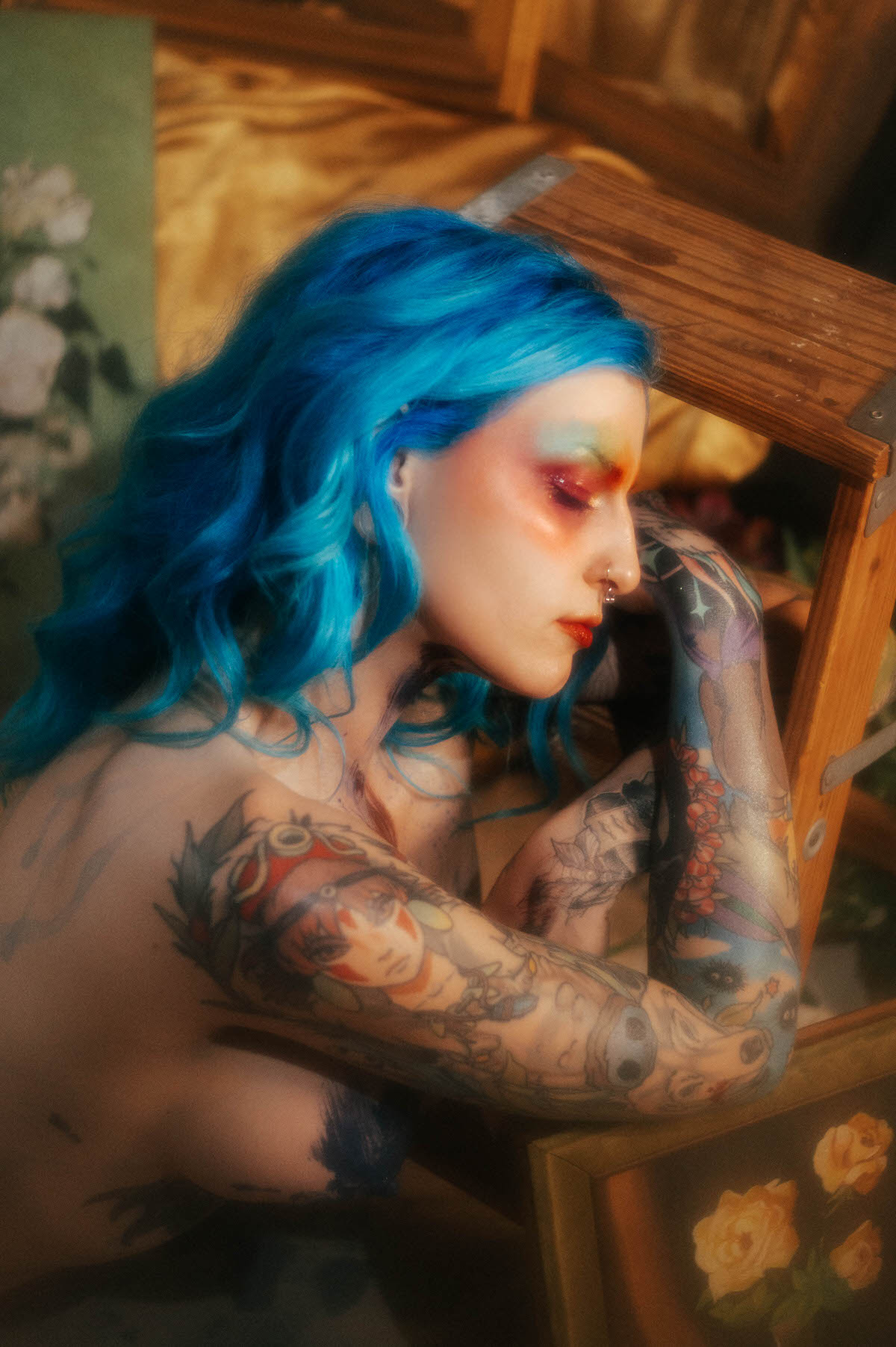
Whitley was the perfect muse for this concept. As a creative herself, she perfectly encapsulates someone who spends her time creating. With her arms and legs covered in illustrative tattoo work, and full color pieces that could hang on a gallery wall on their own, I didn’t need to convince the camera she was an artist. I just needed to build her a studio to work in.
How Do You Style an Artist Boudoir Photoshoot with Multiple Looks?
Three looks carried this artist boudoir photoshoot from getting ready to full transformation. First she prepared to paint. Then she became part of the art on display. Then she became the canvas herself.
Look One: A Feminine Vintage Slip
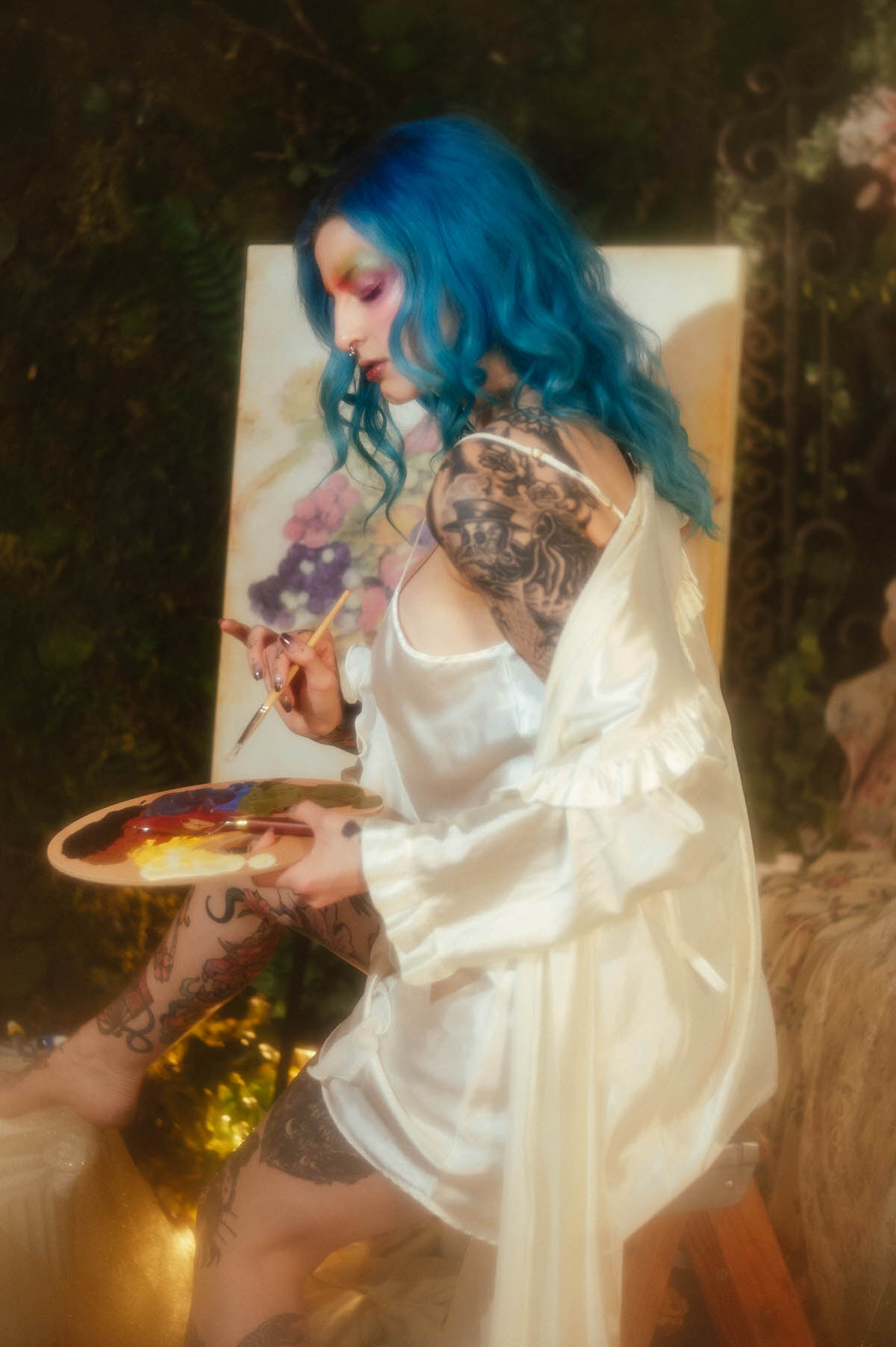
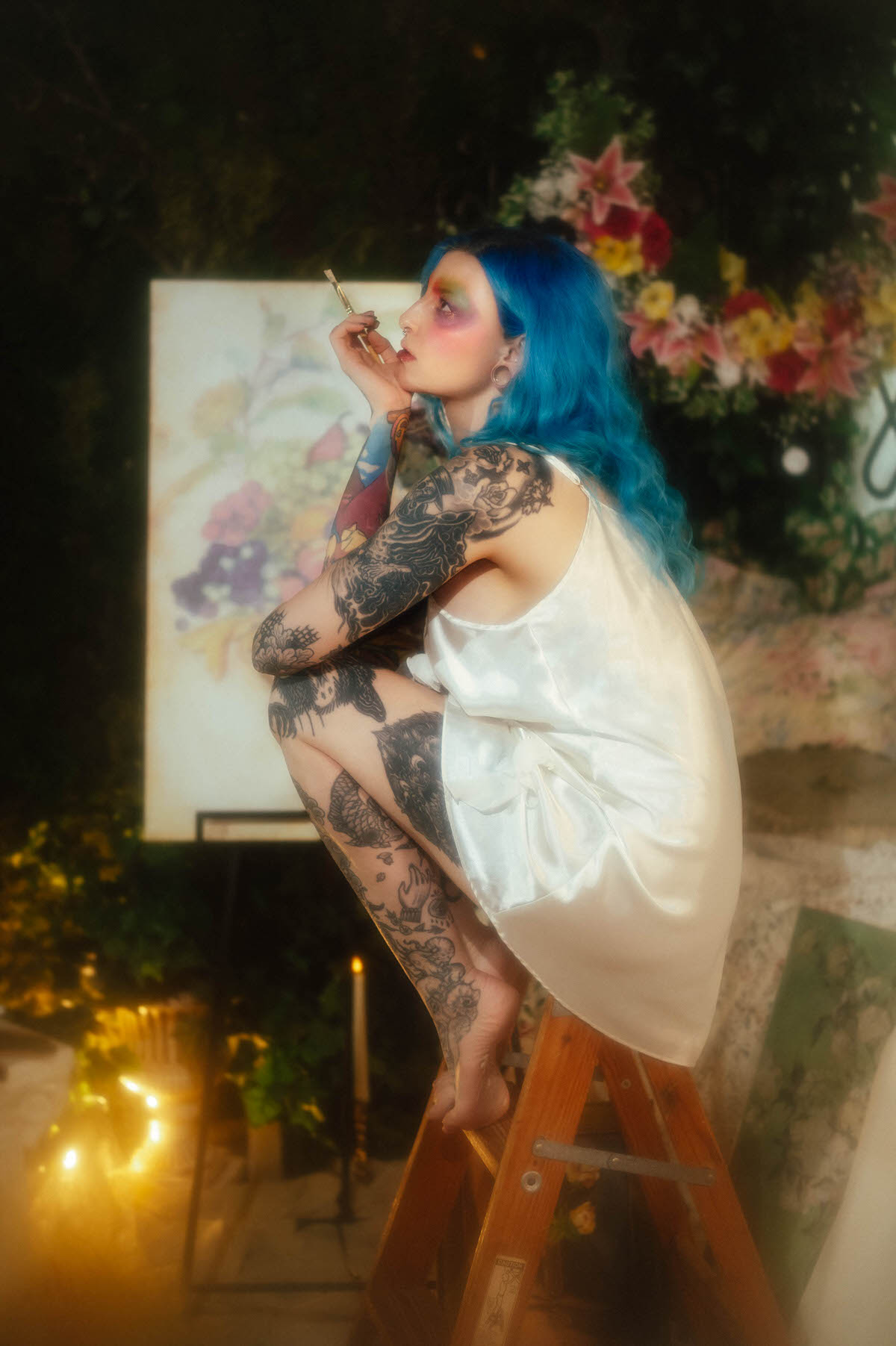
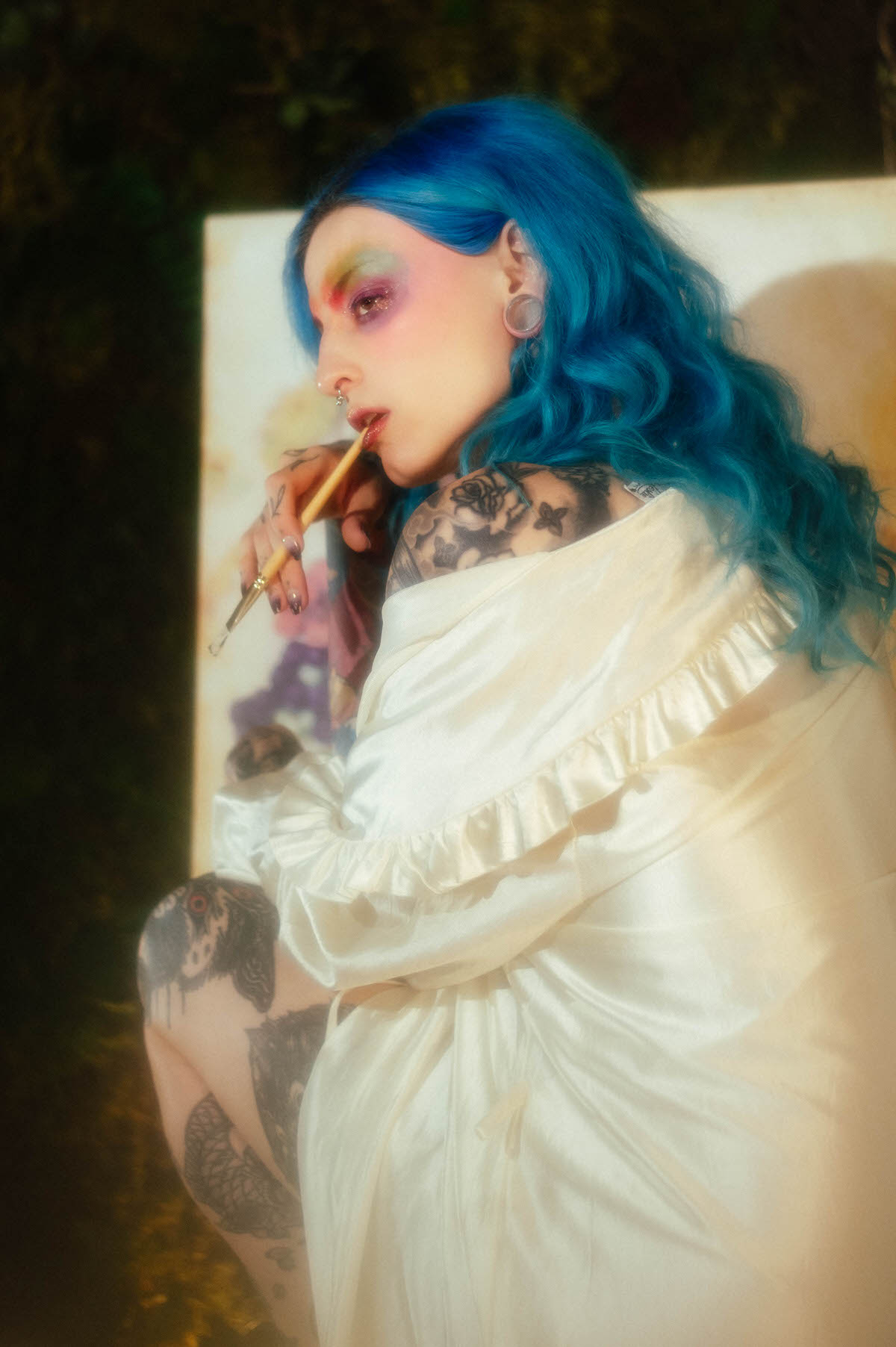
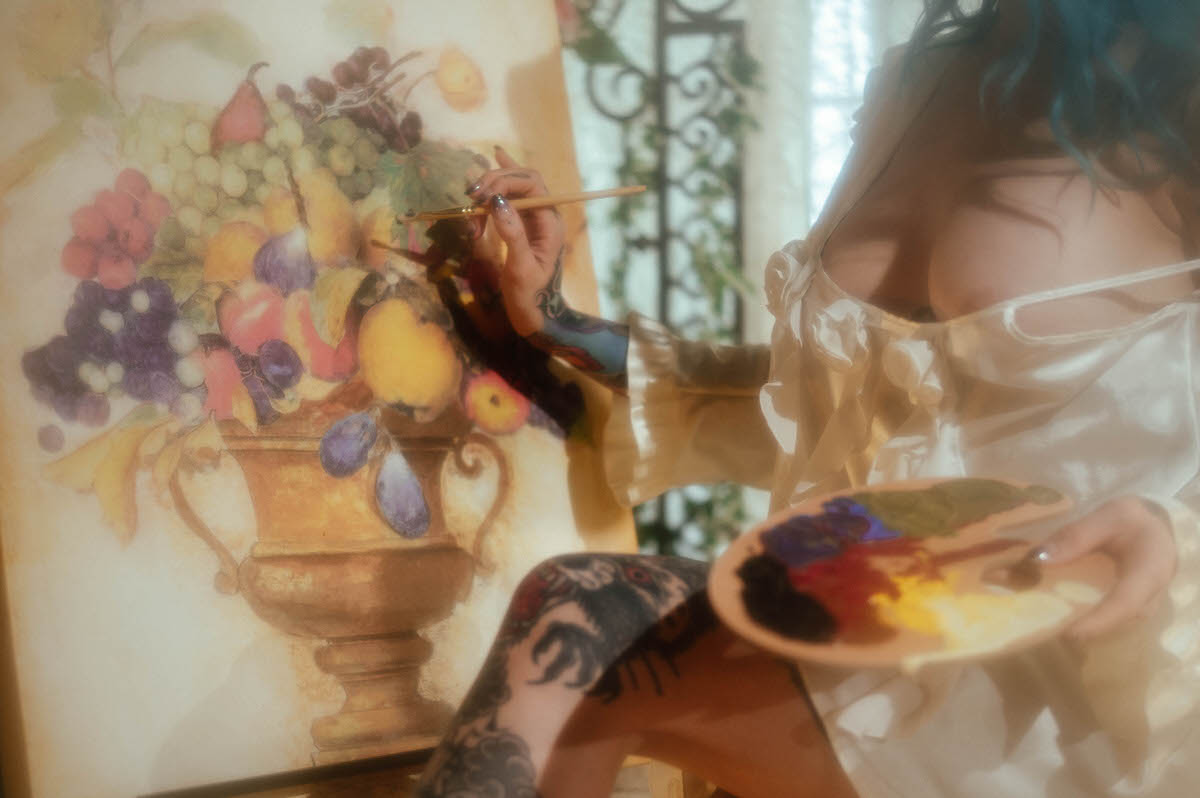
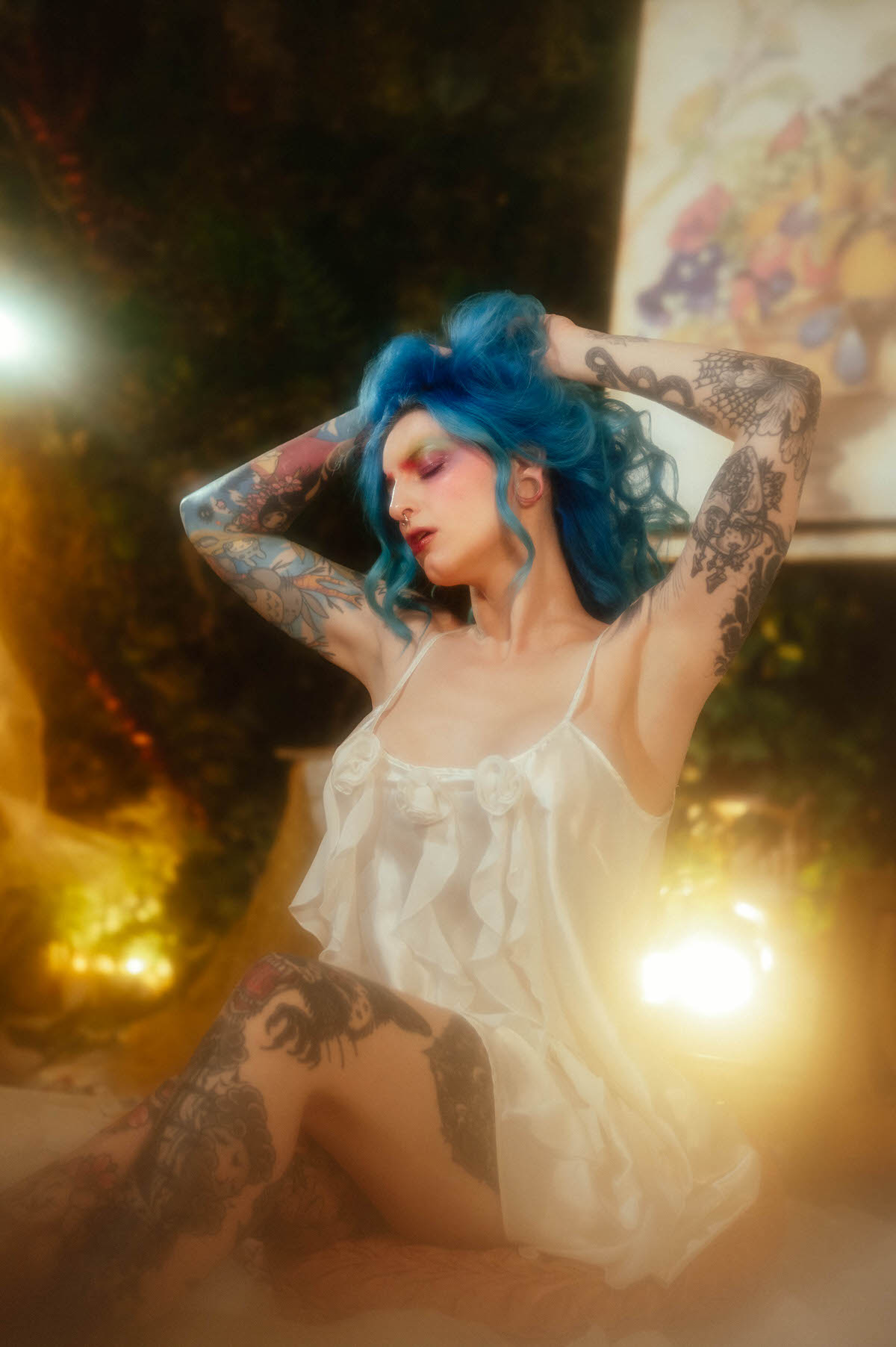
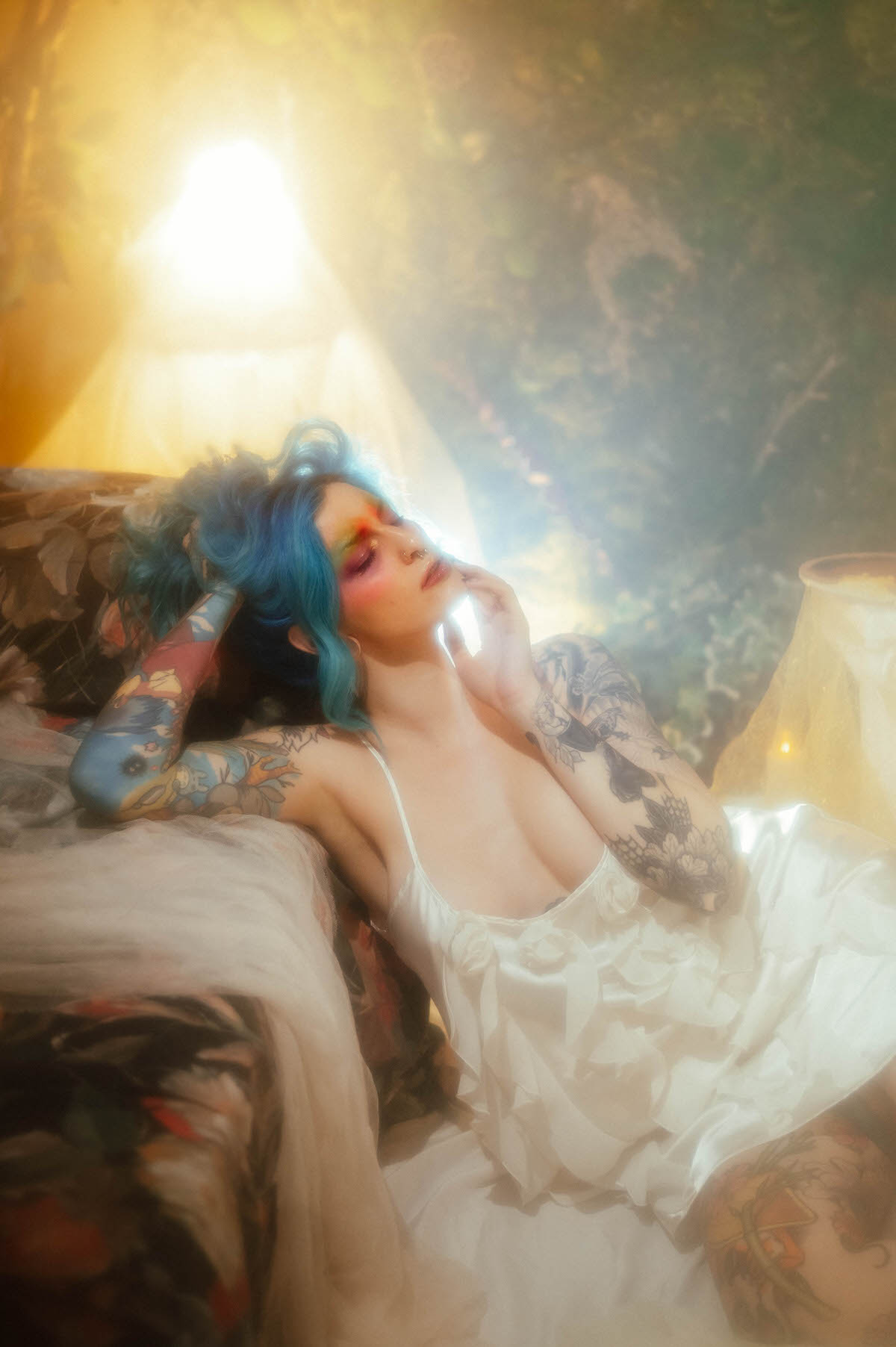
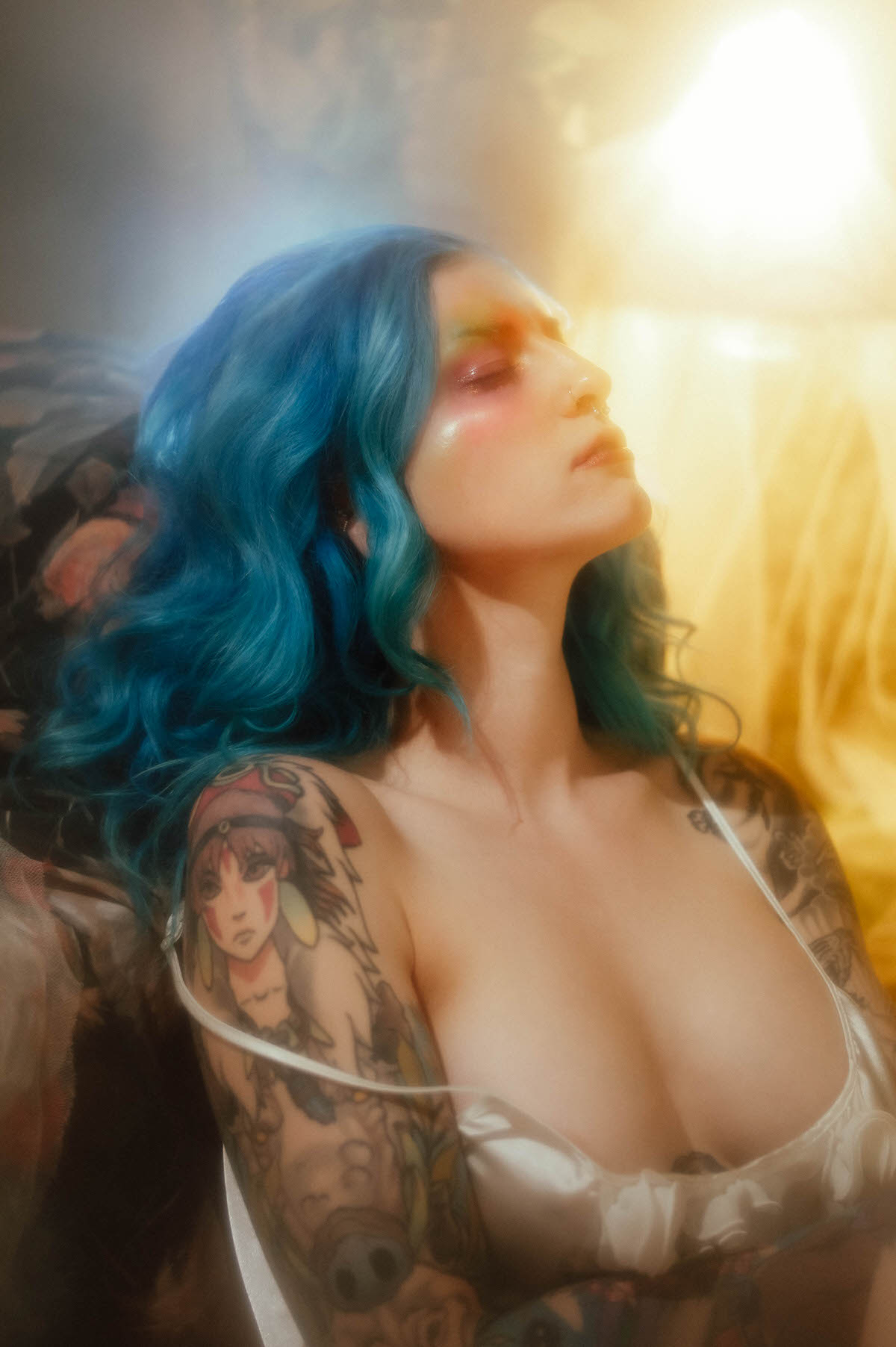
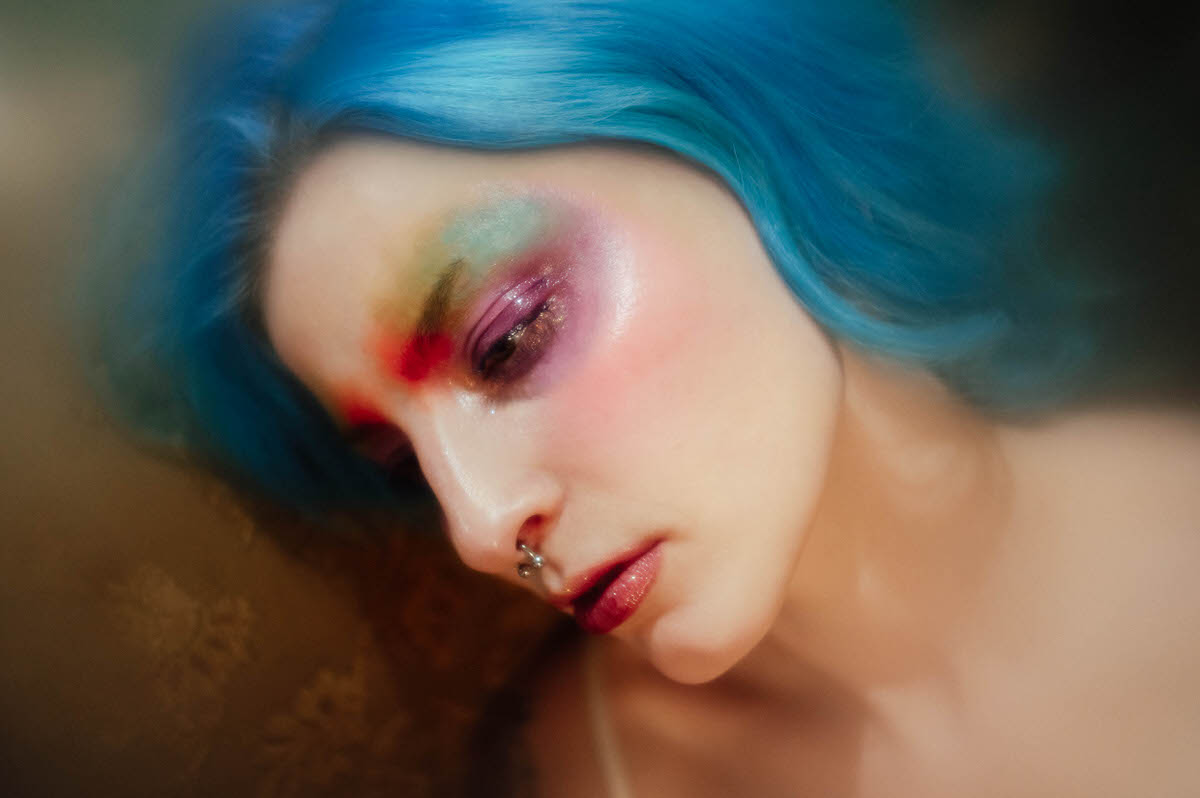
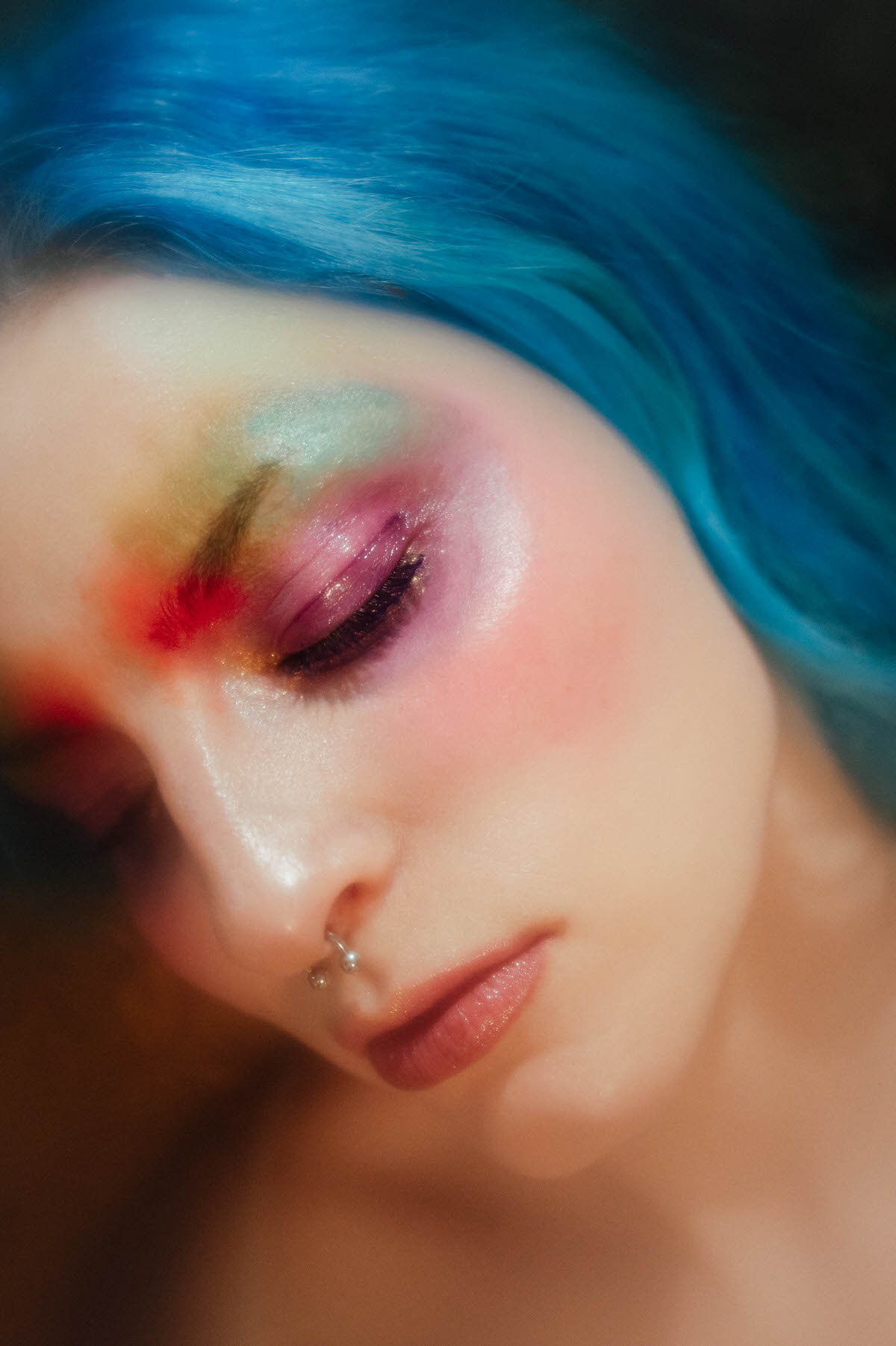
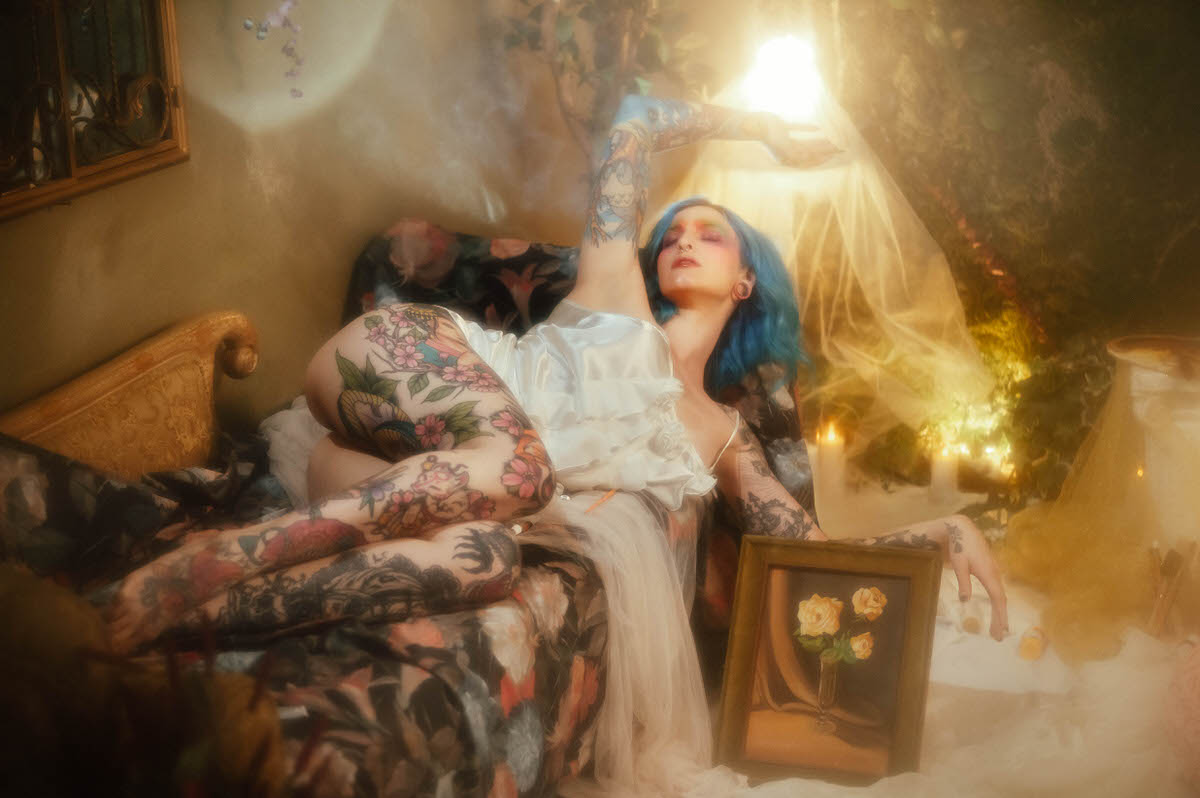
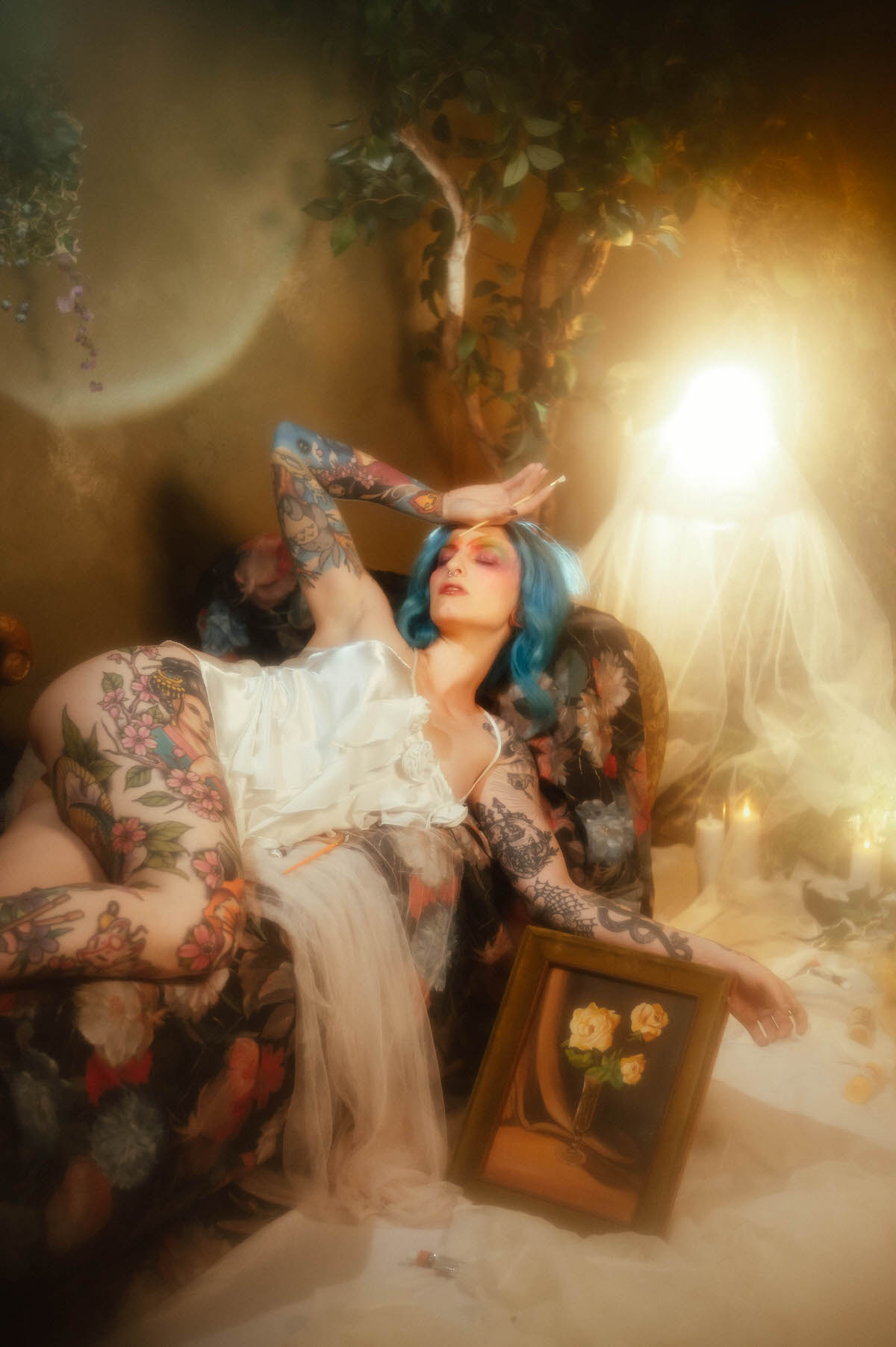
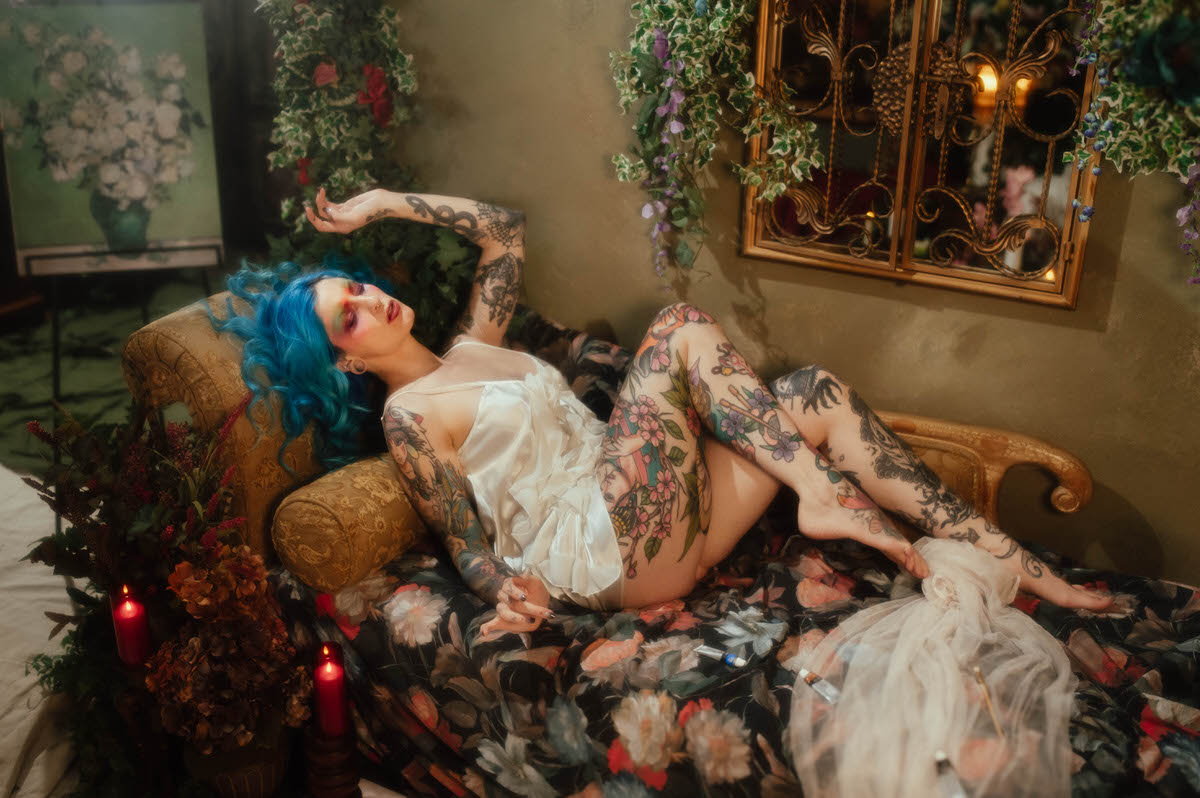
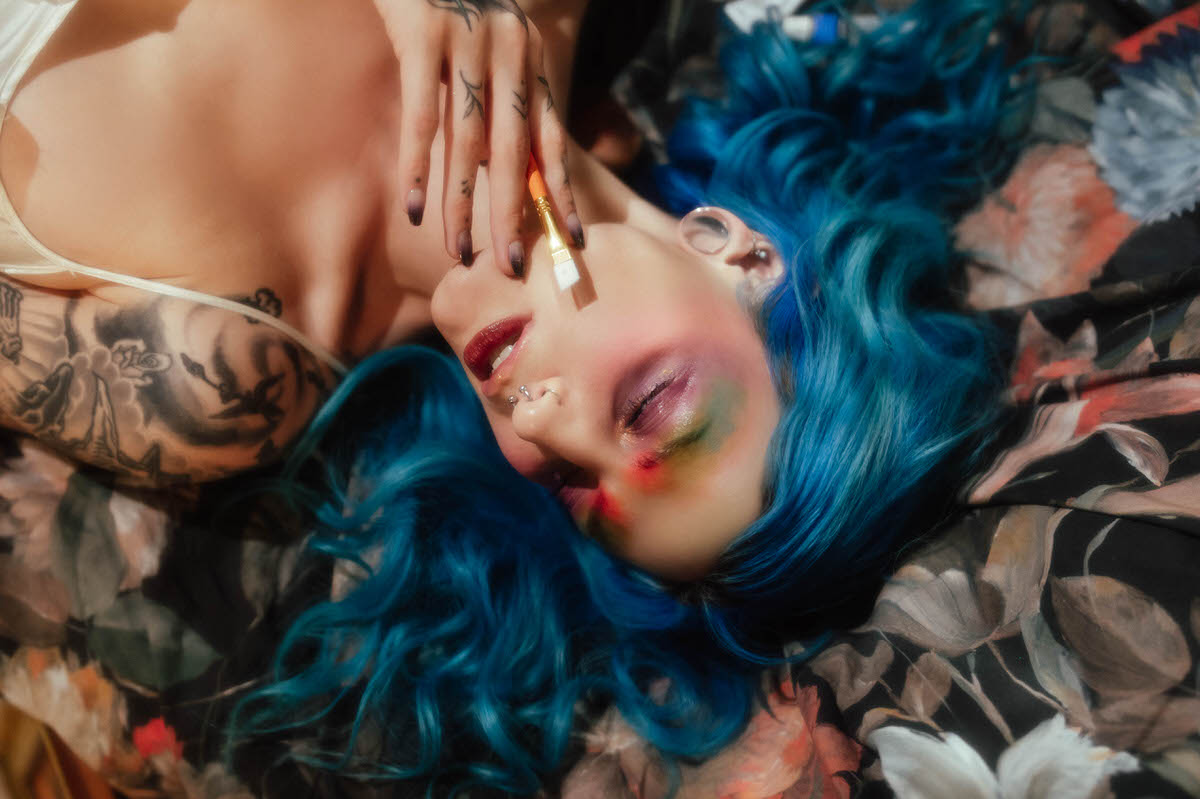
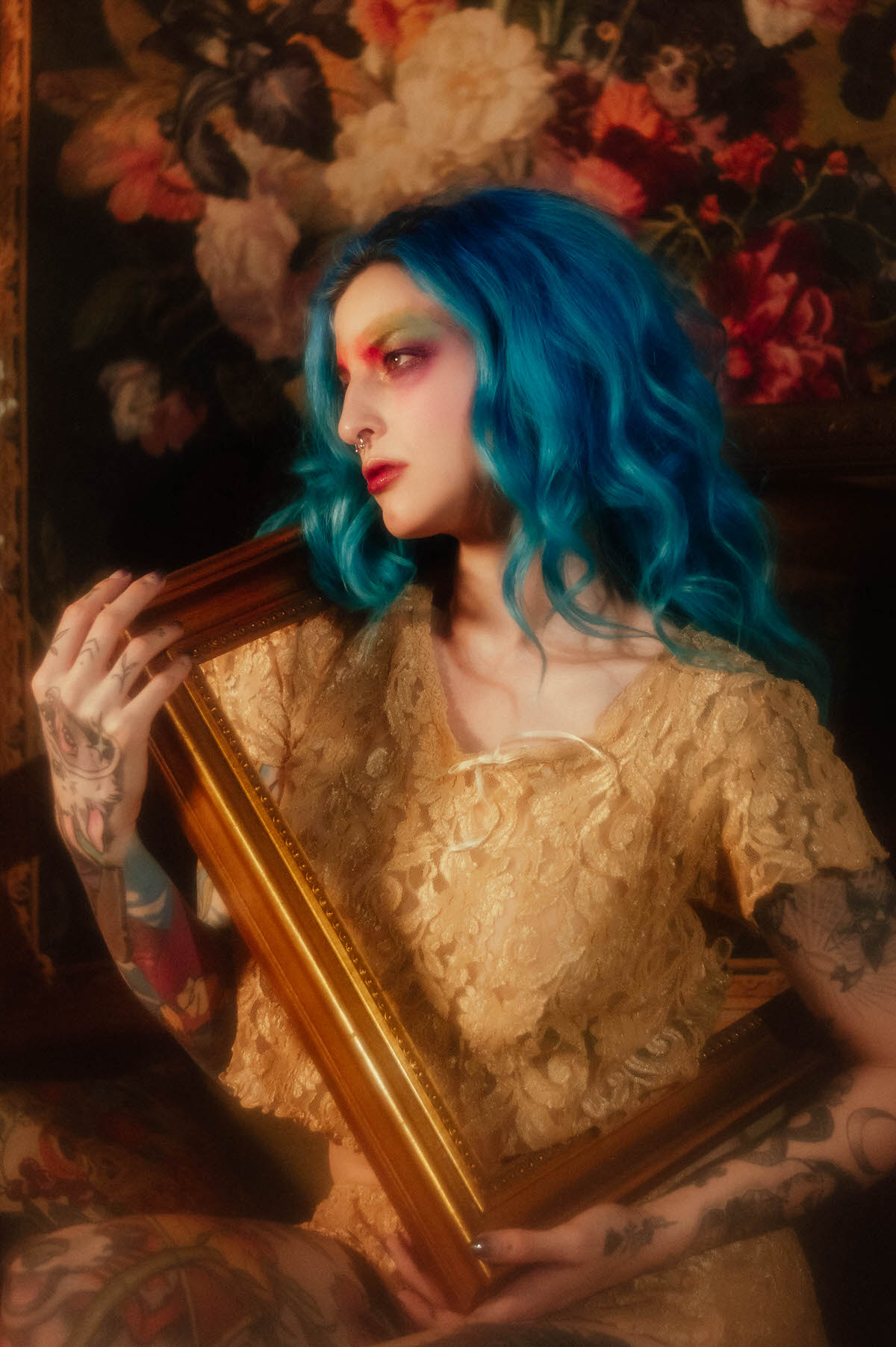
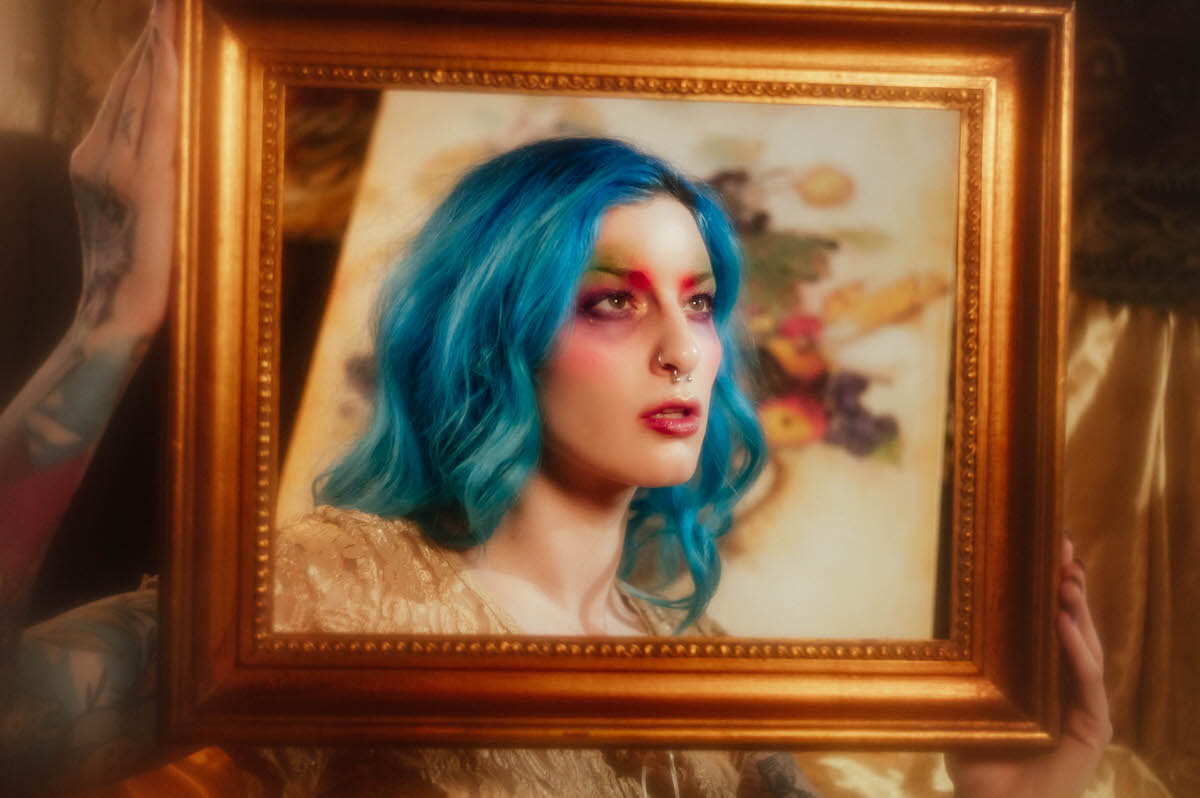
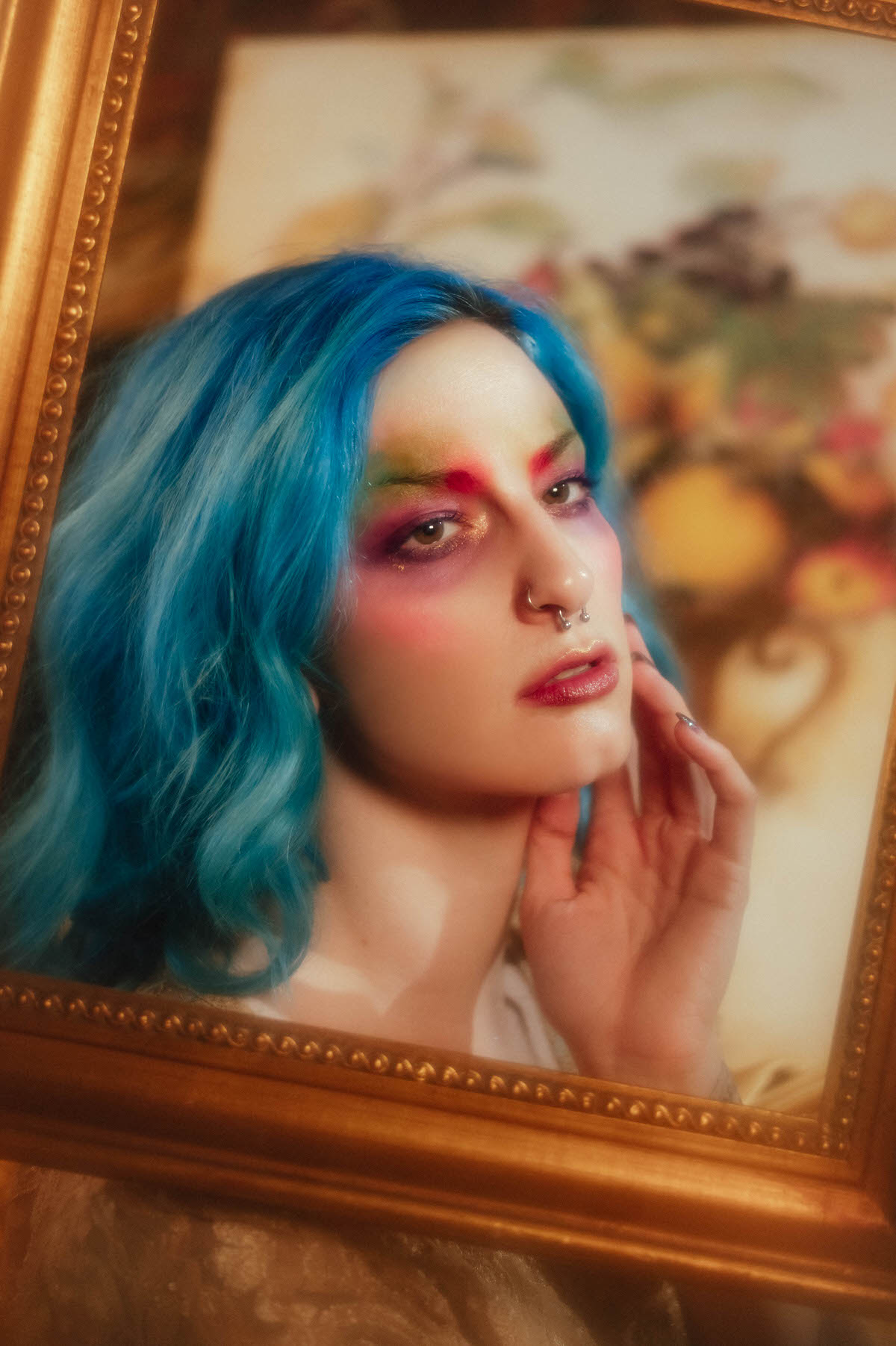
The first look kept things simple: an ivory vintage slip dress with sheer ruffle detailing, paired with soft waves of blue hair and eyeshadow blended in yellow, coral, pink, and purple, like watercolor washed onto her face. This was the getting ready moment, the artist before the mess starts.
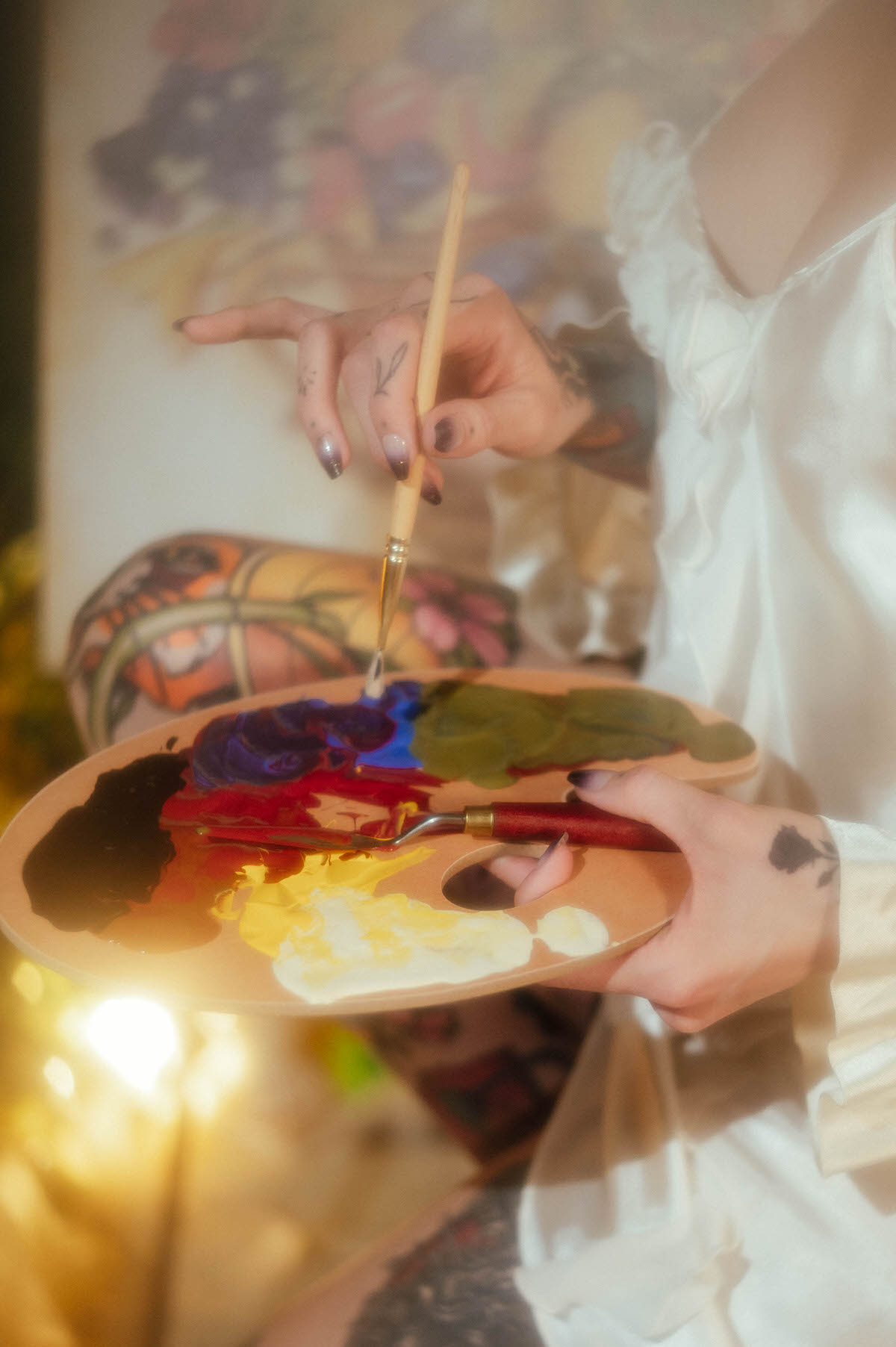
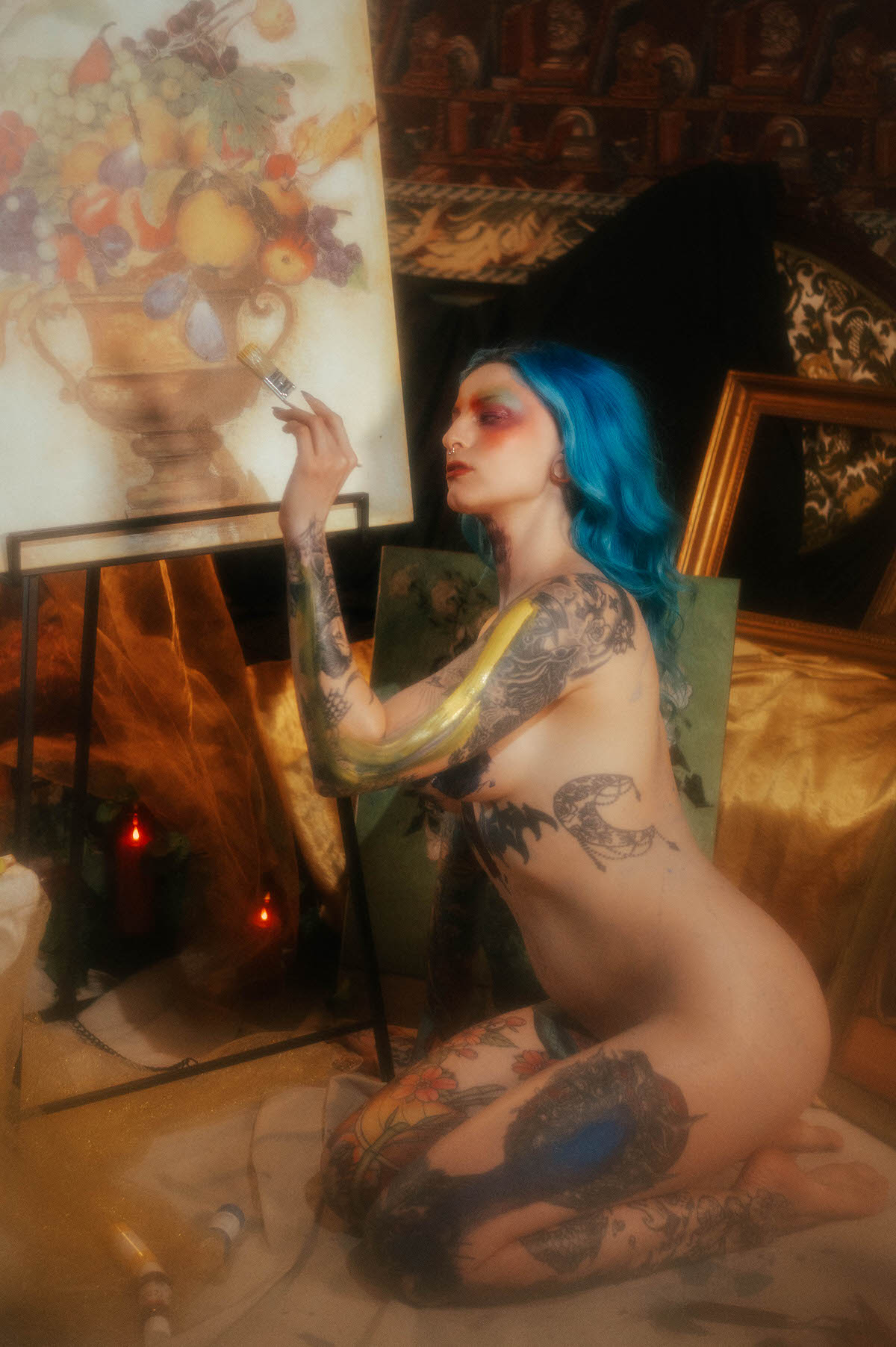
I handed her a loaded palette: blue, purple, red, yellow, white, and black oil paint, a palette knife resting across the wood. She held a paintbrush to a floral still life canvas propped on an easel behind her, one of several thrifted still life paintings I’d been collecting for months for this shoot. A gilt frame with another floral painting sat propped on the floor nearby, along with an ornate gold mirror on the wall behind her, catching candlelight. She spent most of this look reclined across a floral upholstered chaise, one arm stretched overhead, eyes closed, completely unaware of the camera.
Look Two: Gold Lace and Ornate Frames
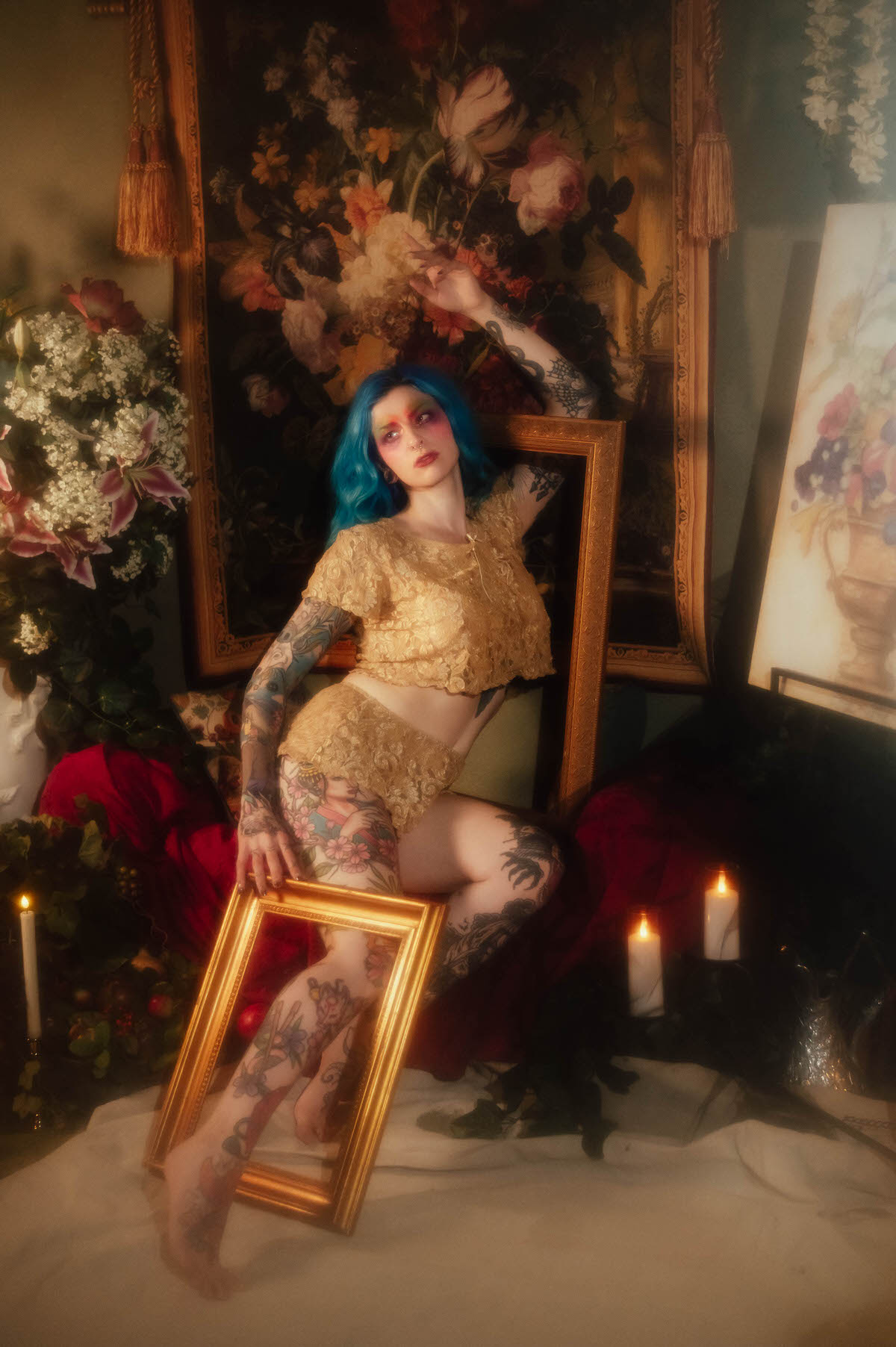
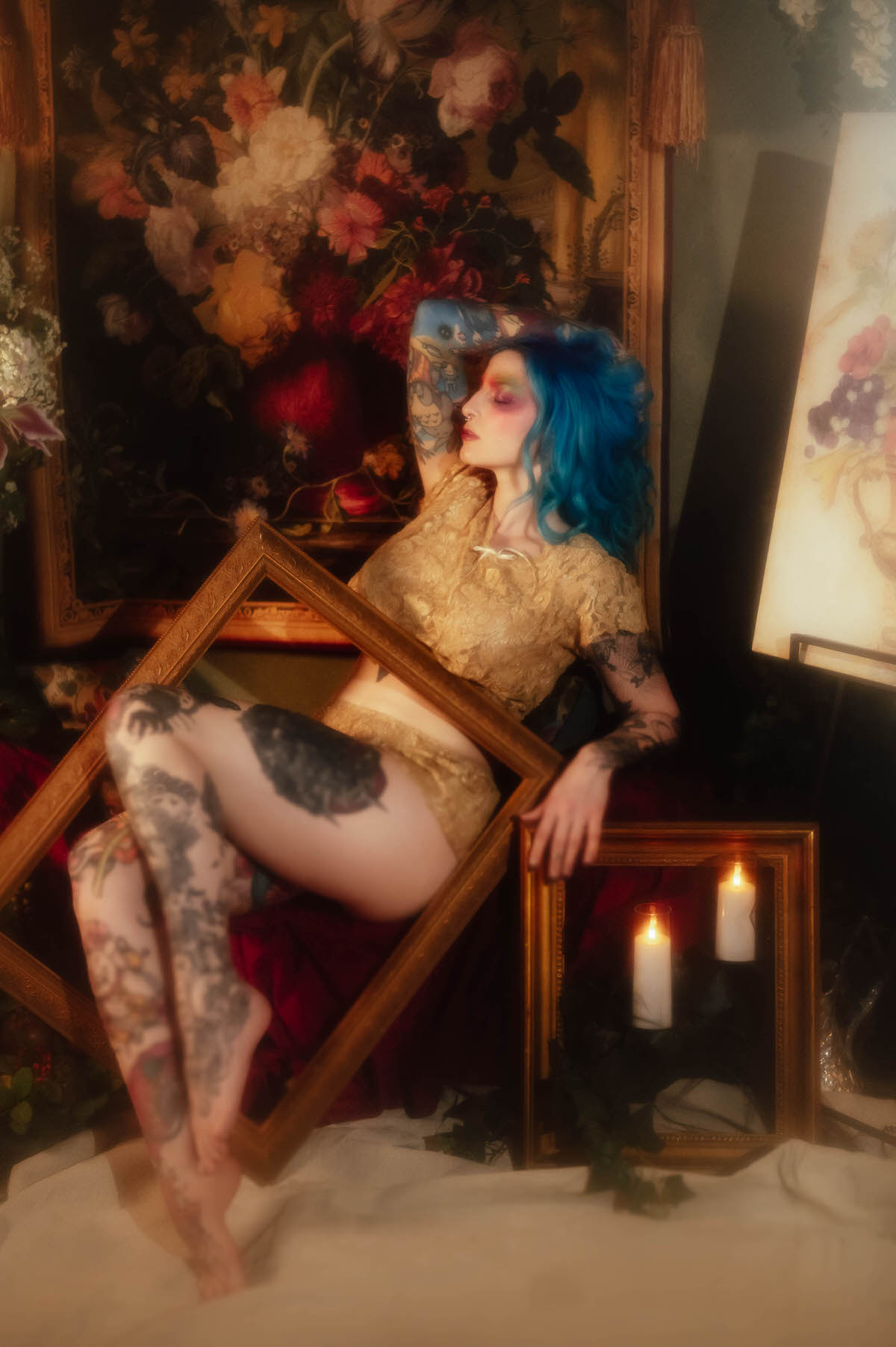
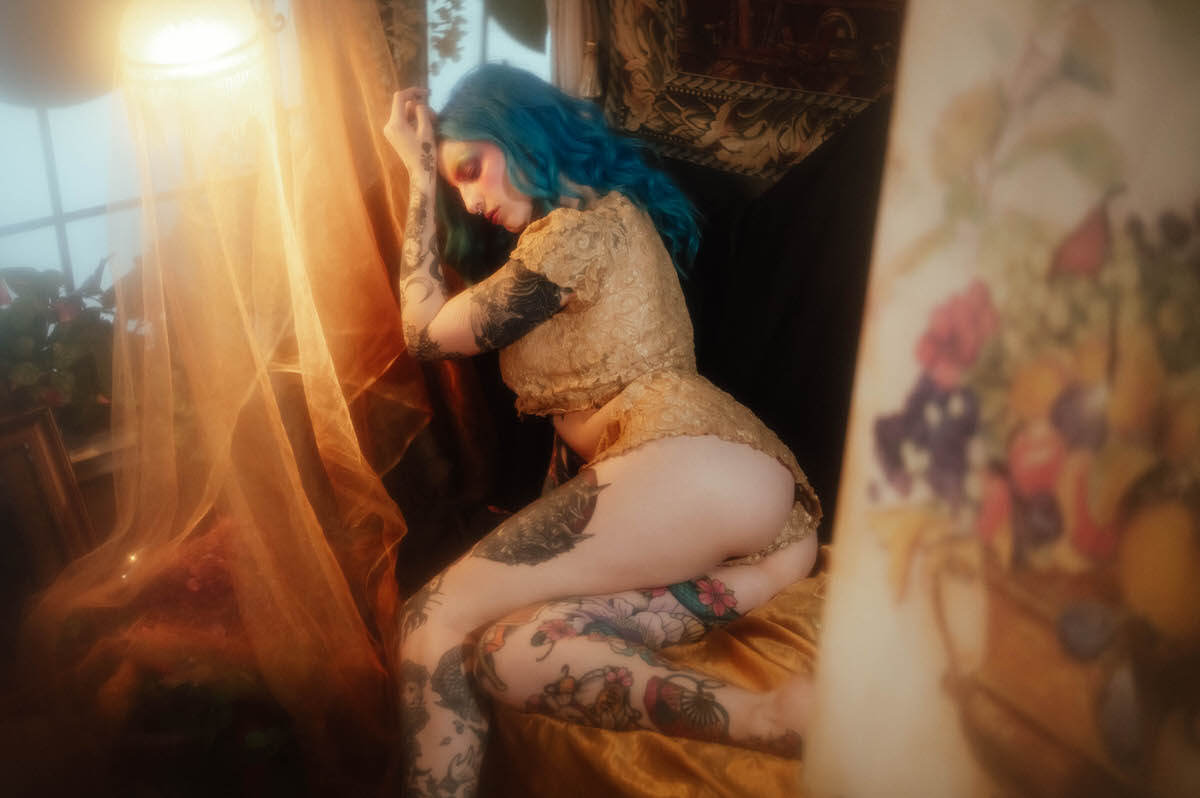
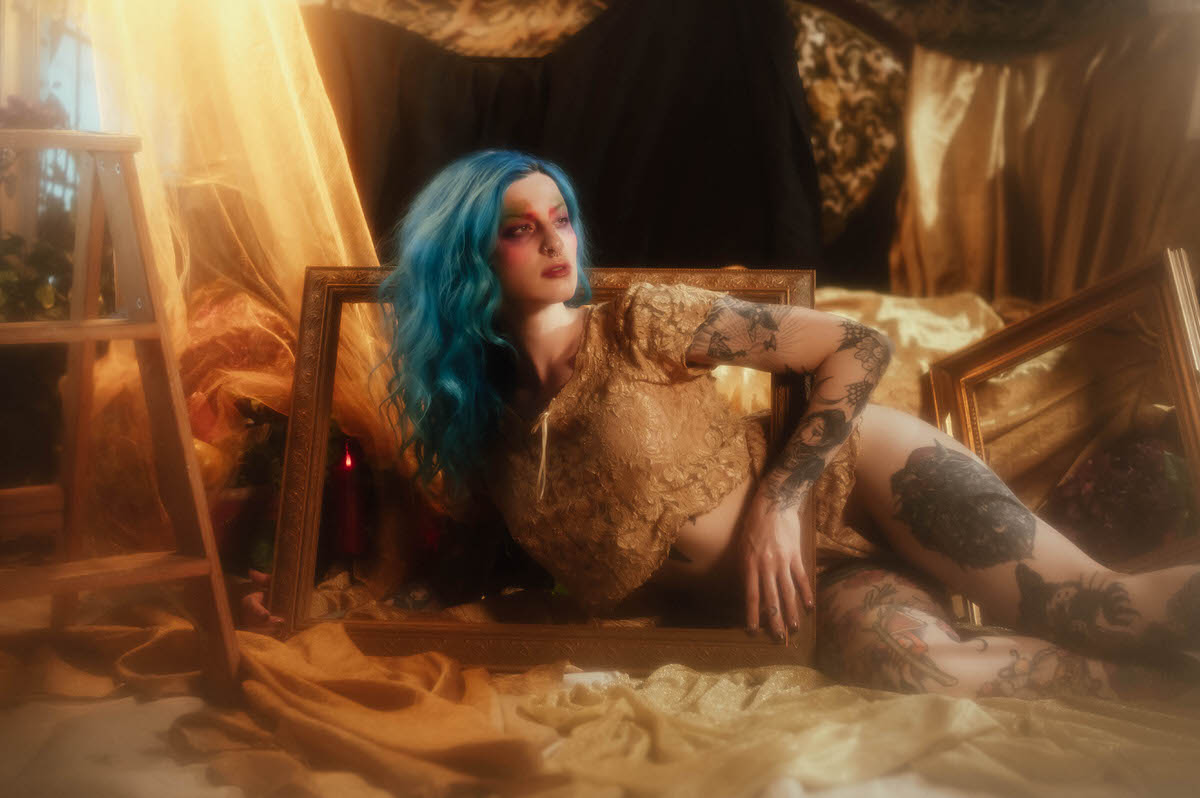
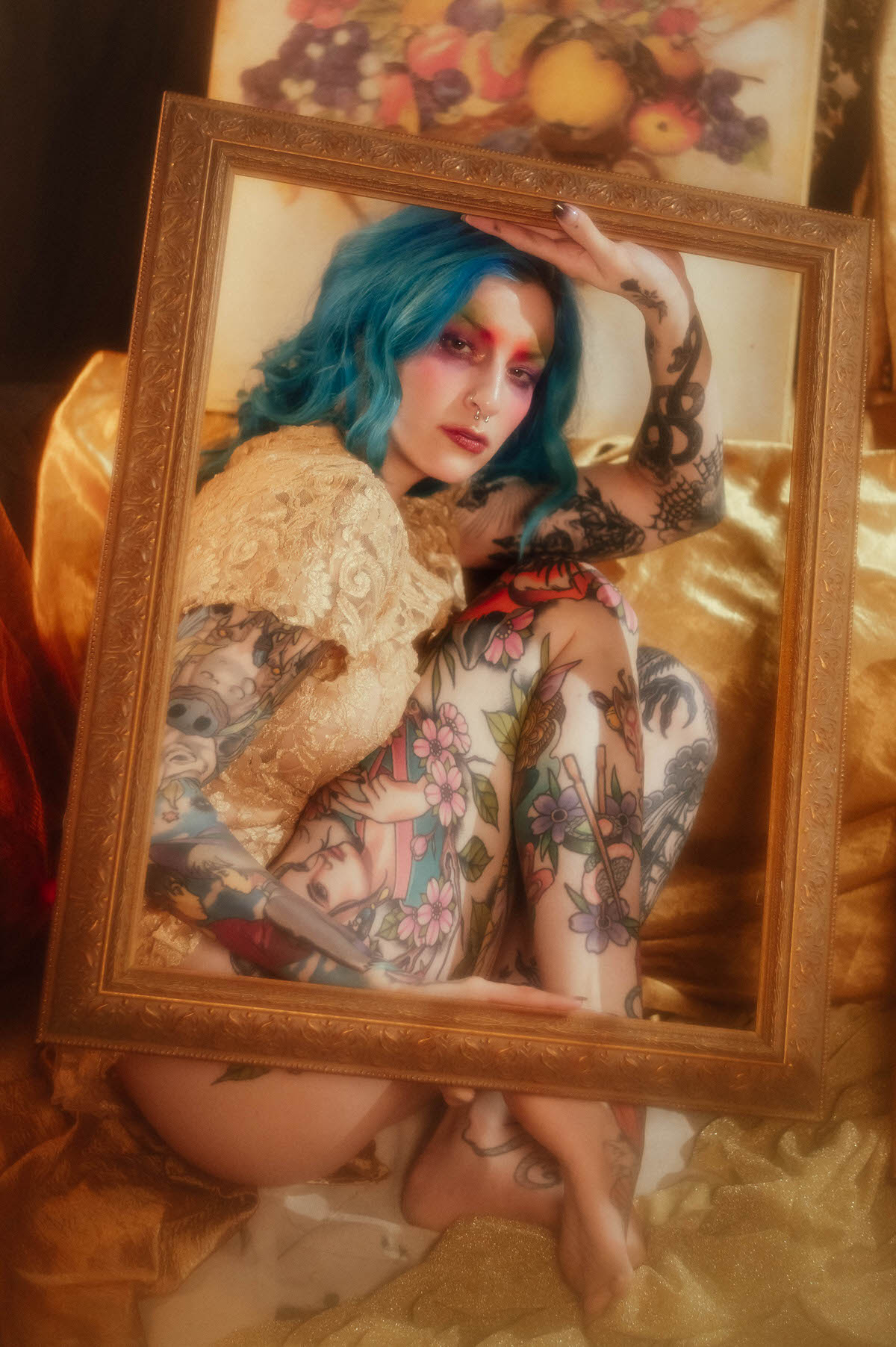
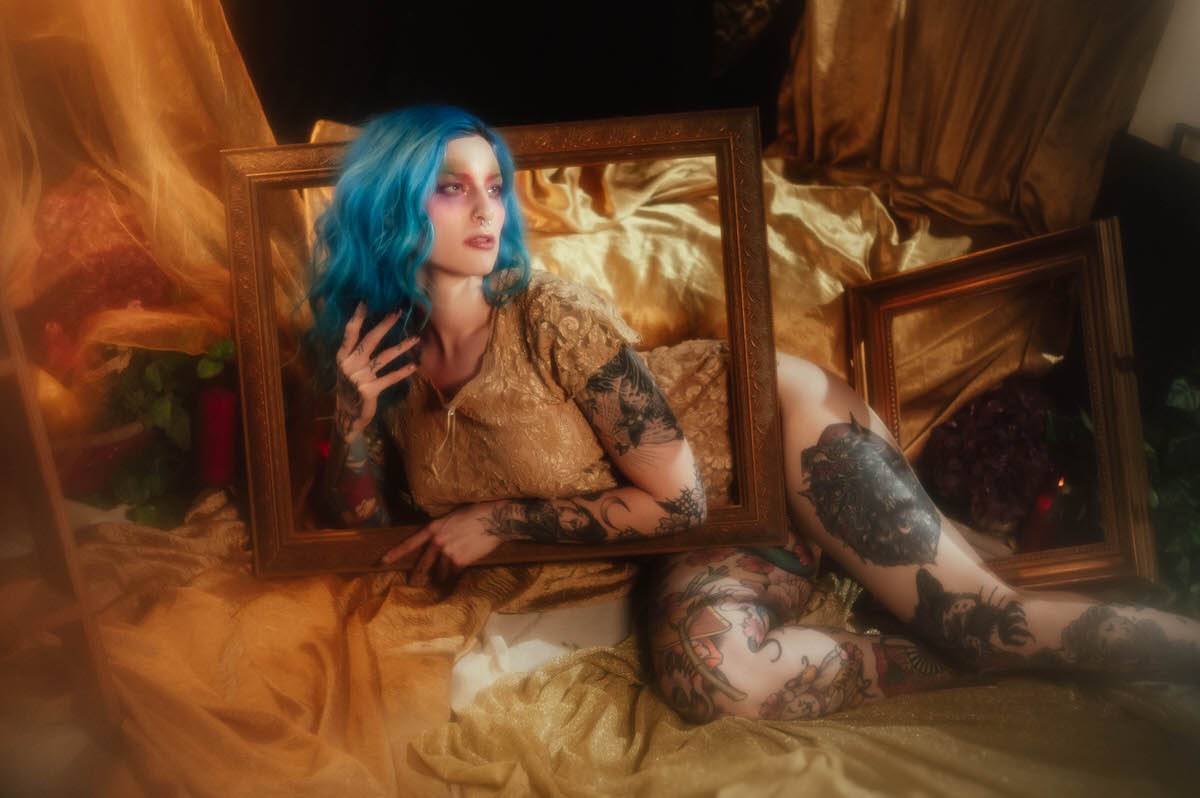
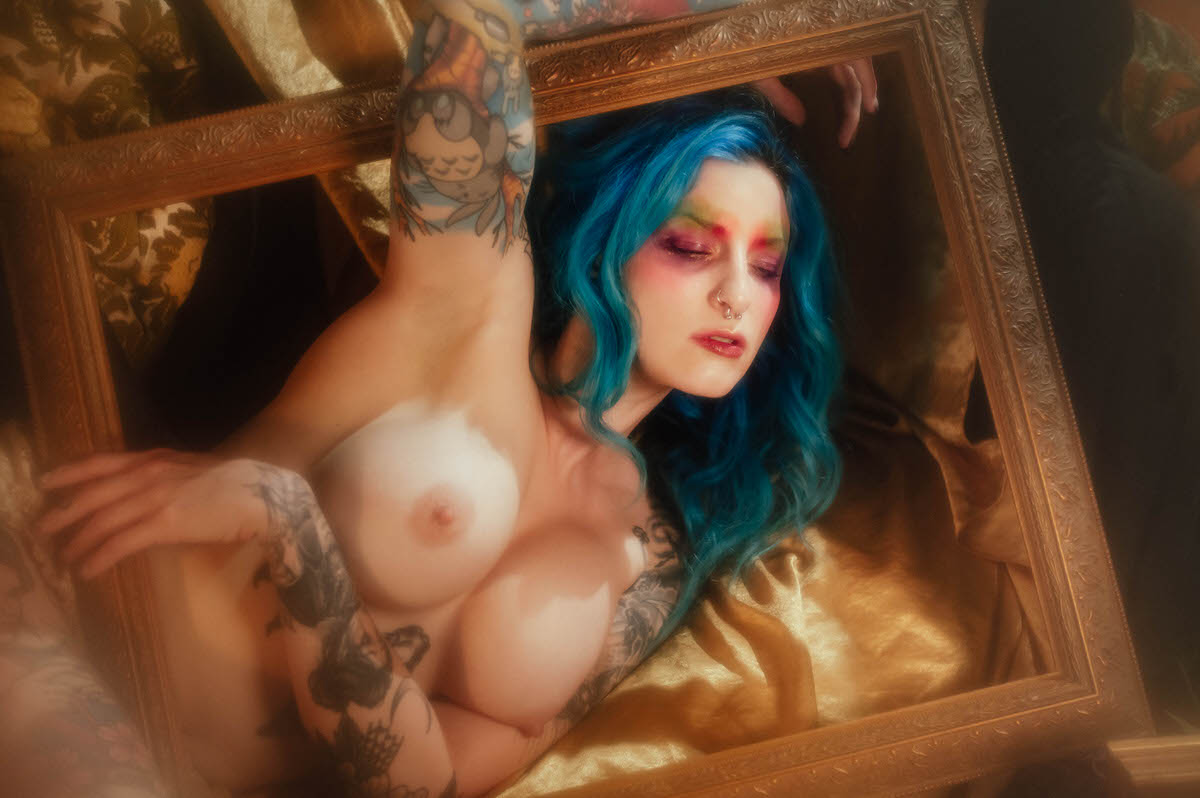
For the second look, I styled her in a thrifted gold lace two piece set I’d found to match the vintage frames scattered through the set. This is where the concept shifted. Instead of painting, she started posing inside the empty frames themselves, holding them up around her own body and face like she was stepping into a portrait herself.
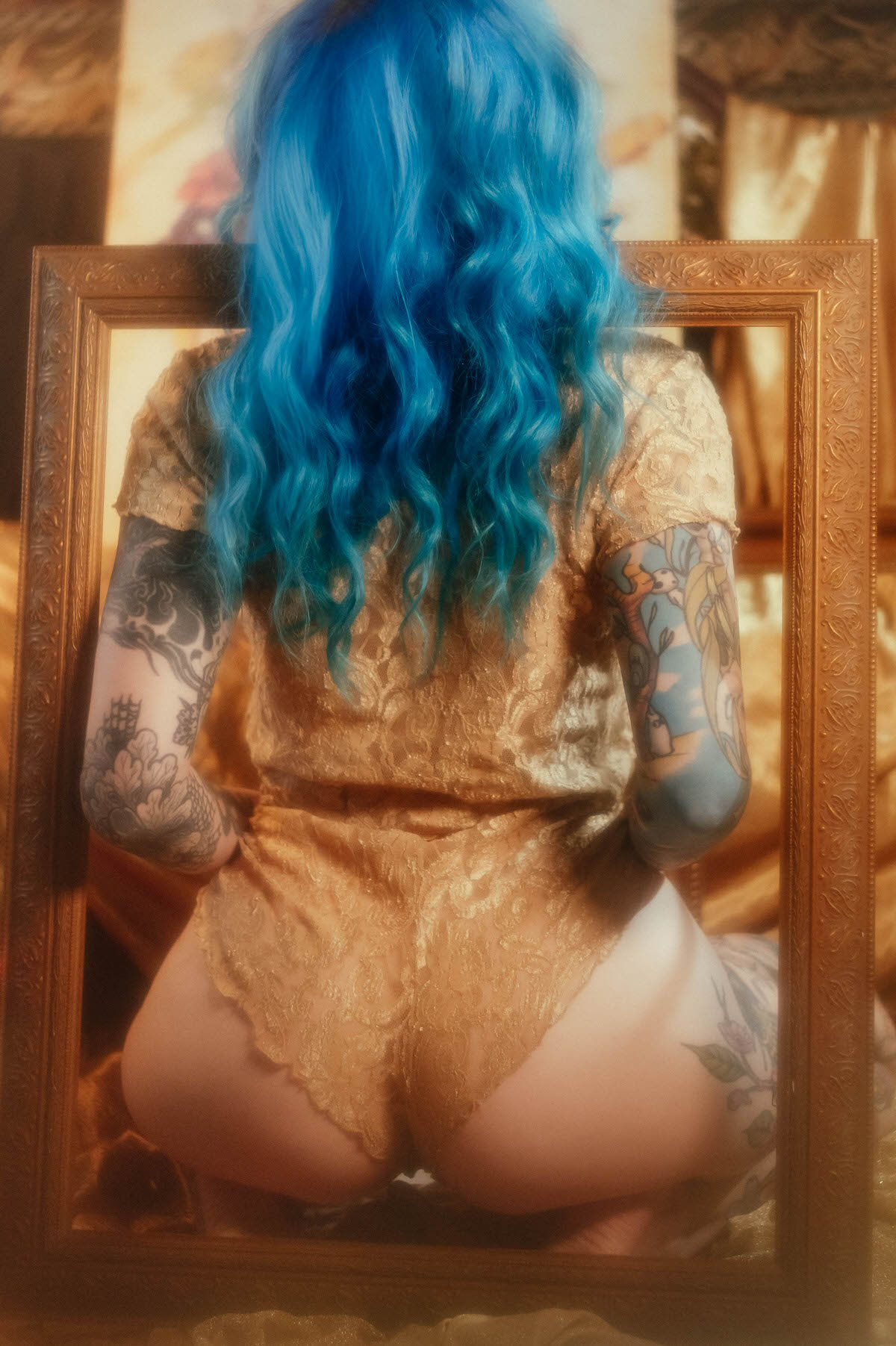
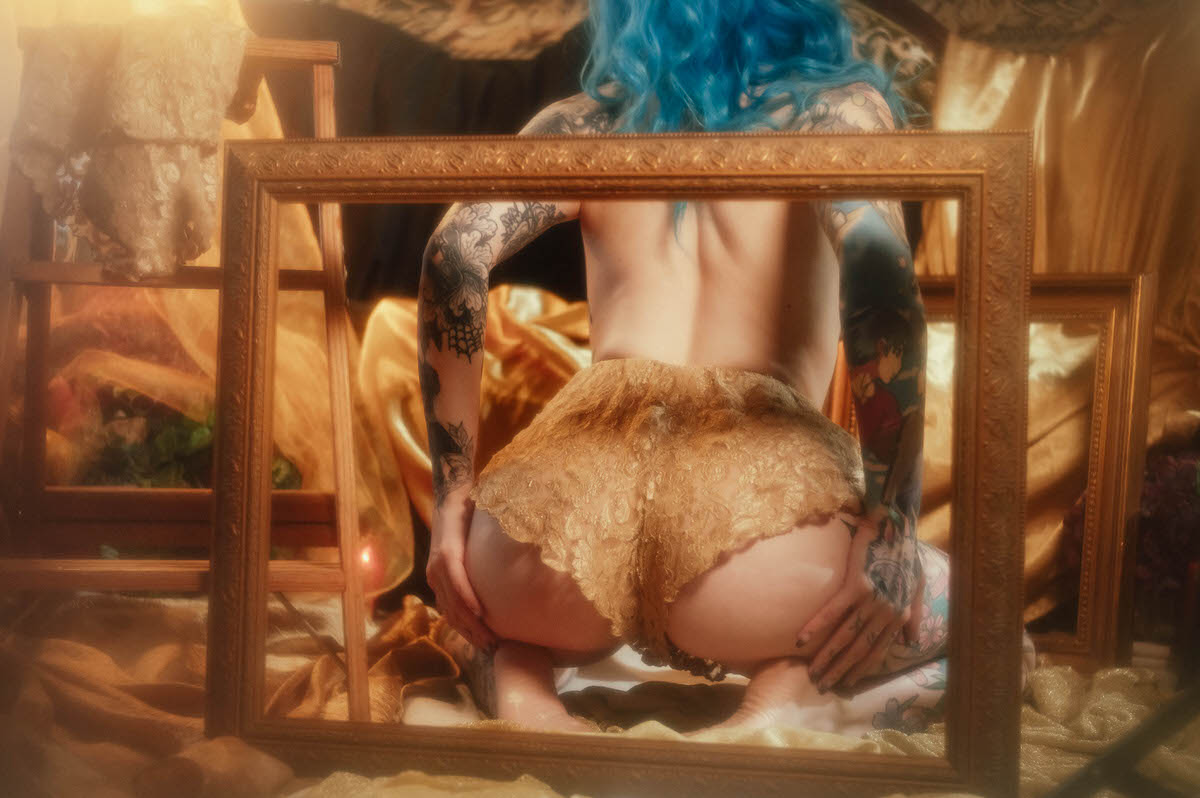
One shot has her curled into a seated pose, viewed straight through a frame propped in front of her legs. Another catches her from behind, kneeling, a frame surrounding just her back and the gold lace shorts. I lit the whole scene with taper candles and gold satin fabric pooled behind her, with a floral still life tapestry as the backdrop. The frames weren’t props sitting in the background. She was using them, actively, to turn herself into the artwork before we ever got to the final look.
Look Three: Fine Art Nude with Body Paint
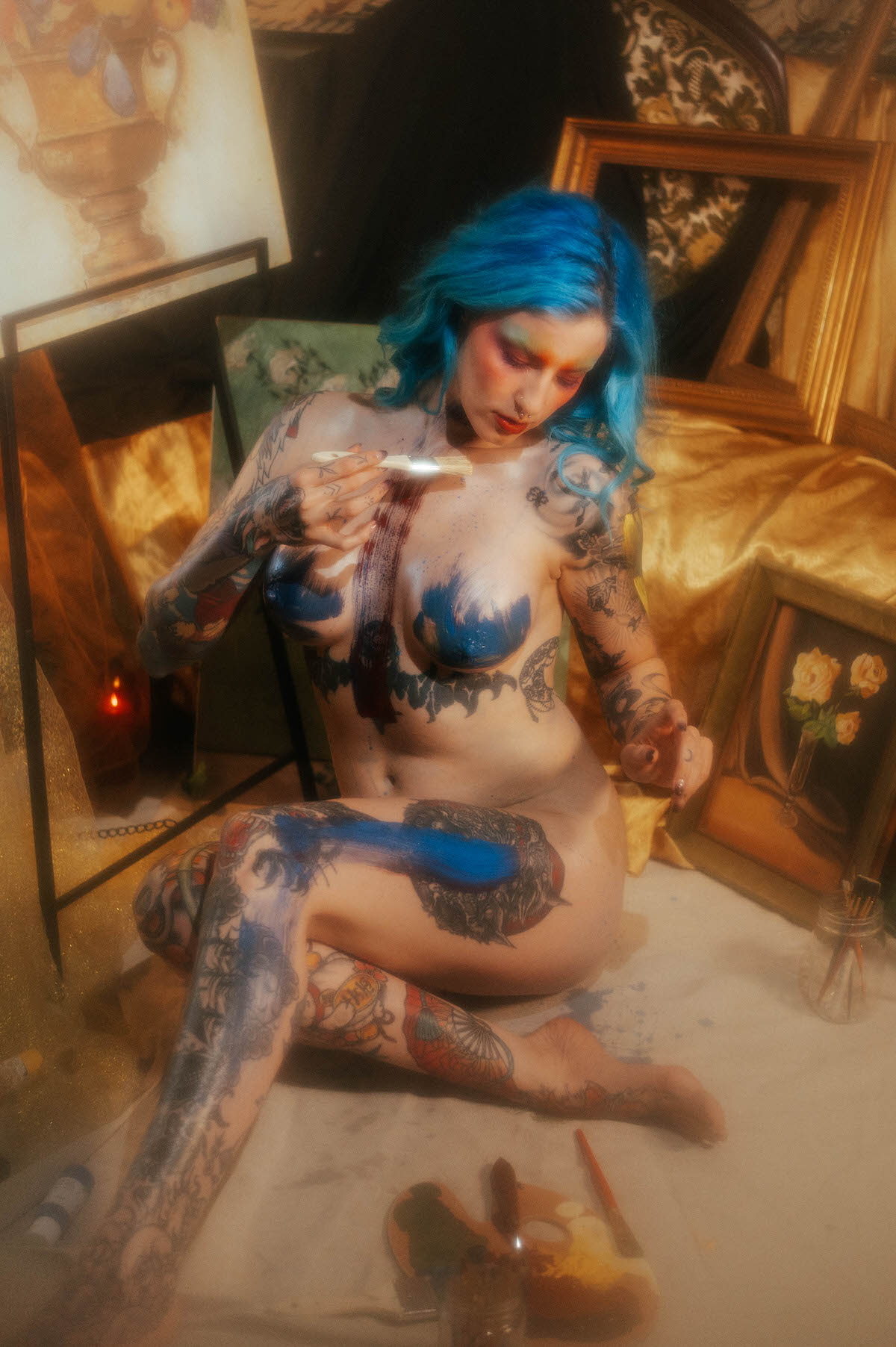
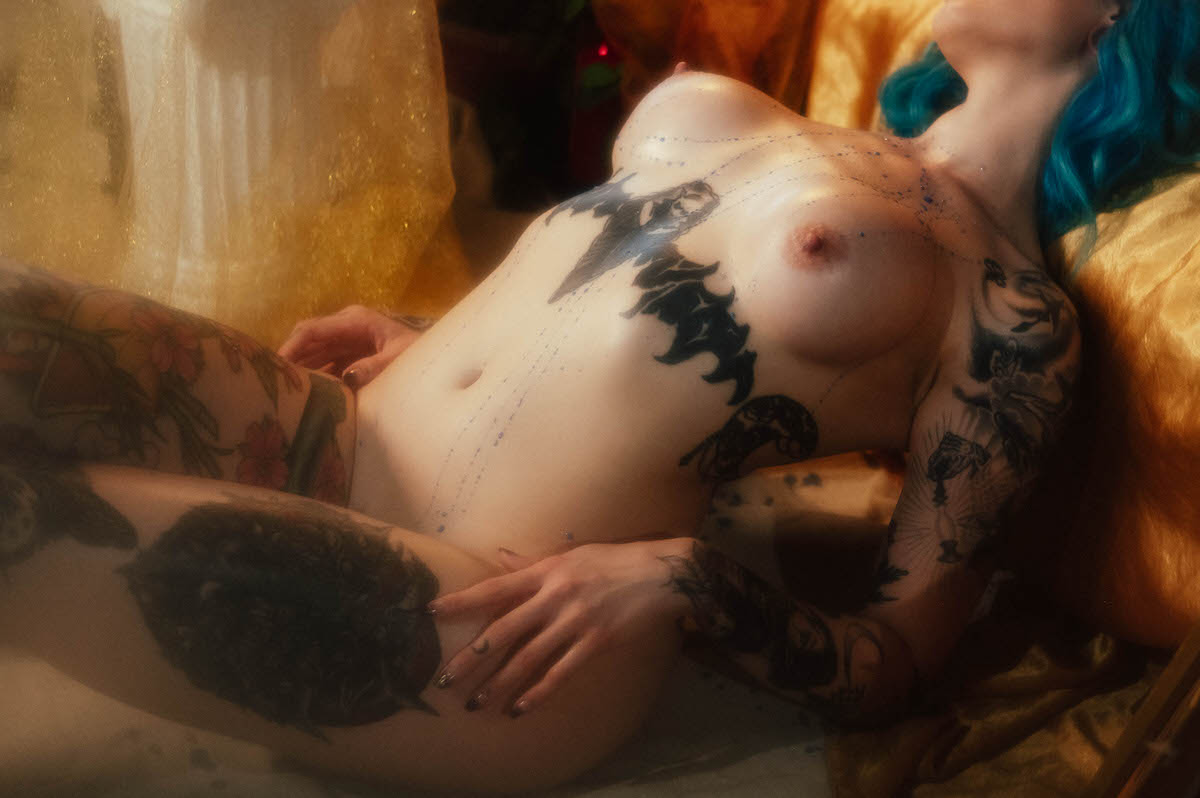
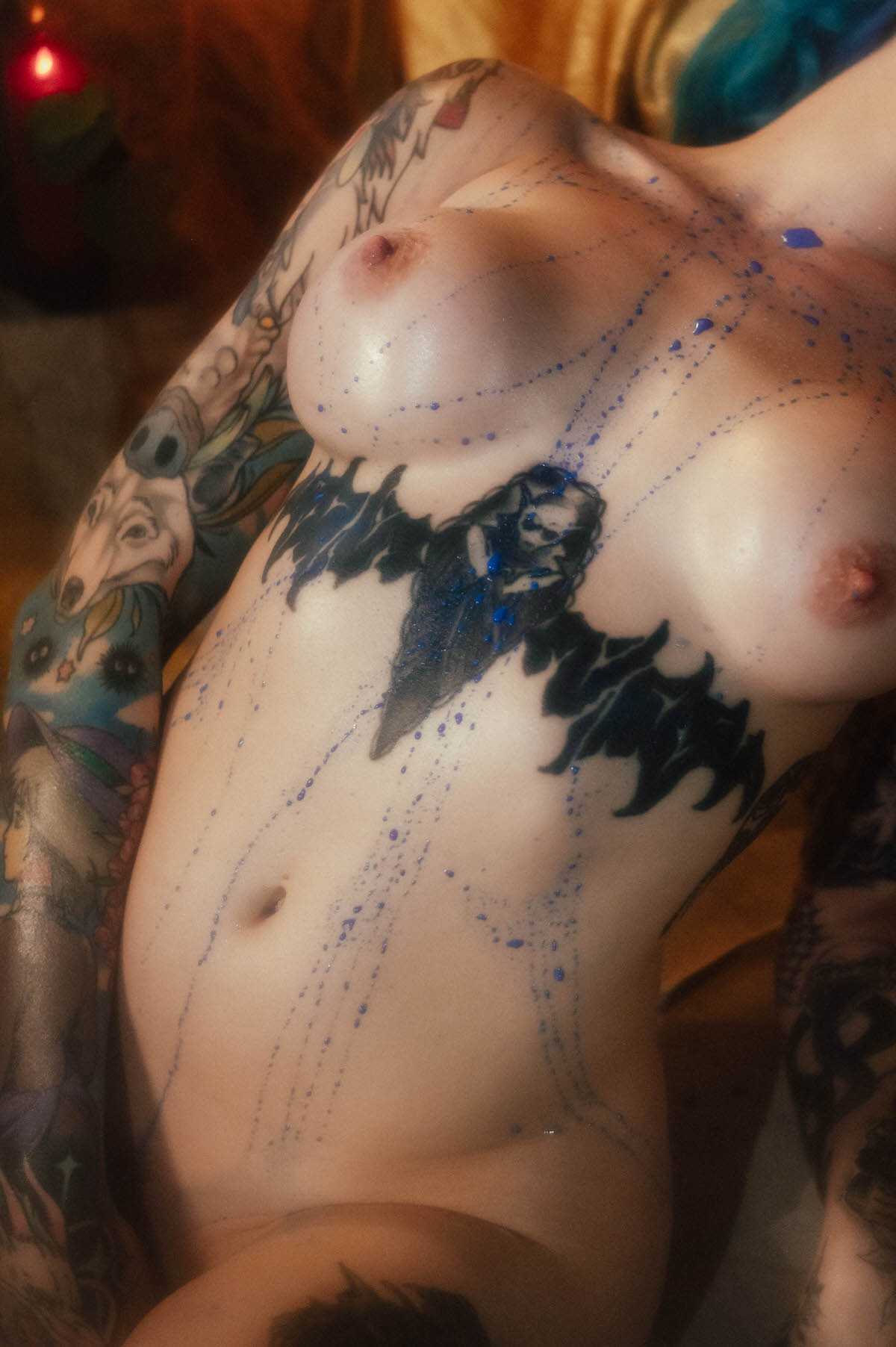
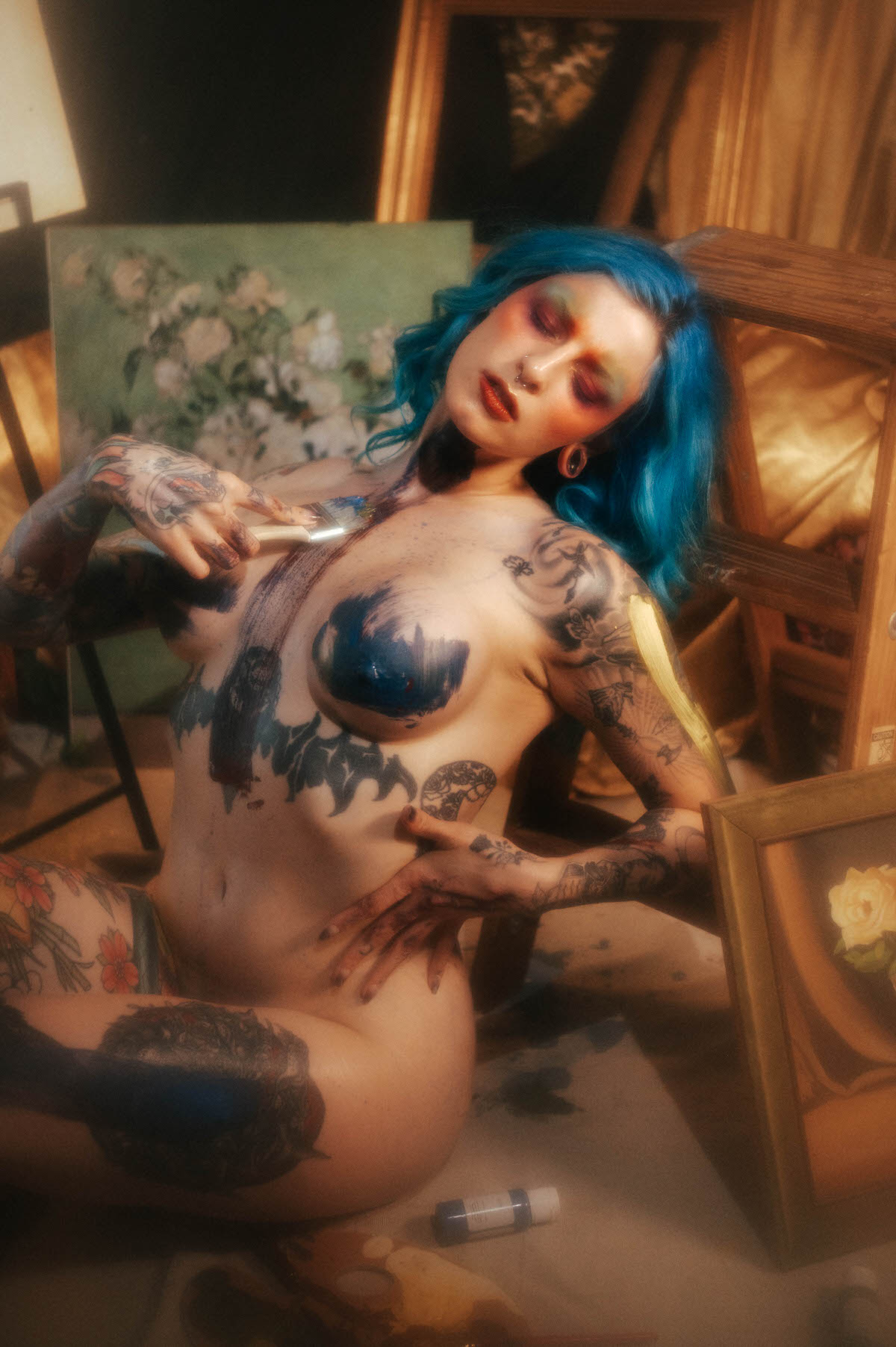
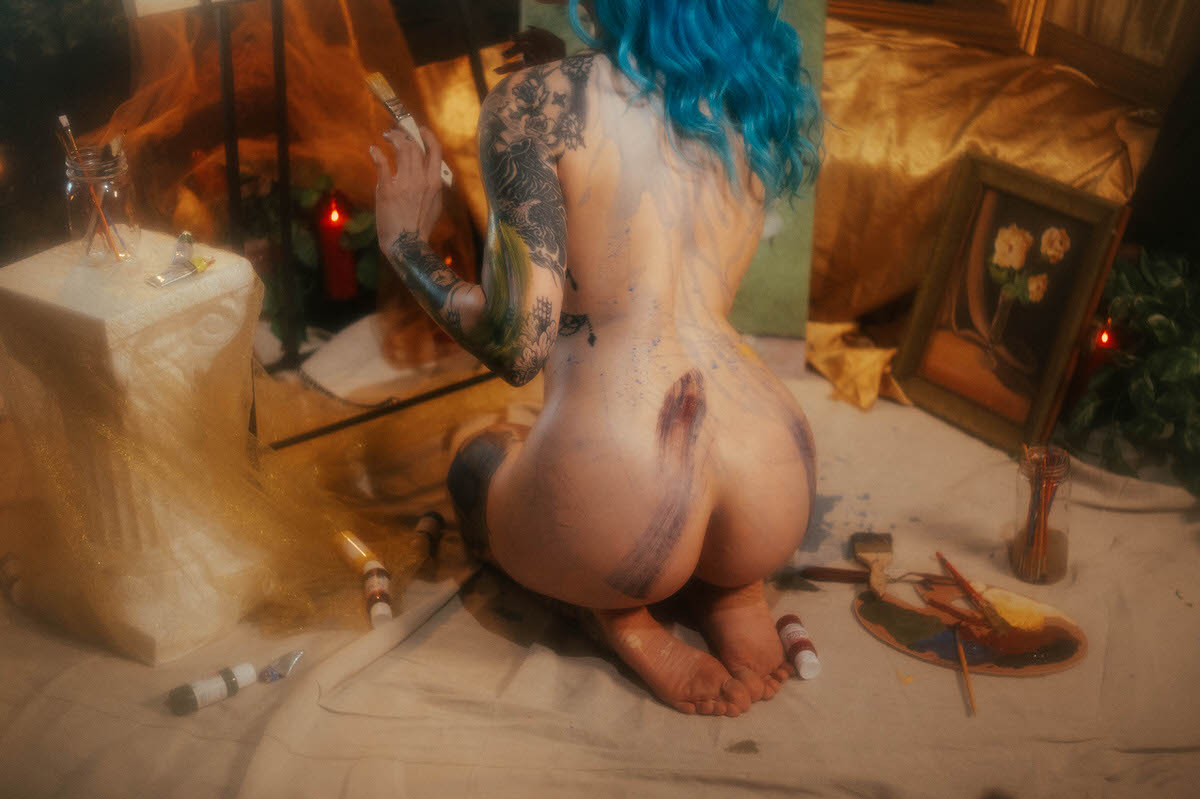
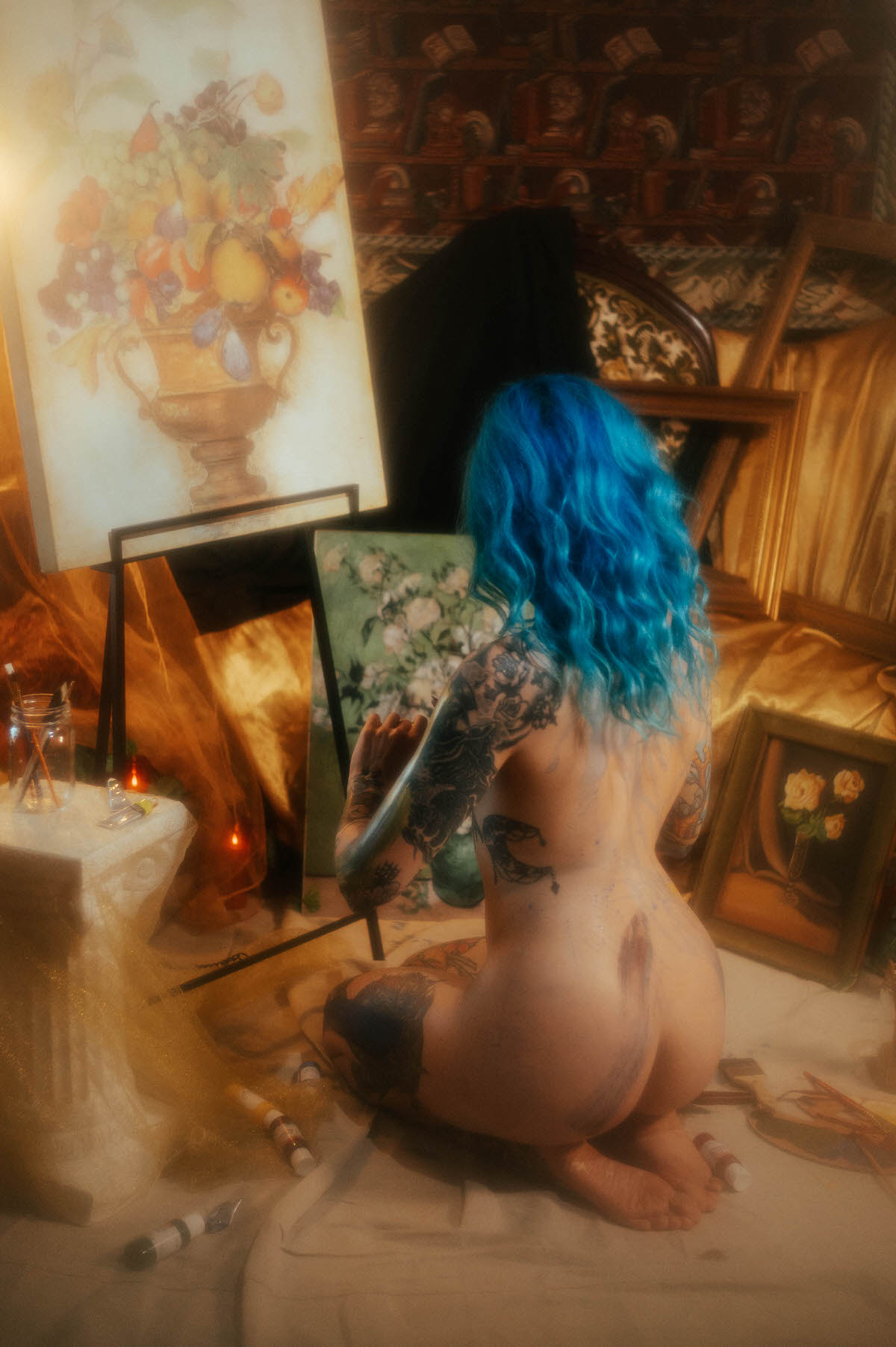
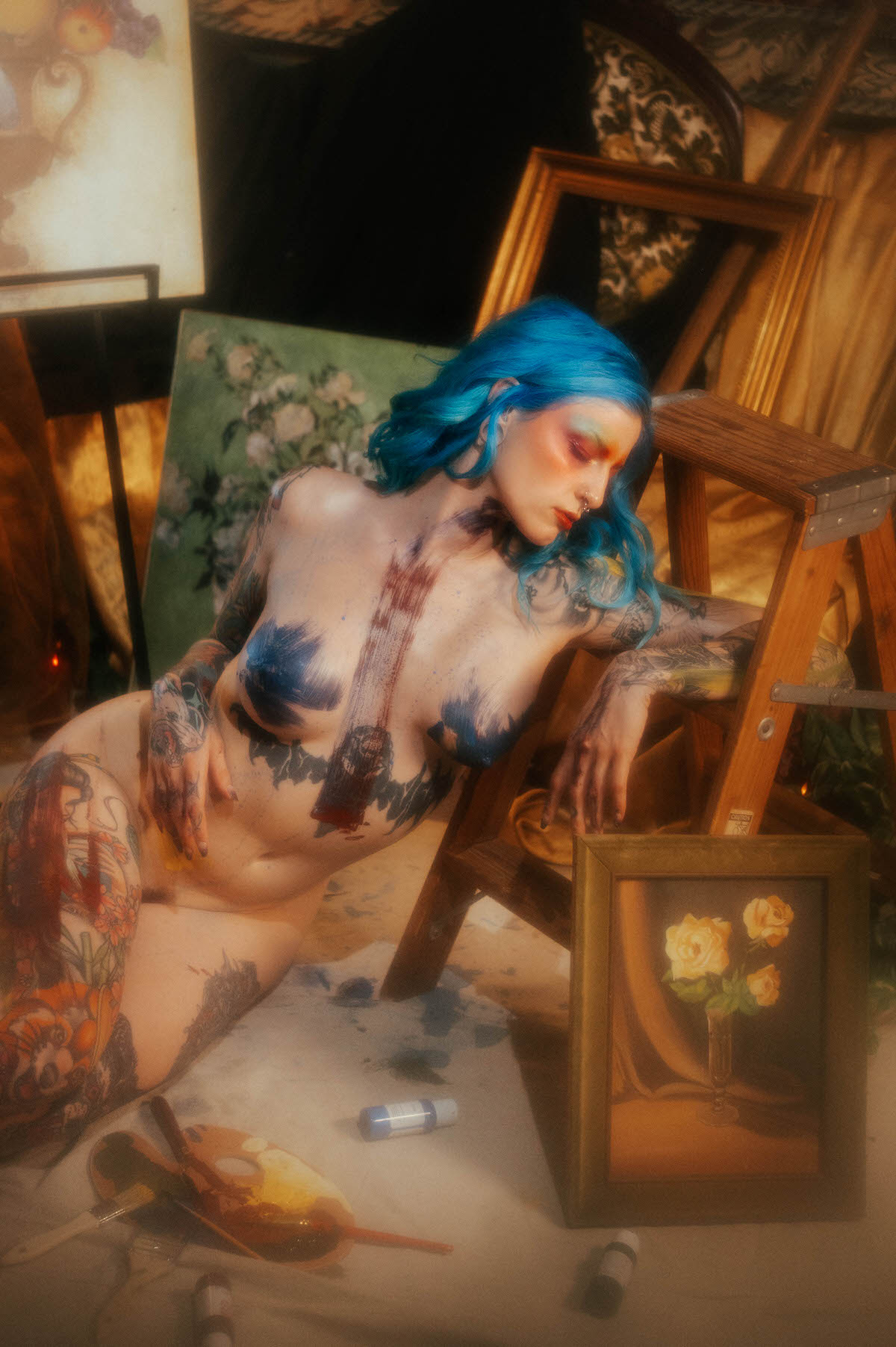
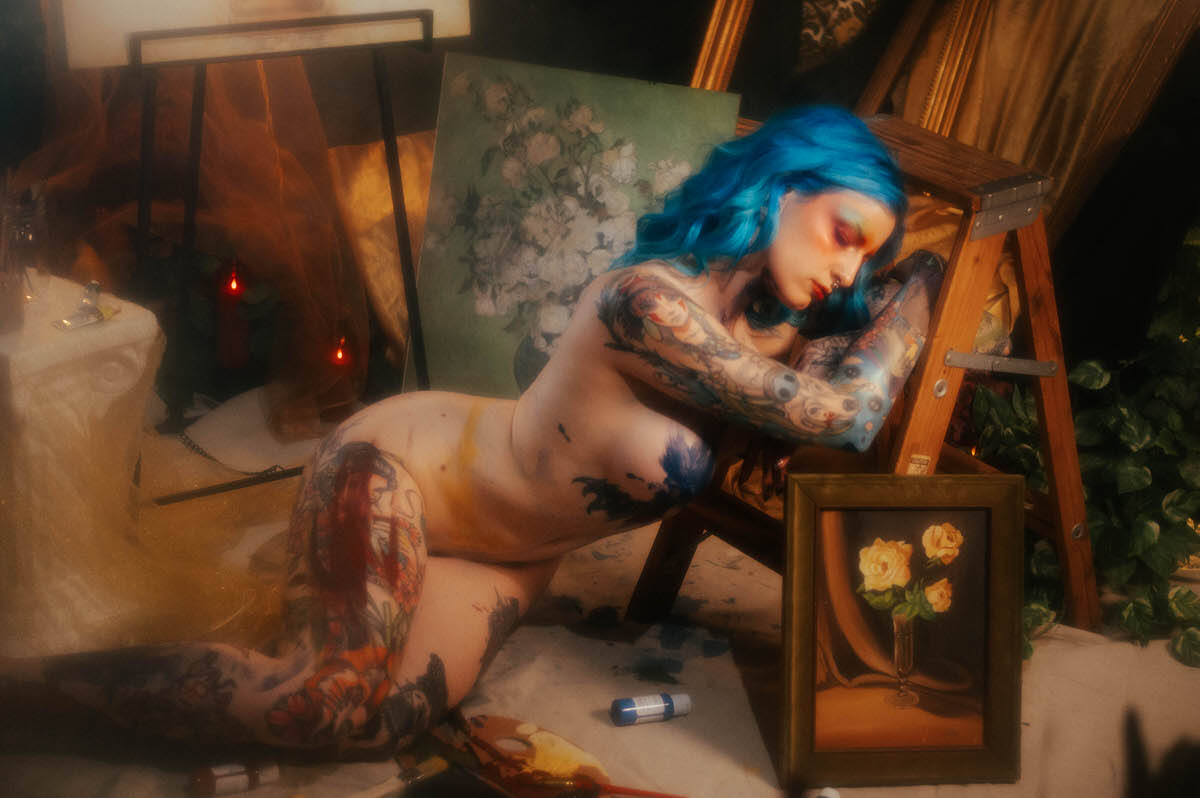
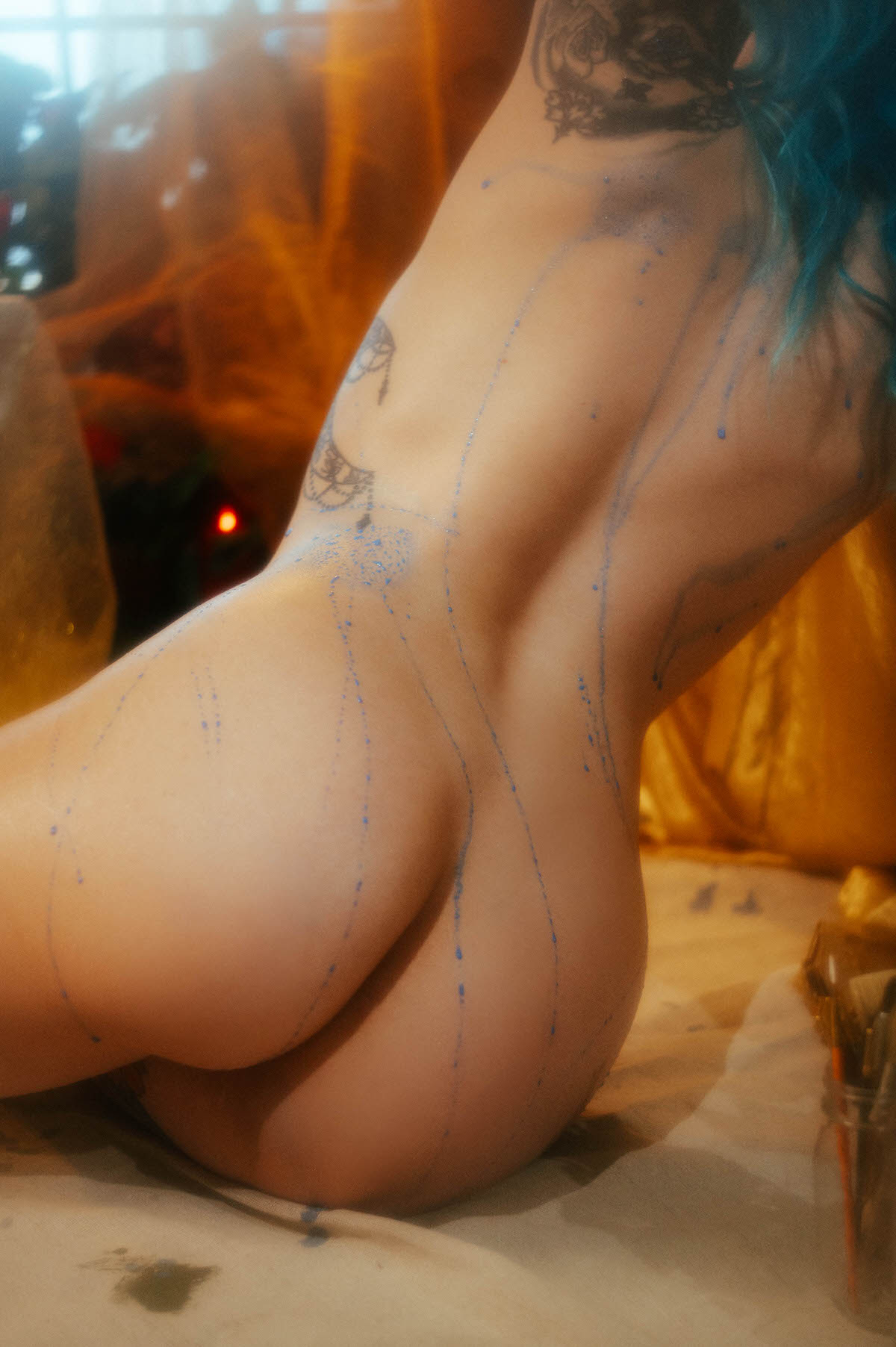
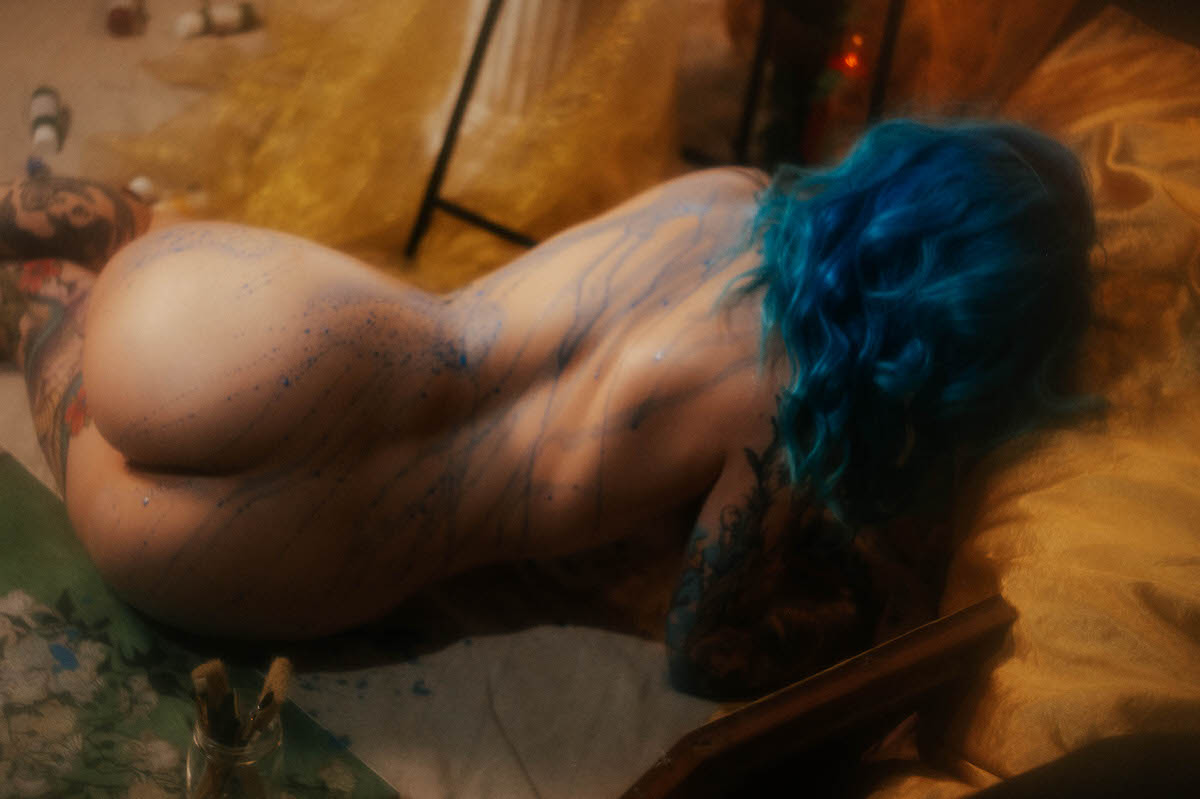
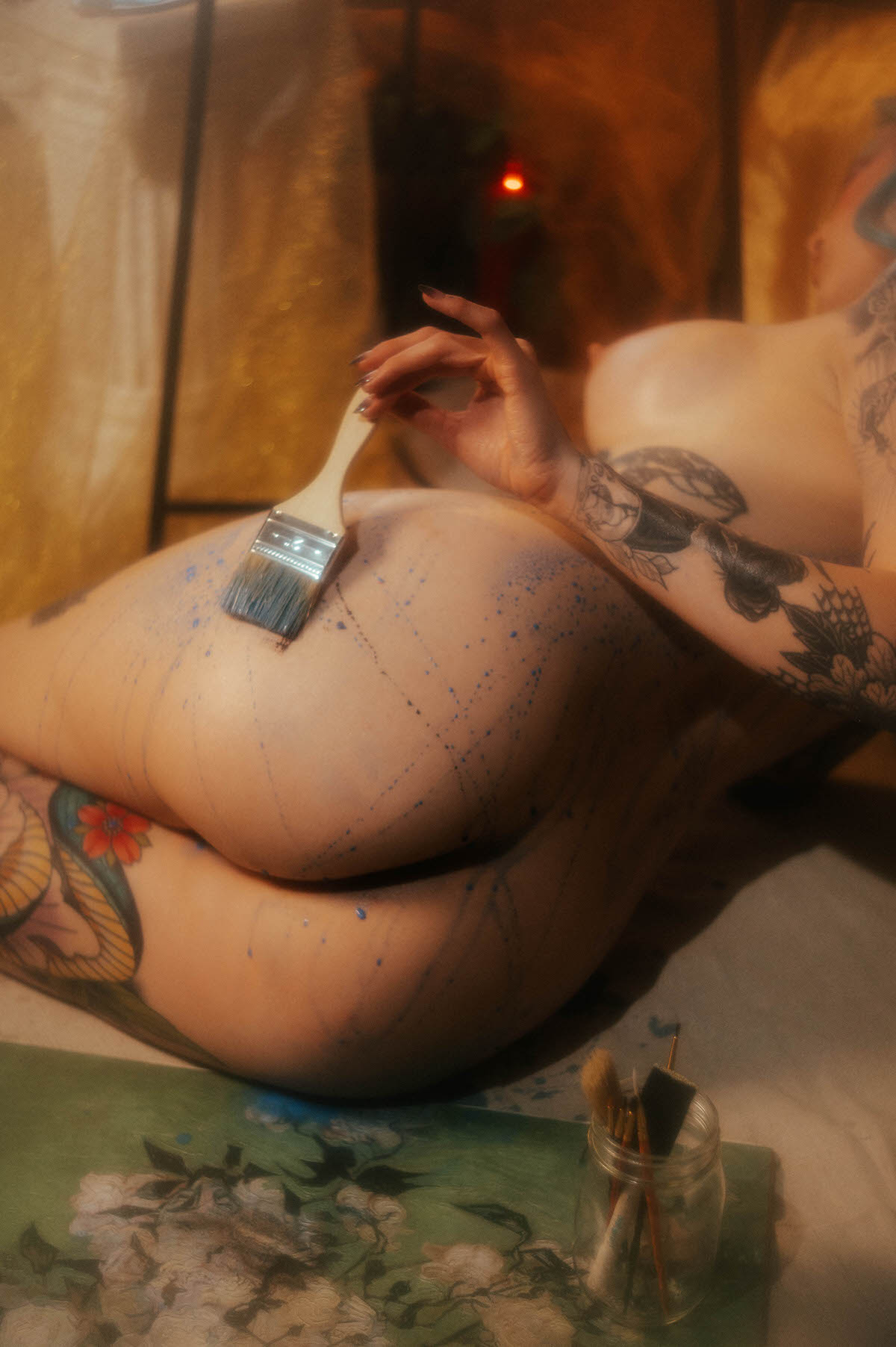
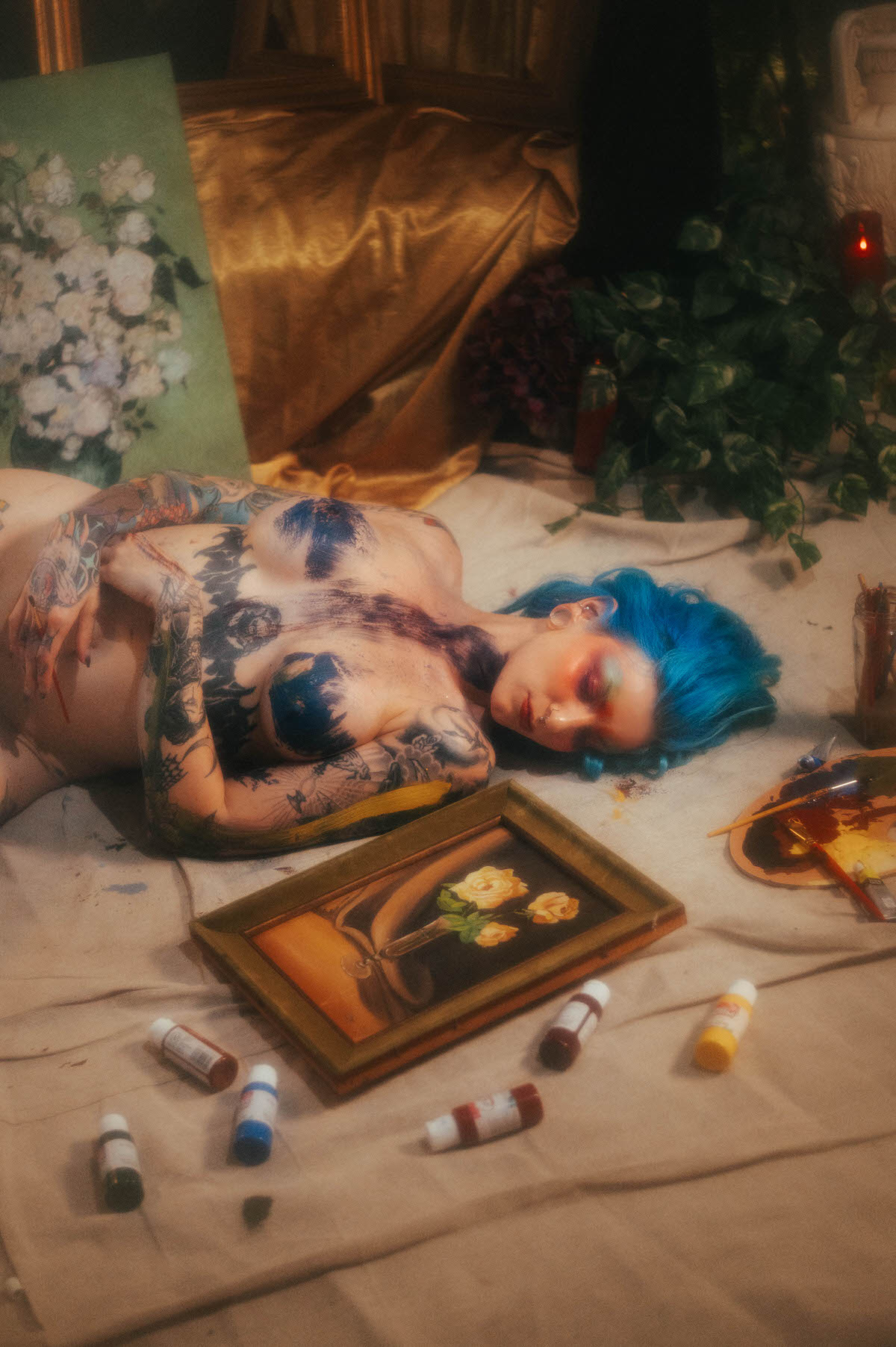
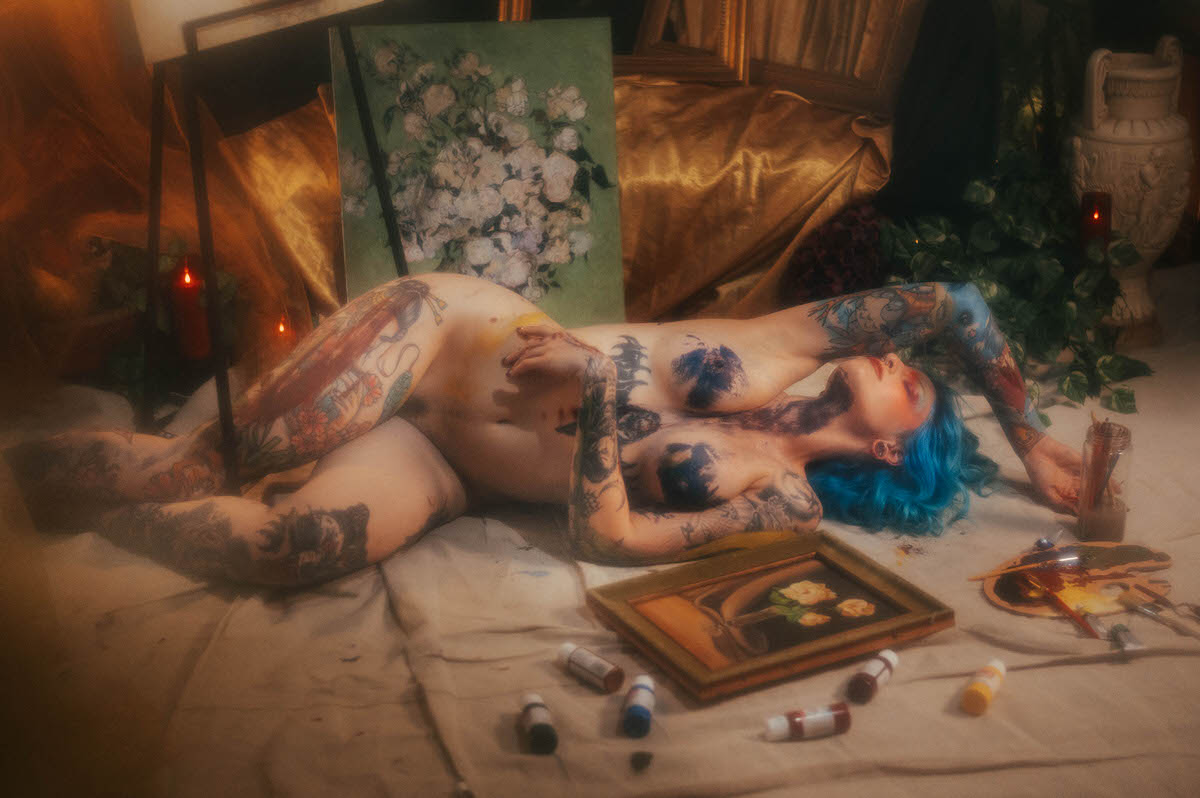
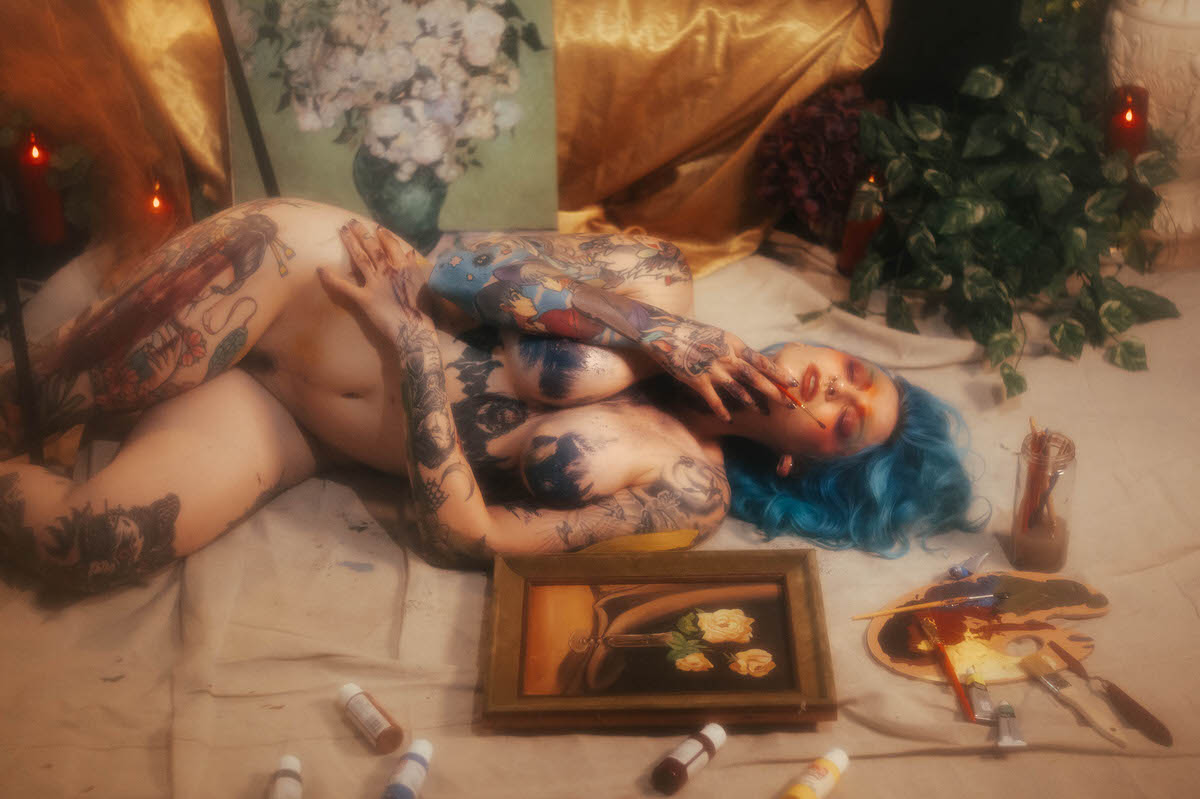
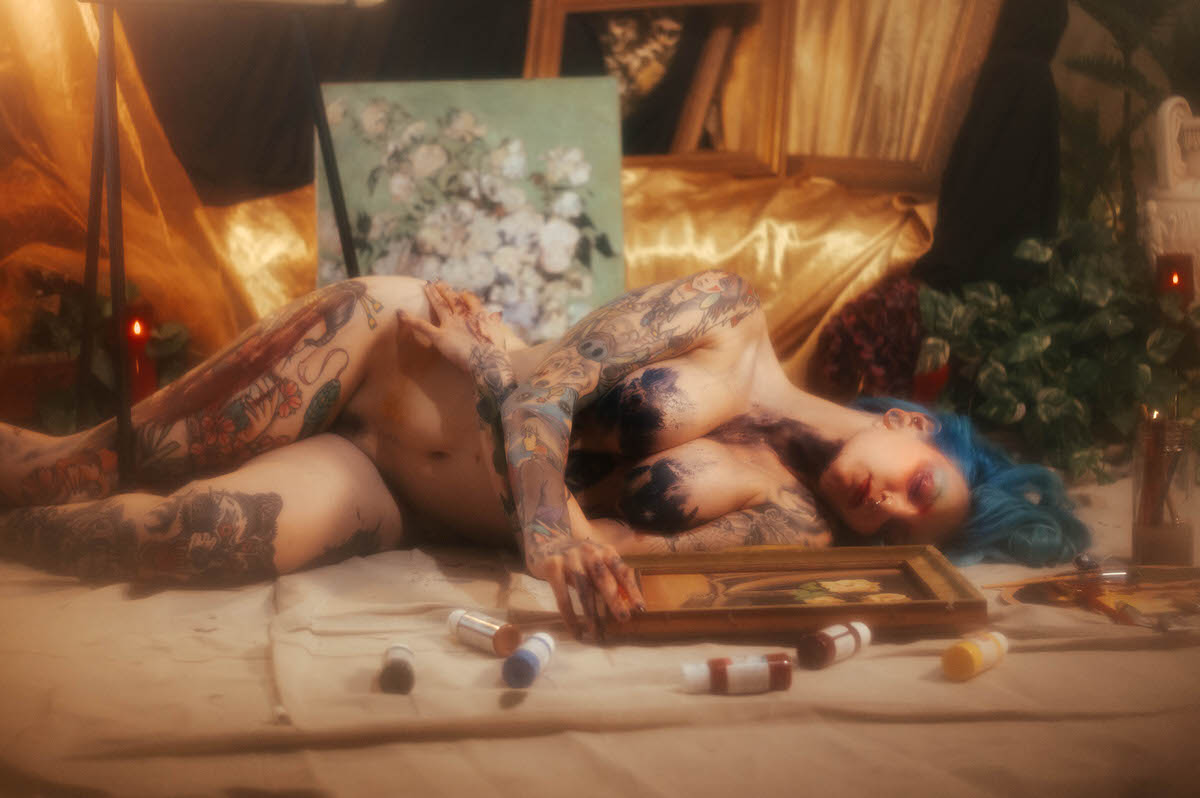
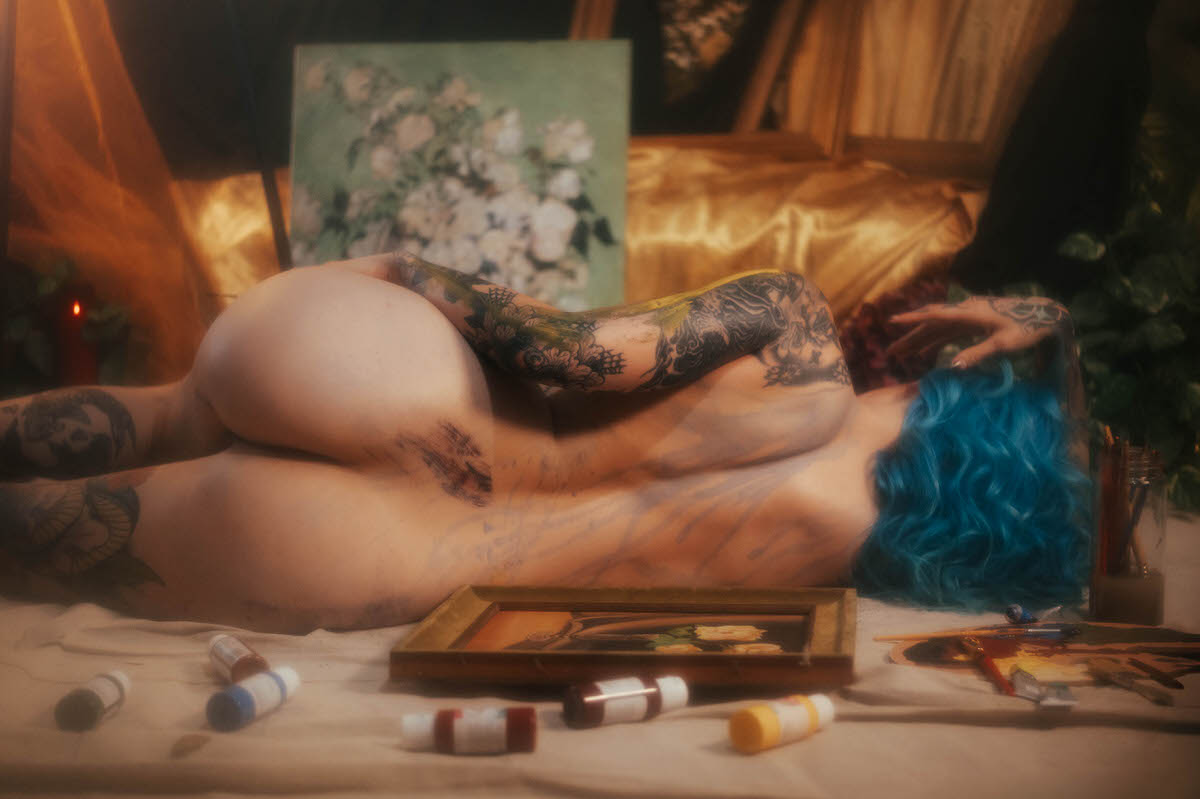
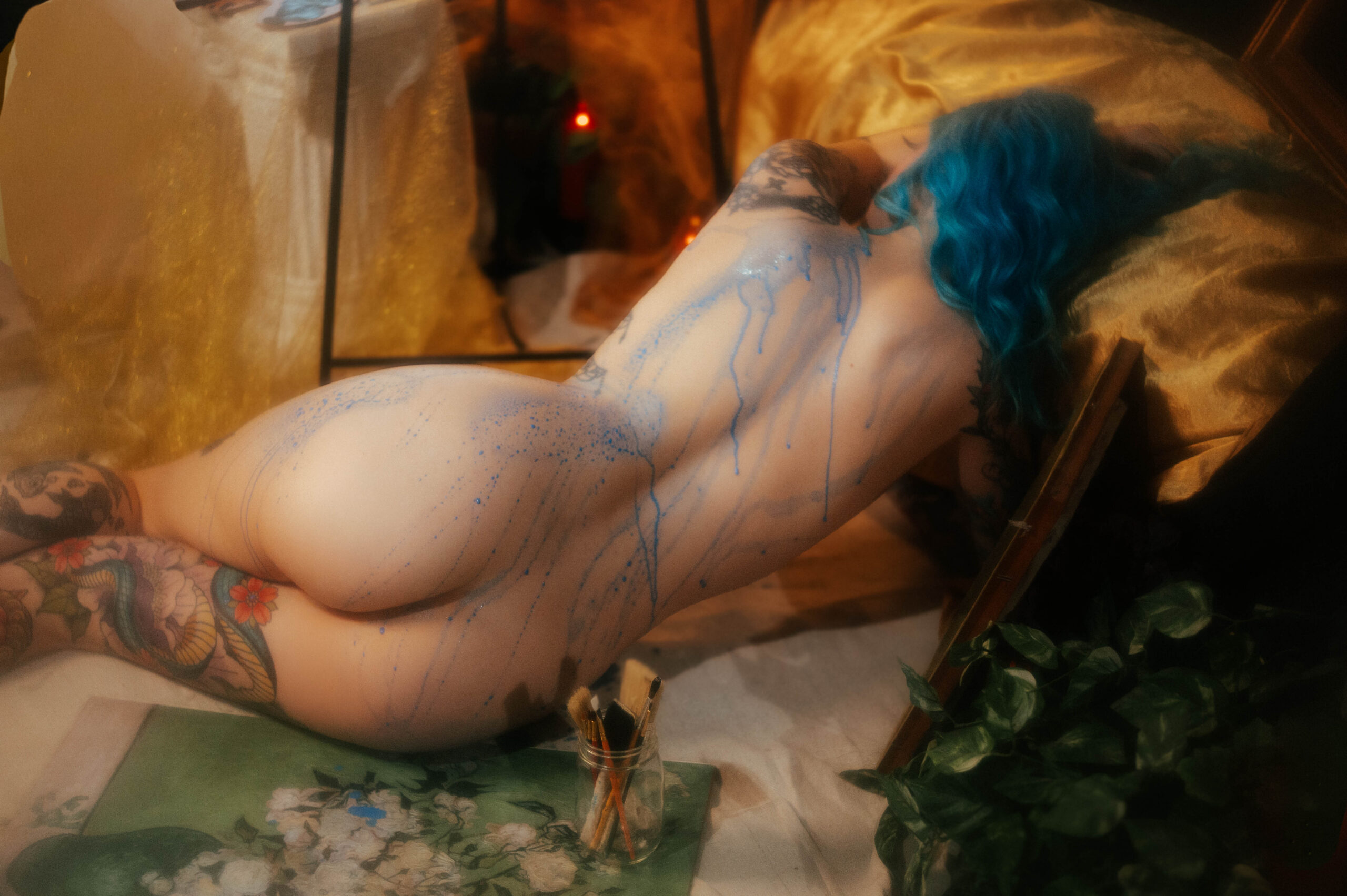
The final look dropped the wardrobe entirely. This was the body paint photoshoot portion of the session, and it doubled as the fine art nude portion, too. I used water based craft paint, the kind sold at any craft store and safe to apply straight to skin, in colors matched scene by scene to whatever painting she was posed “working on” in that moment. Blue for one still life, a deep maroon for another, so the paint on her body always tied back to the canvas next to her.
She applied most of it herself, which was intentional. I wanted the strokes to look like something that happened over the course of a painting session, not something painted on for the camera. She’s kneeling on a white canvas drop cloth in most of these shots, palette and brushes scattered around her, paint tubes half squeezed out on the floor.
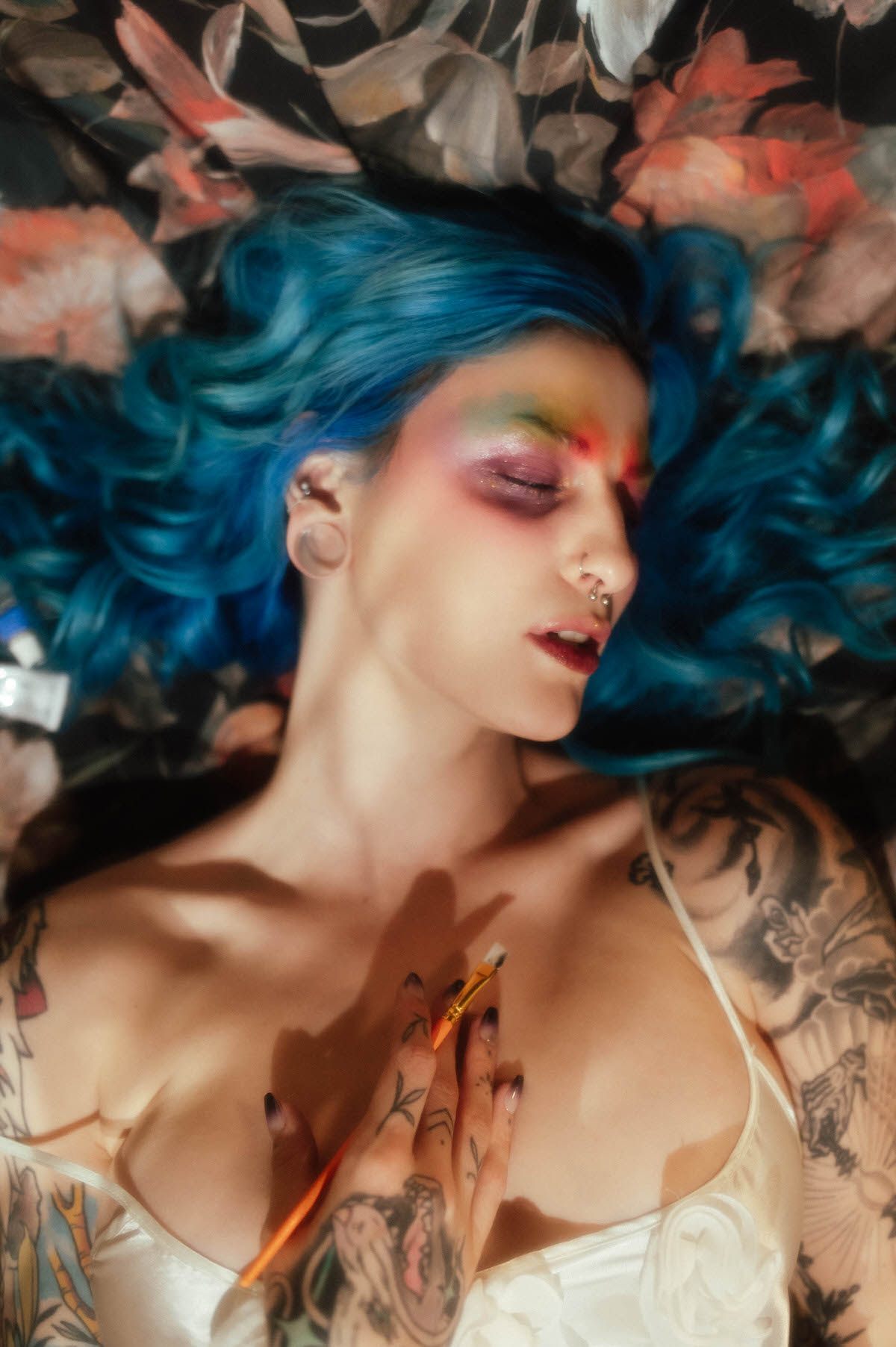
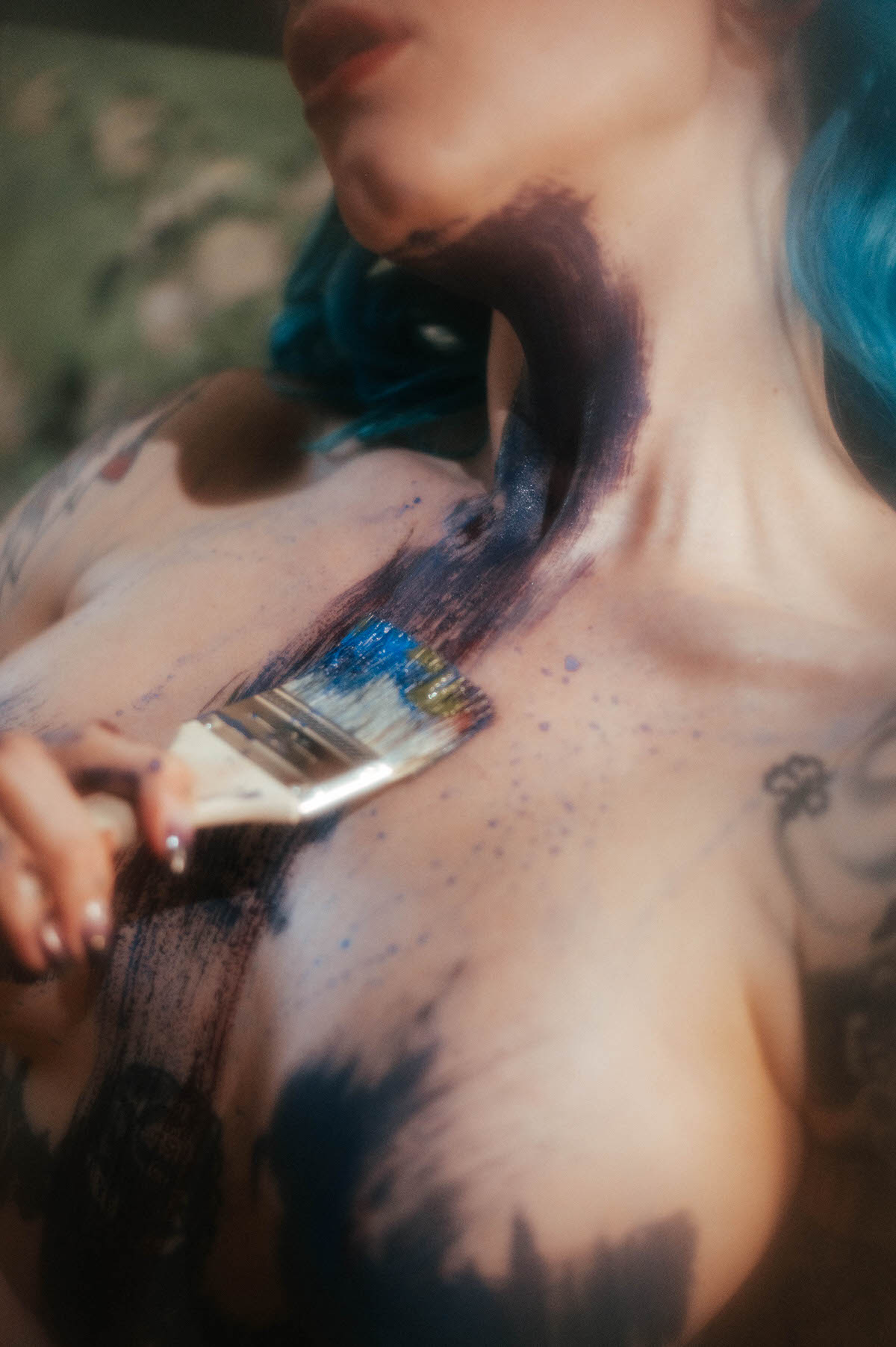
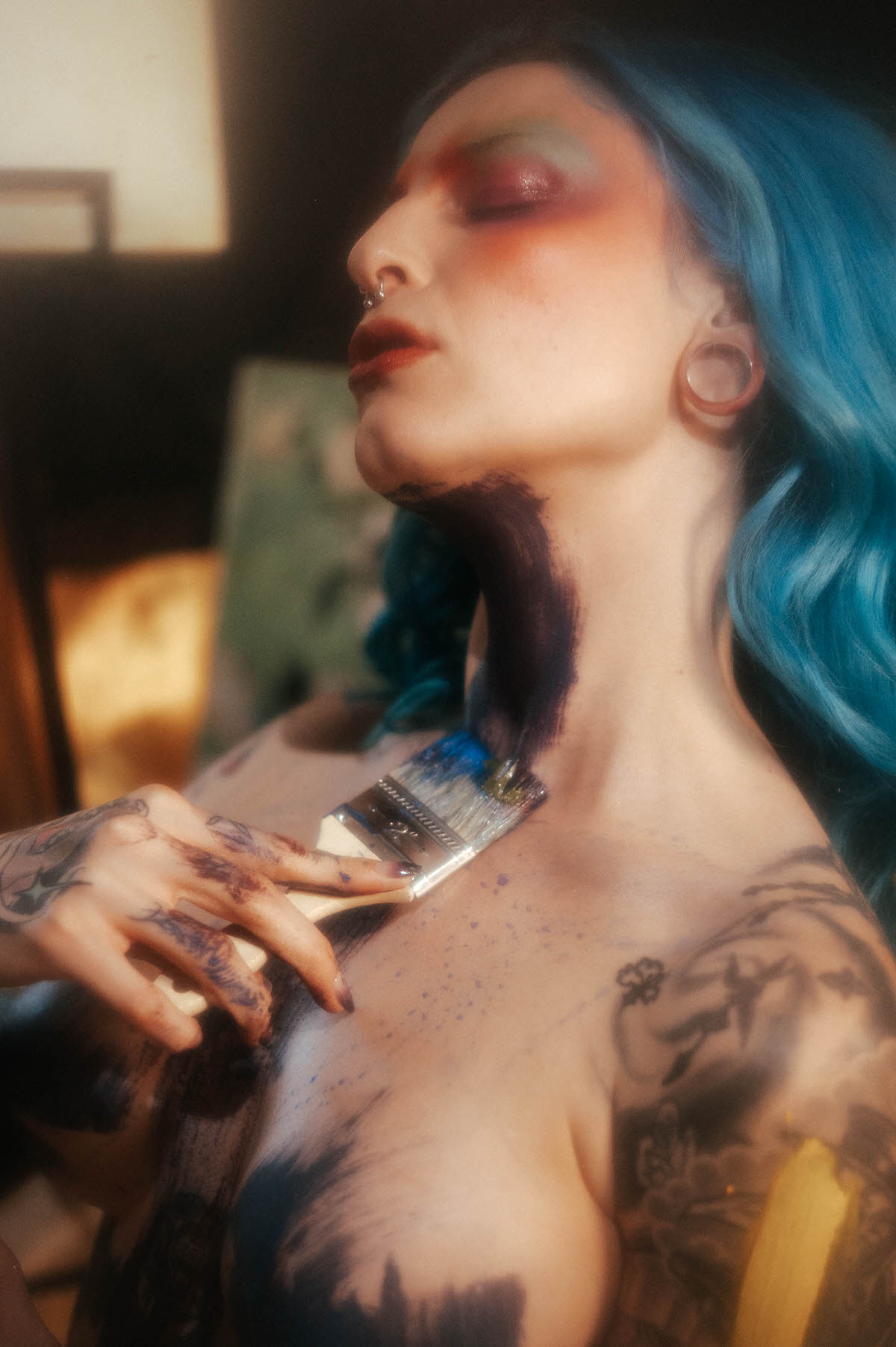
One of the strongest images from this look has her brushing a wide flat brush down her own neck and collarbone in a slow, deliberate stroke, a boudoir pose built directly into the body paint application itself. It reads as sensual because the gesture is real: her head tilted back, eyes closed, the brush moving down her skin rather than posed after the fact. A vintage wooden step ladder, one she leaned into and draped over in a few frames, tied back to the same painter’s studio she’d been standing in the whole session. By the end of this look, there was no clean line left between the artist and the art.
How Did I Transform My Boudoir Studio Into a Painter’s Art Studio?
My studio in, located in Sanger just north of Denton, is already built for storytelling: floral installations, antique furniture, and dreamy fabrics. For this session, none of that changed. What changed was everything I brought into it.
An artist boudoir photoshoot lives or dies on the props, and I didn’t want fake ones. I spent weeks before this shoot thrifting still life paintings: a bowl of fruit in an urn, a vase of white roses, a cluster of violet blooms. Each one got its own moment on an easel (also thrifted of course) or propped against gold satin fabric, and each one became the literal subject Whitley was “painting” in that scene. I also picked up several vintage gilt frames, left empty on purpose, so she could hold them up around her own body in the second look and turn herself into the artwork hanging inside them.
Ivy trailed along the black iron easel stand, and candlelight from a cluster of taper candles caught the gold leaf on every frame in the room. It looked like a working vintage art studio, not a boudoir studio dressed up for a theme.
The rest of the set was pulled from what painters keep around a studio, not what a boudoir studio usually stocks: a wooden palette loaded with oil paint, a palette knife, a glass jar crowded with soaking brushes, a vintage wooden step ladder for reaching tall canvases instead of something bought to look pretty in a corner. Even the white canvas drop cloth under her feet did double work. It kept paint off my studio floor, and it gave the scene a reason to exist. A drop cloth on the floor means someone is painting, not posing near paint.
Nothing in this room was there to look nice for the camera. The palette had paint mixed on it because she was going to use it. The frames were empty because she was going to fill them with her own body. Every object in this fine art photography studio had a job to do.
Creative Portrait Photography: Combining Editorial Makeup and Body Paint
The makeup for this artist boudoir photoshoot came from Charlene, and it had to carry across all three completely different looks. She built a watercolor style eye, blending yellow, coral, pink, and purple straight across the lid and under the eye like pigment bleeding on wet paper. It’s the kind of makeup that reads as editorial rather than natural, which is exactly what a creative portrait photography concept like this one needs. A soft, everyday beauty look would have fought against a woman meant to look freshly out of her own painting.
The body paint itself was Whitley’s job, not Charlene’s, and that distinction mattered. I wanted the paint to look like something that happened mid session, not an effect applied to her beforehand. So, instead of Charlene painting pre planned strokes onto her body, I handed Whitley a brush and let her apply the paint herself, live, in front of the camera.
That decision changed the whole feel of the final look. A body painter working from a reference sheet produces something polished and even. Whitley working alone with a brush and a mirror produced paint that was rougher and uneven: a smudge where her hand caught her own hip, one forearm already drying a shade lighter than the other before we moved to the next shot.
Is a Creative Concept Photoshoot Only for Boudoir Clients?
No. This might be the most important thing I want other creatives to take from this artist boudoir photoshoot. Although this artistic session included boudoir, that doesn’t mean this type of concept cannot exist outside of that.
Everything that made this shoot work (the painter’s studio, the thrifted still life paintings, props sourced to match Whitley’s craft) would translate directly into a personal branding session. If you’re a tattoo artist, florist, writer, musician, fellow photographer, content creator (or any other creative), I can build a session around your craft the same way I built one around this painterly concept.
The version I shoot for a boudoir client happens to include implied nudity and body paint. The version I’d build for a branding client wouldn’t need either, unless otherwise discussed. What stays the same is the process. I ask what your craft looks like from the inside, then build a set around it.
As a Dallas fine art photographer working with creatives across DFW, I’d rather build your branding session around what you make than shoot another headshot in front of a plain backdrop.
Artist Boudoir Photoshoot and Fine Art Nude Photography: Frequently Asked Questions
What Is a Conceptual Photoshoot?
A conceptual photoshoot builds an entire visual story around one idea instead of photographing a woman in a nice outfit against a pretty backdrop. Every prop, every piece of styling, and every pose has to support that one idea, or it gets cut. For this artist boudoir photoshoot, the concept was a working painter caught mid session, so nothing entered the frame unless it belonged in a painter’s studio: paint, brushes, canvases, a step ladder. Immersive styling means a client can look at any single frame and understand the whole story without needing it explained.
Does Body Paint Wash Off Easily After a Photoshoot?
Yes, as long as the right kind of paint is used. The paint on Whitley’s skin in this shoot was a water based craft paint, and it came off with basic soap and water after the session. Alcohol based or specialty body paints can need an oil based remover, but for a session like this one, water based paint kept cleanup simple and kept her skin safe throughout the shoot.
Is Body Paint Safe to Use Directly on Skin?
It can be, but the type of paint matters. I only use water based paint labeled safe for skin, the kind sold at most craft stores. I avoid anything alcohol based or industrial for a boudoir session. If you’re planning your own body paint photoshoot, patch test the paint on a small area first and confirm it’s labeled cosmetic or skin safe before it goes anywhere near bare skin.
Can I Incorporate My Own Art or Craft Into My Boudoir Session?
Yes, and I’d encourage it. If you paint, sculpt, sew, tattoo, or work with your hands in any way, that craft can become the entire concept behind your artist boudoir photoshoot instead of an afterthought. Bring your own tools and materials rather than generic props. The more specific your craft is to you, the more the session ends up looking like nobody else’s.
What Is the Difference Between Fine Art Nude Photography and Boudoir Photography?
Fine art nude photography focuses on the body as form: light, shadow, composition, and concept take priority over identity or narrative. Boudoir photography centers the woman herself, her confidence, and often includes lingerie, robes, or partial coverage rather than full nudity. This artist boudoir photoshoot sits somewhere between the two on purpose. The final look leans into fine art nude photography with full nudity and body paint, while the first two looks stay rooted in traditional boudoir styling.
Can Boudoir or Fine Art Photography Work as a Personal Branding Session?
Yes. The same concept driven approach used in boudoir and fine art nude photography works just as well for personal branding, minus the nudity if that’s not the goal. A concept built around your profession photographs with far more personality than a generic headshot in front of a plain backdrop.
How Do You Bring Visual Storytelling Into an Artist Branding Session?
Start with the physical objects tied to the craft itself: the tools, the materials, the mess left behind after using them. A baker gets flour on her hands. A woodworker gets sawdust on her jeans. Build the set and the wardrobe around those details instead of a stock office backdrop, then let the subject use the tools during the shoot rather than just holding them for the camera. Visual storytelling comes from action, not from props sitting still.
Ready to Book Your Own Artist Boudoir Photoshoot?
A set like this could mean full boudoir, fine art nude work, or a branding session built around your own craft. Any version, I’d love to build it with you. This is exactly the kind of artist boudoir photoshoot I want more of on my calendar: specific, a little strange, built entirely around one clear idea instead of a generic theme pulled off a mood board.
Huge thanks to Charlene (charleneivettemakeup on Instagram) for the editorial makeup that held this whole concept together, and to Whitley (whitleyqueen on Instagram) for trusting me with a concept this unusual and bringing her own tattoo work into the story in a way I couldn’t have planned for.
If you want to see how I approach concept driven sessions like this one, my Painterly Boudoir Style Guide and Painterly Boudoir Posing Guide are good places to start, along with Dallas Fantasy Boudoir Photography: Arabian Nights Muse, the last time I built a full body paint concept from scratch.
Not sure boudoir is right for you yet? Start with Is Boudoir Photography Right for Me?
Ready to build your own artist boudoir photoshoot? Reach out through my contact form and follow along on Instagram (@royallune.photo and @royallune.studio) and TikTok (@royallune.photo) to see what’s coming next.