July 11, 2026
Dreamy Renaissance Boudoir Photoshoot: The Art of Yearning
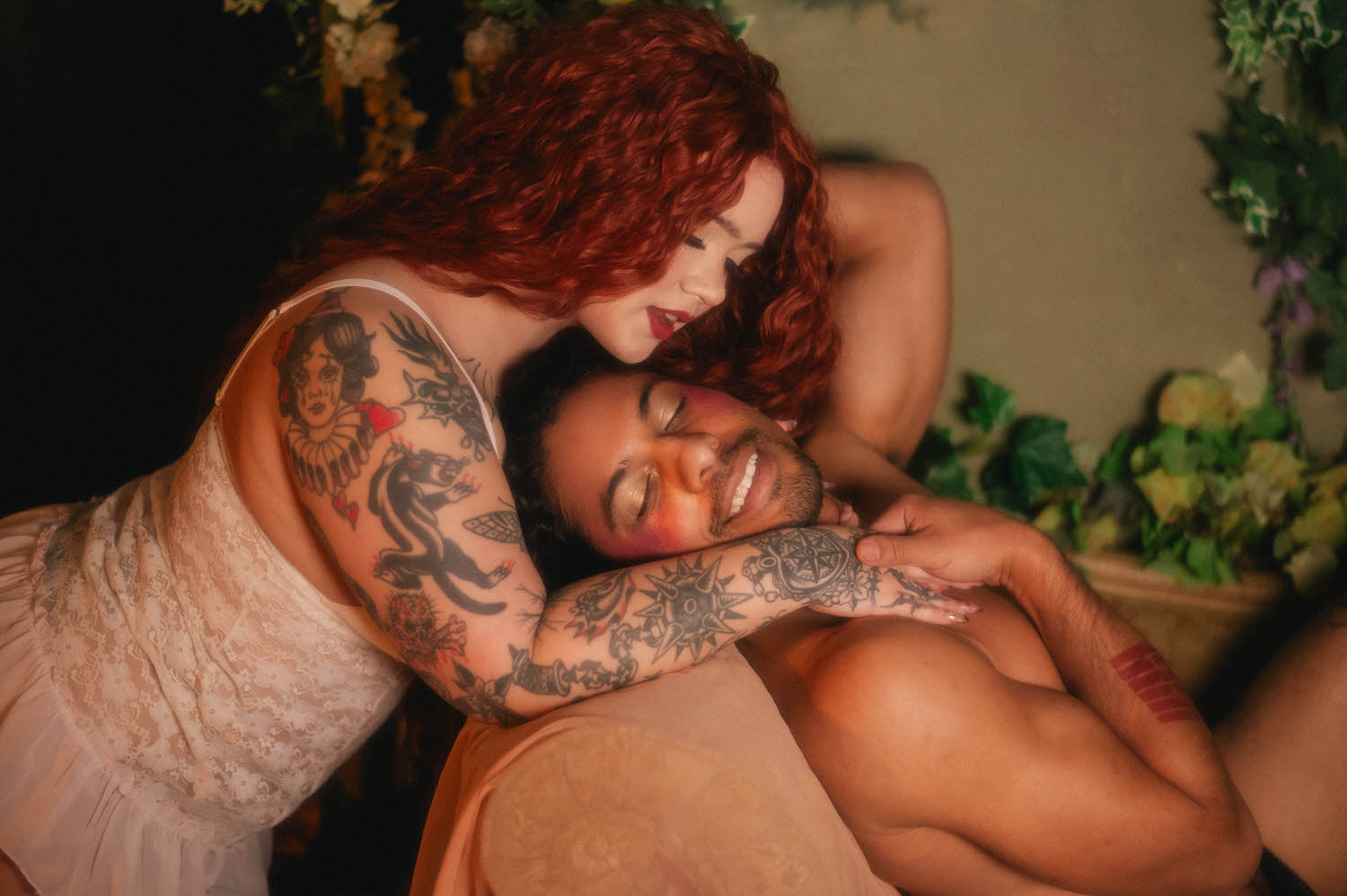
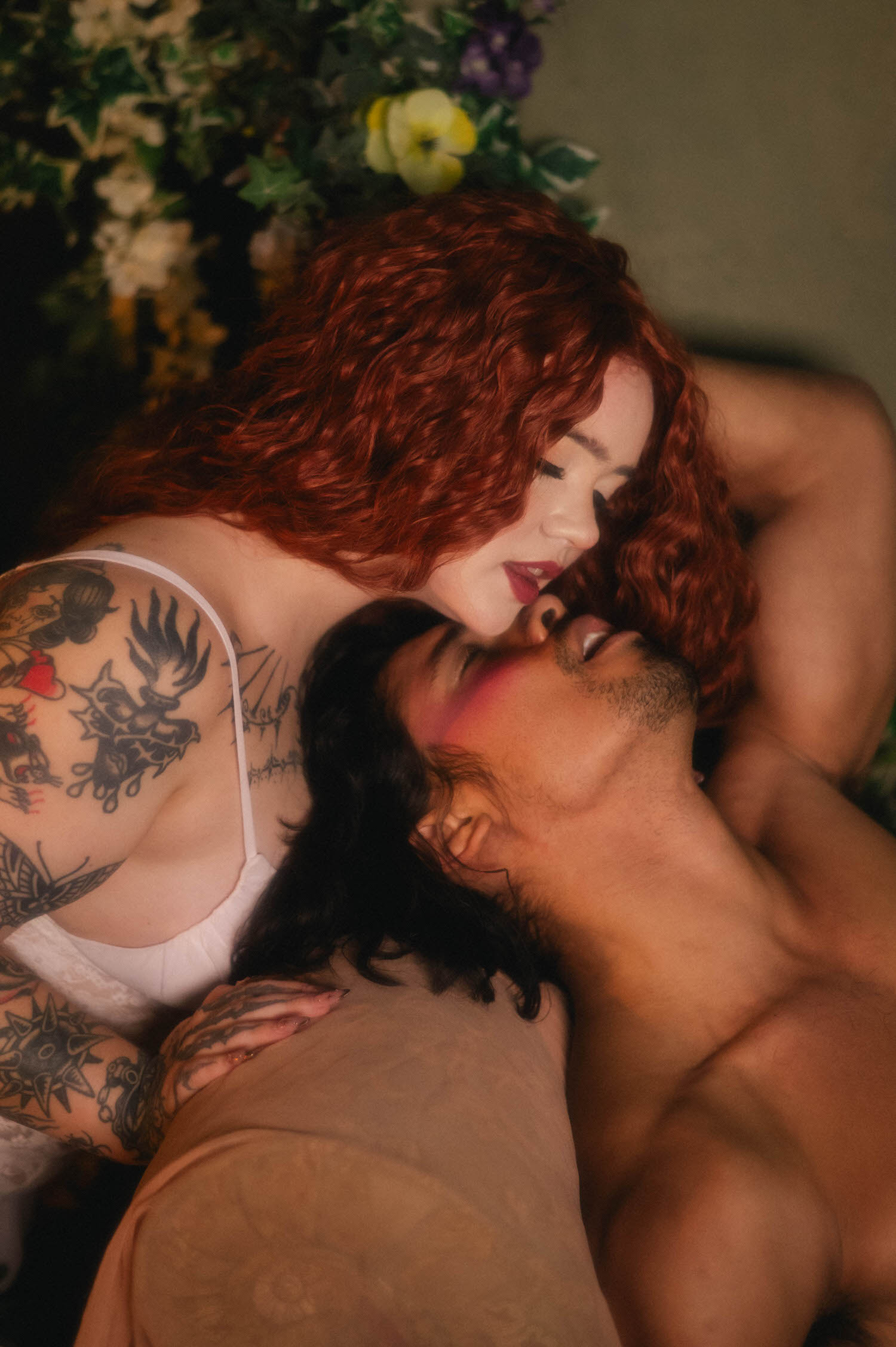
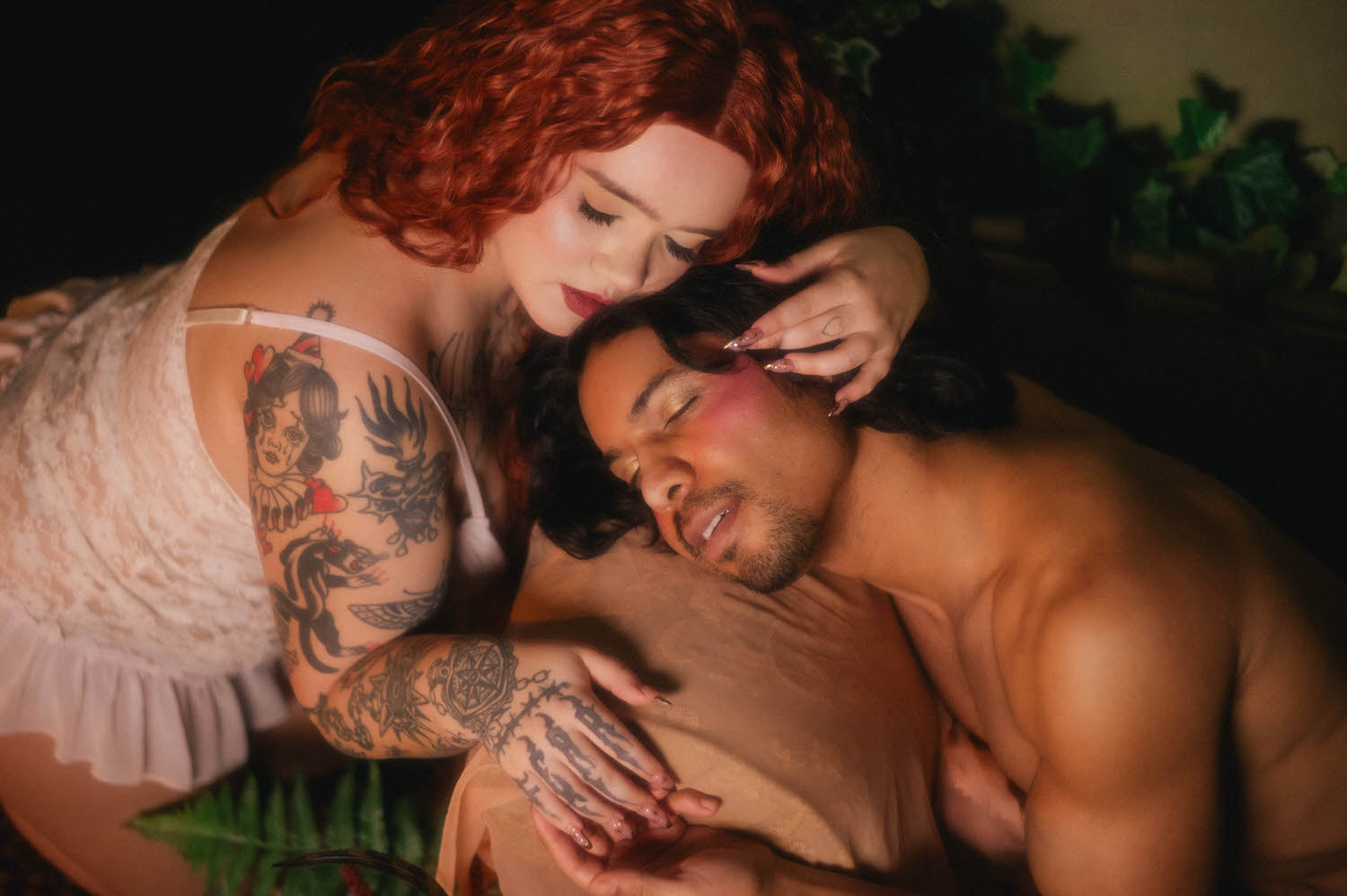
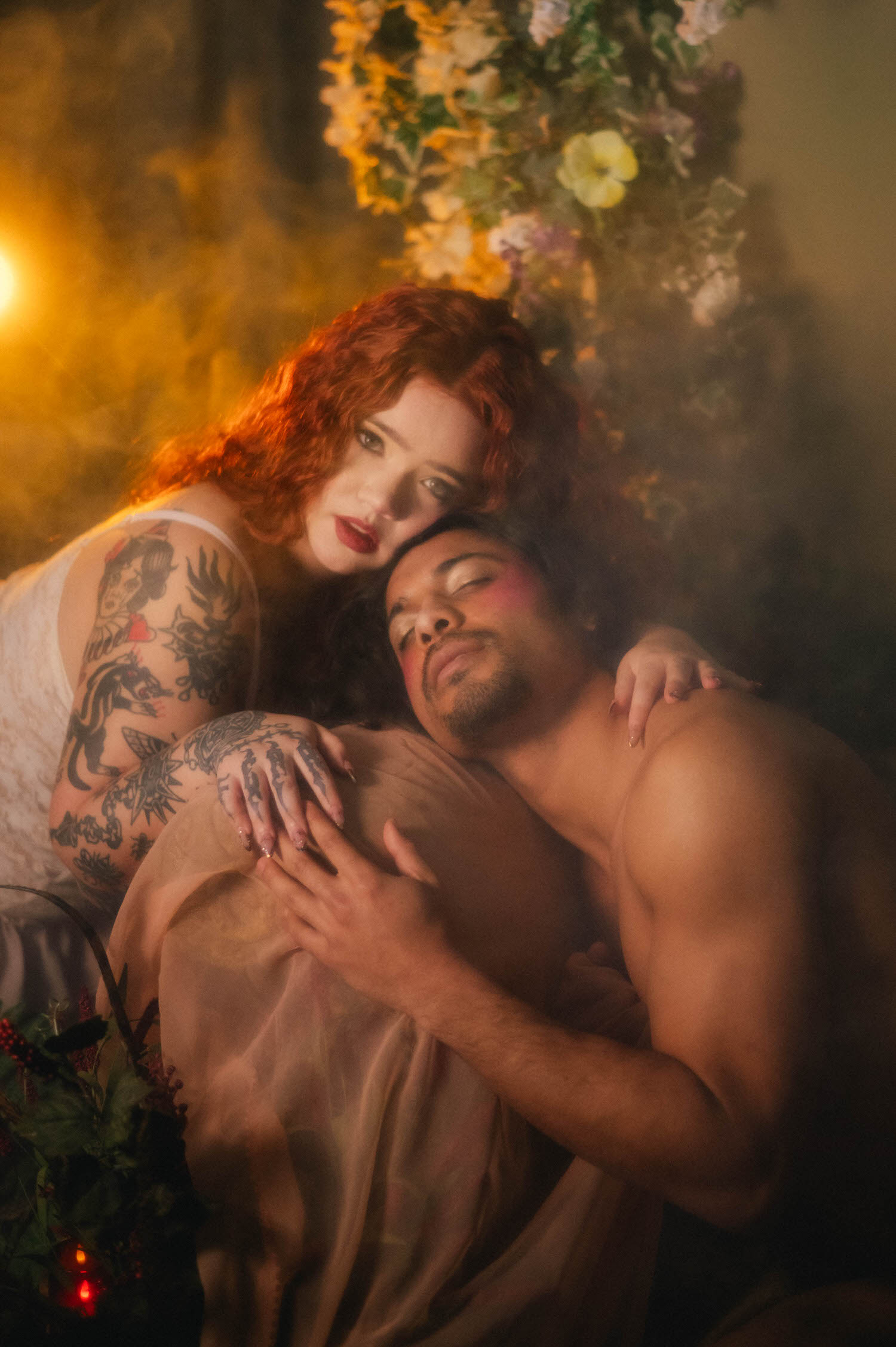
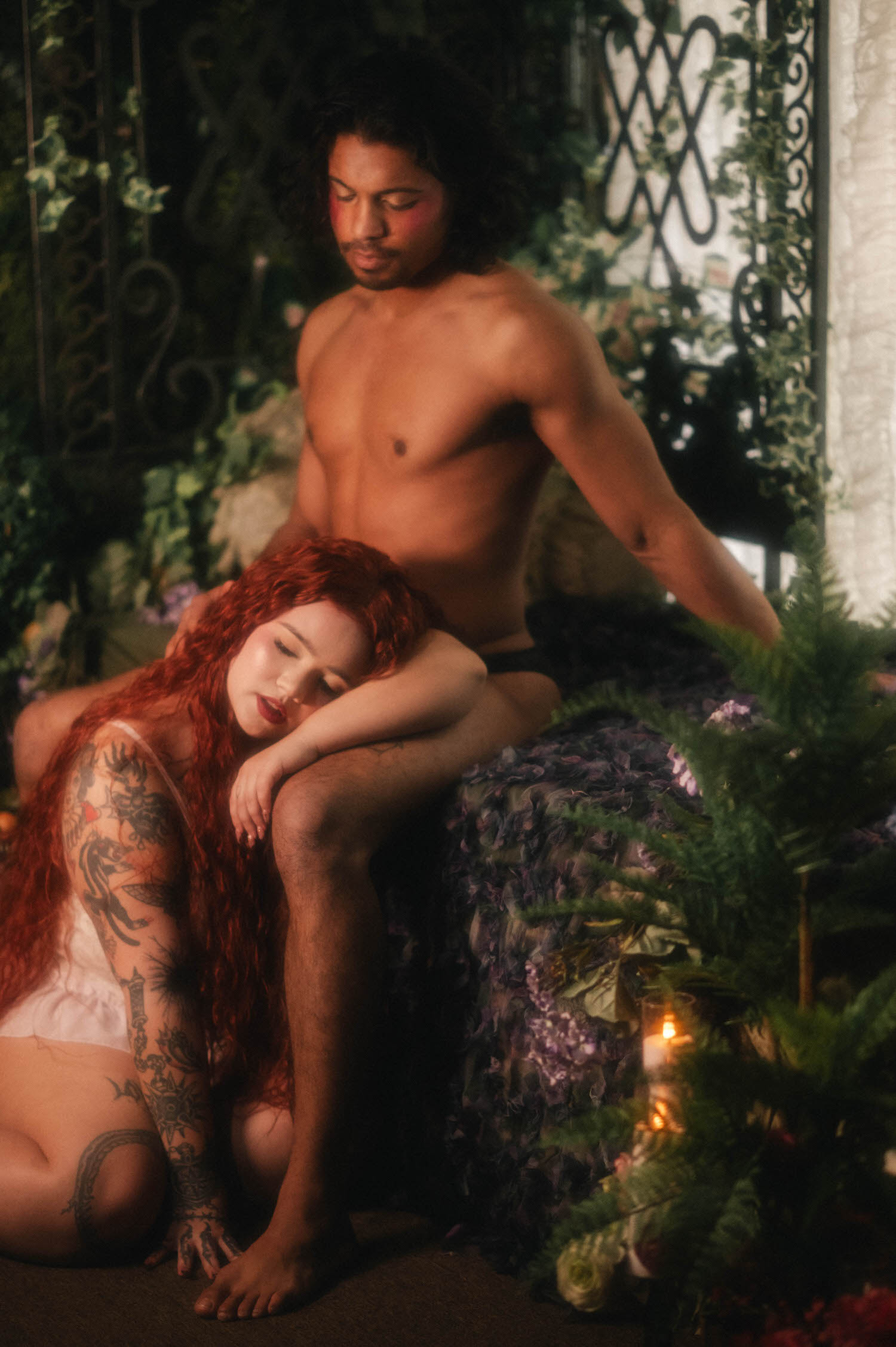
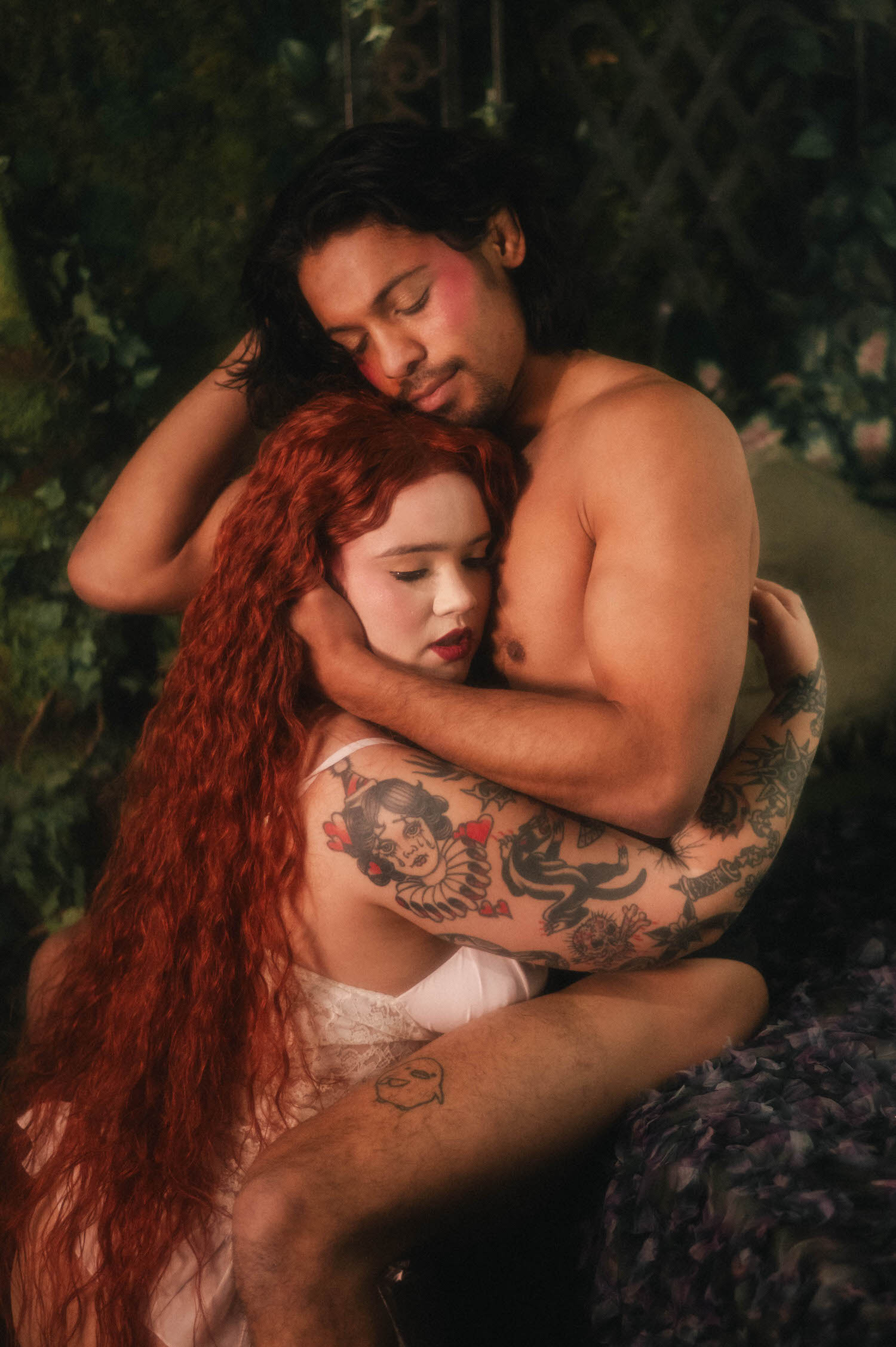
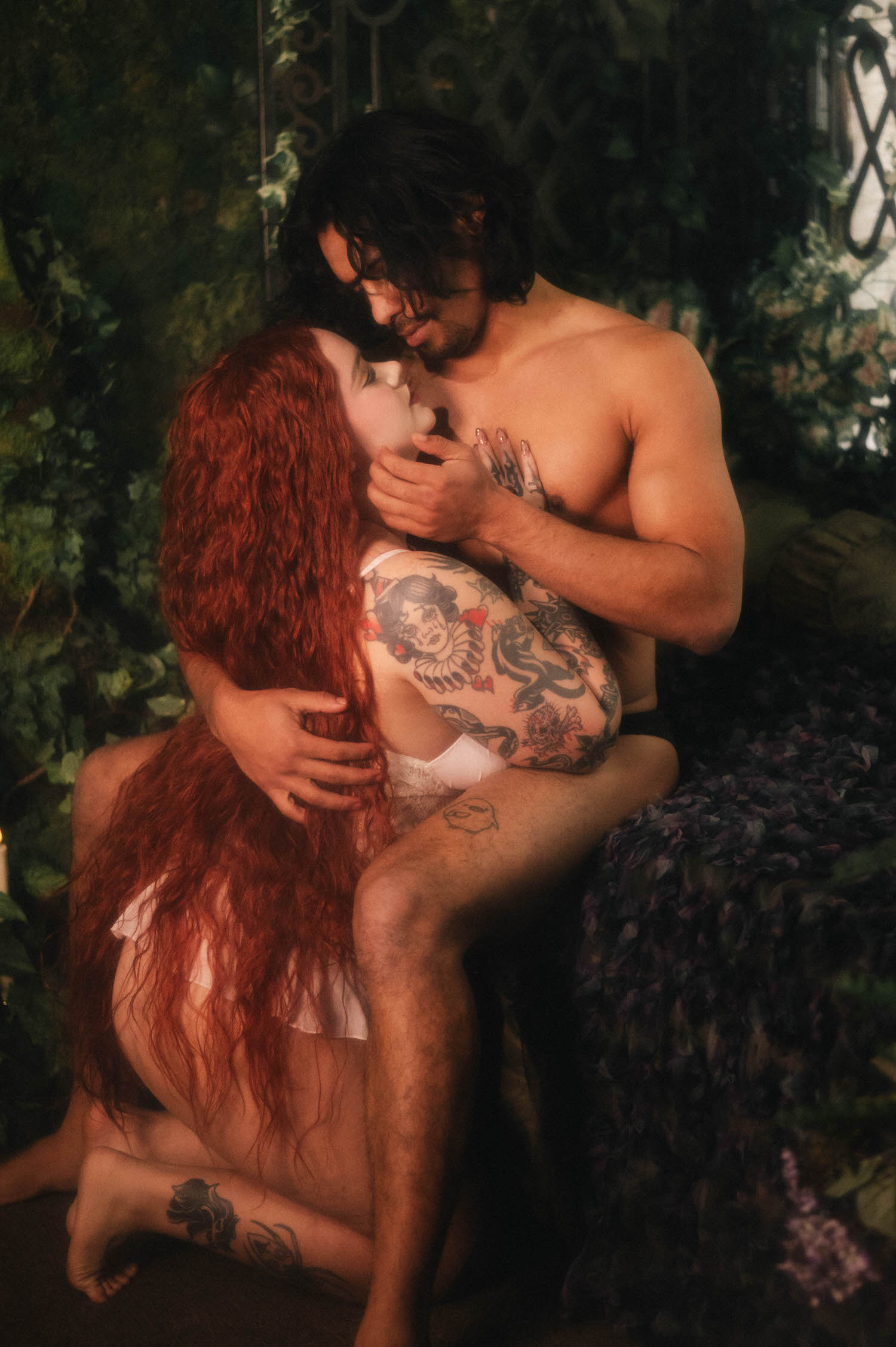
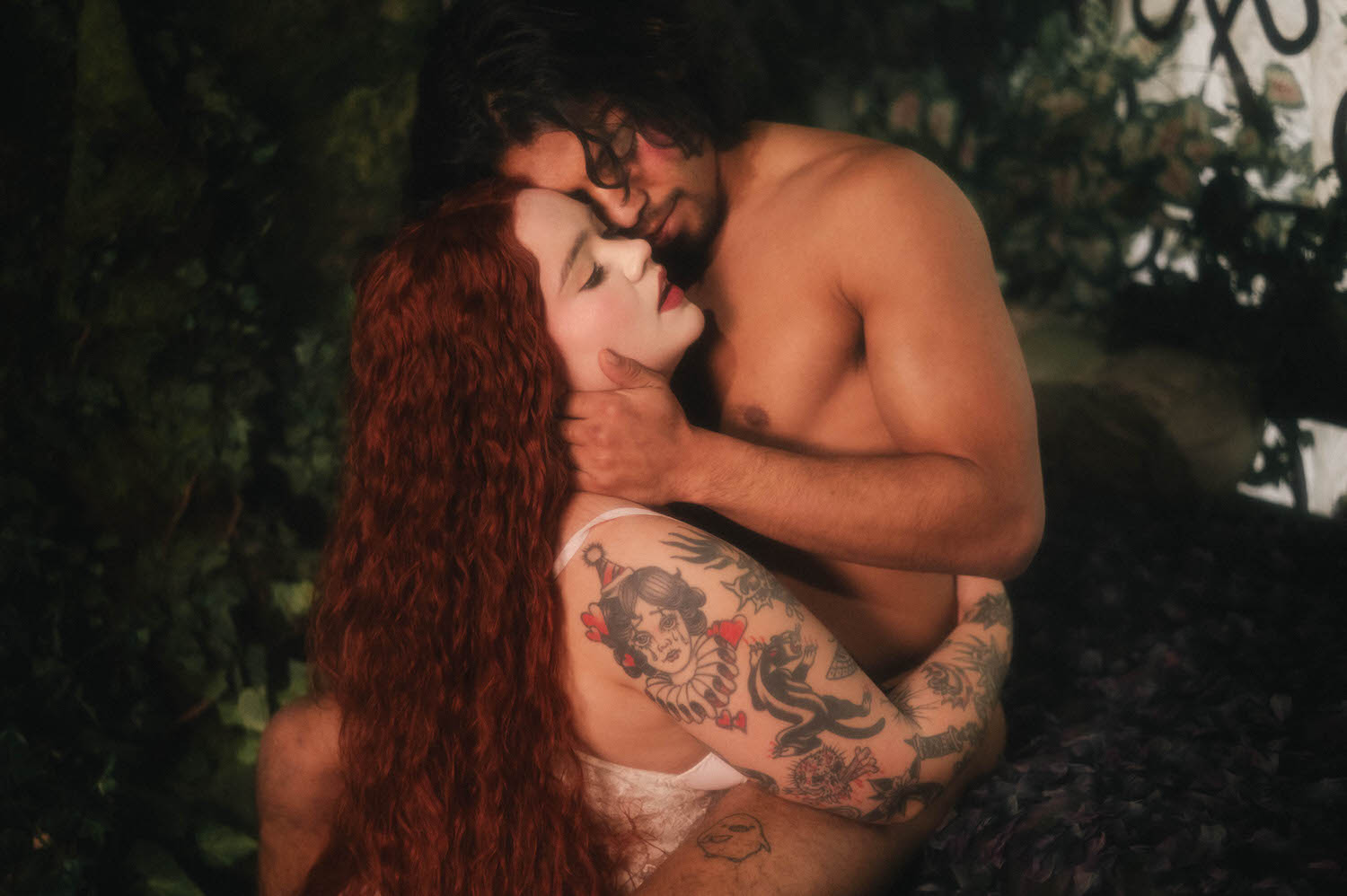
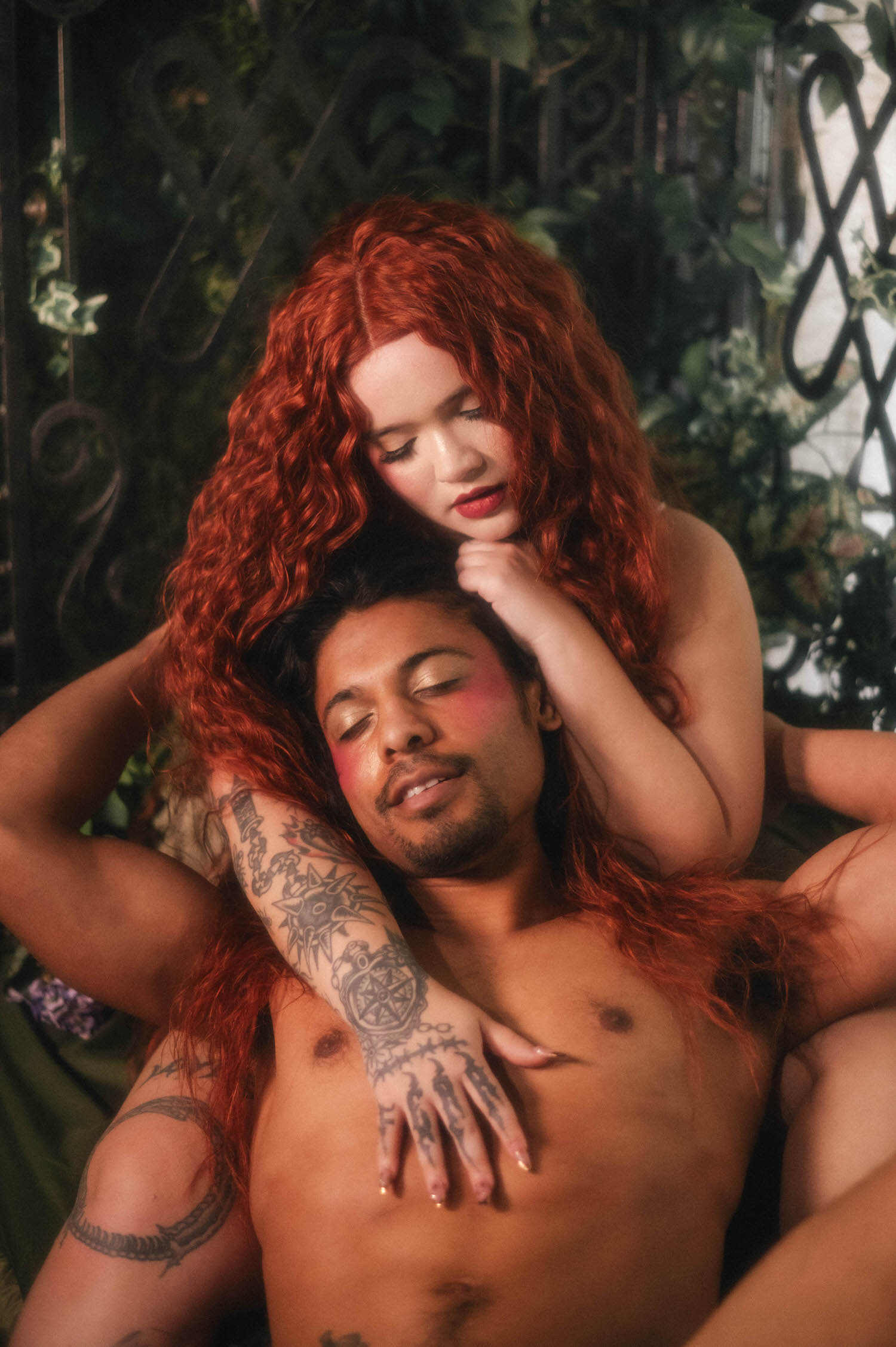
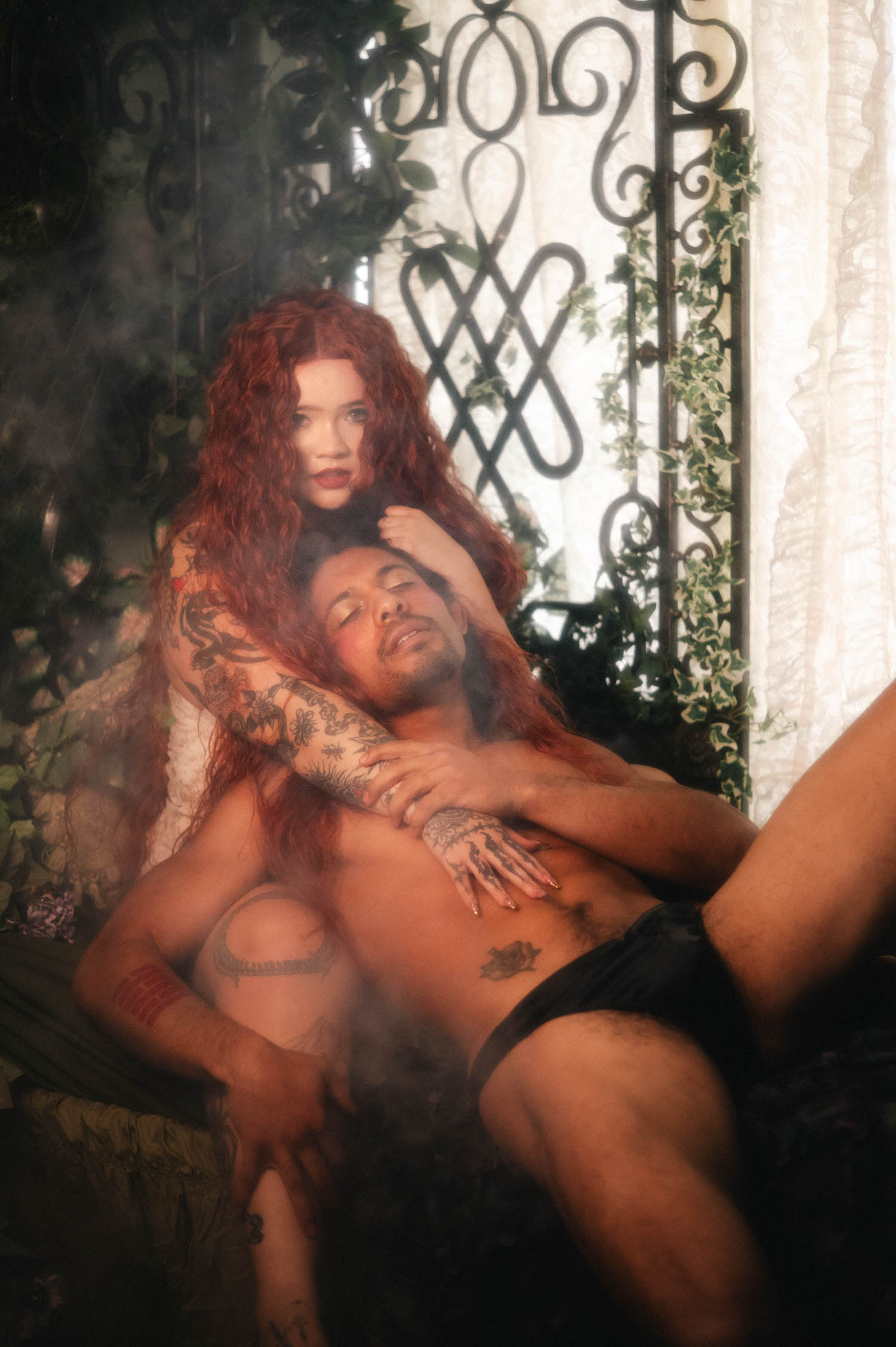
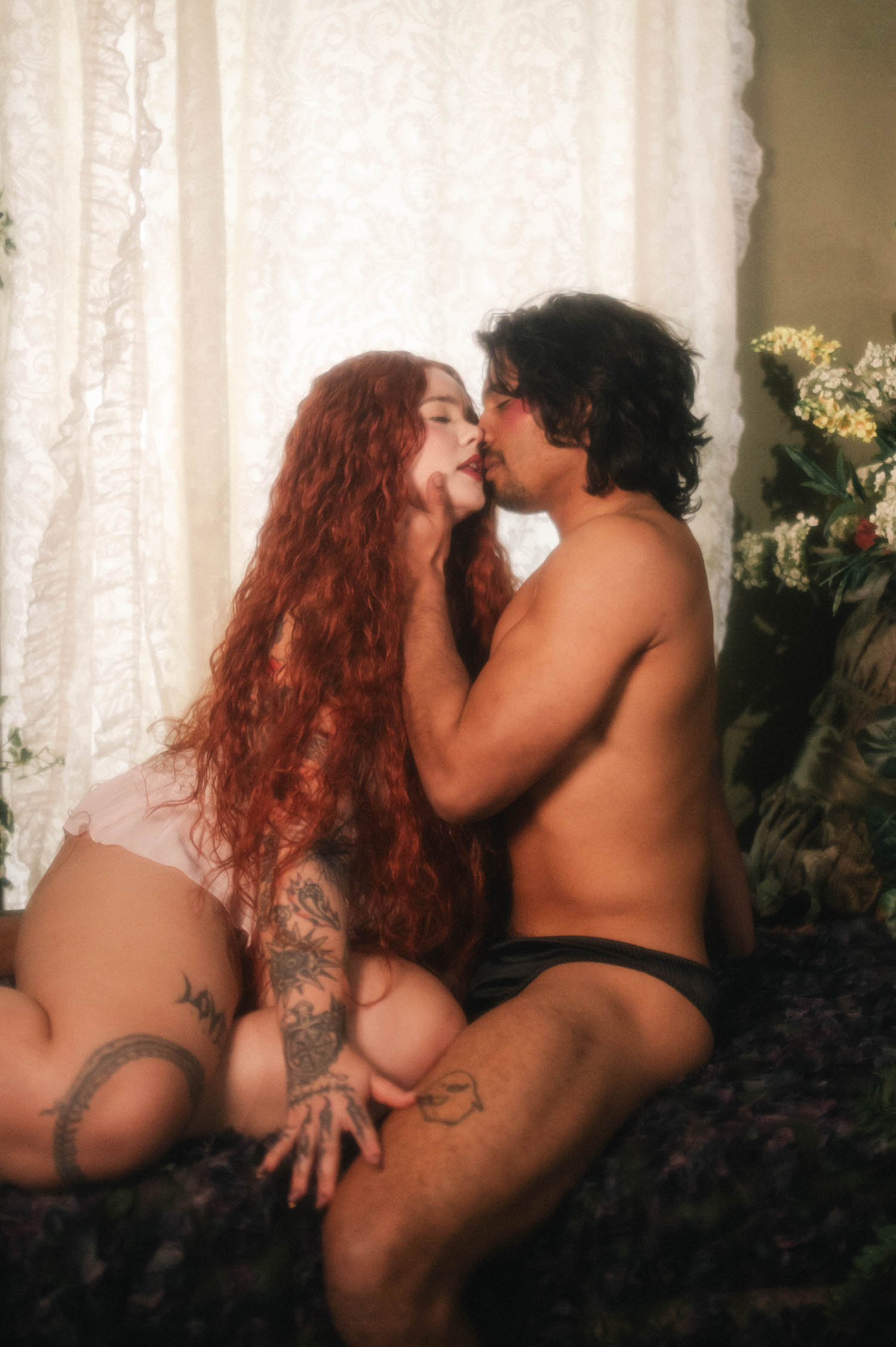
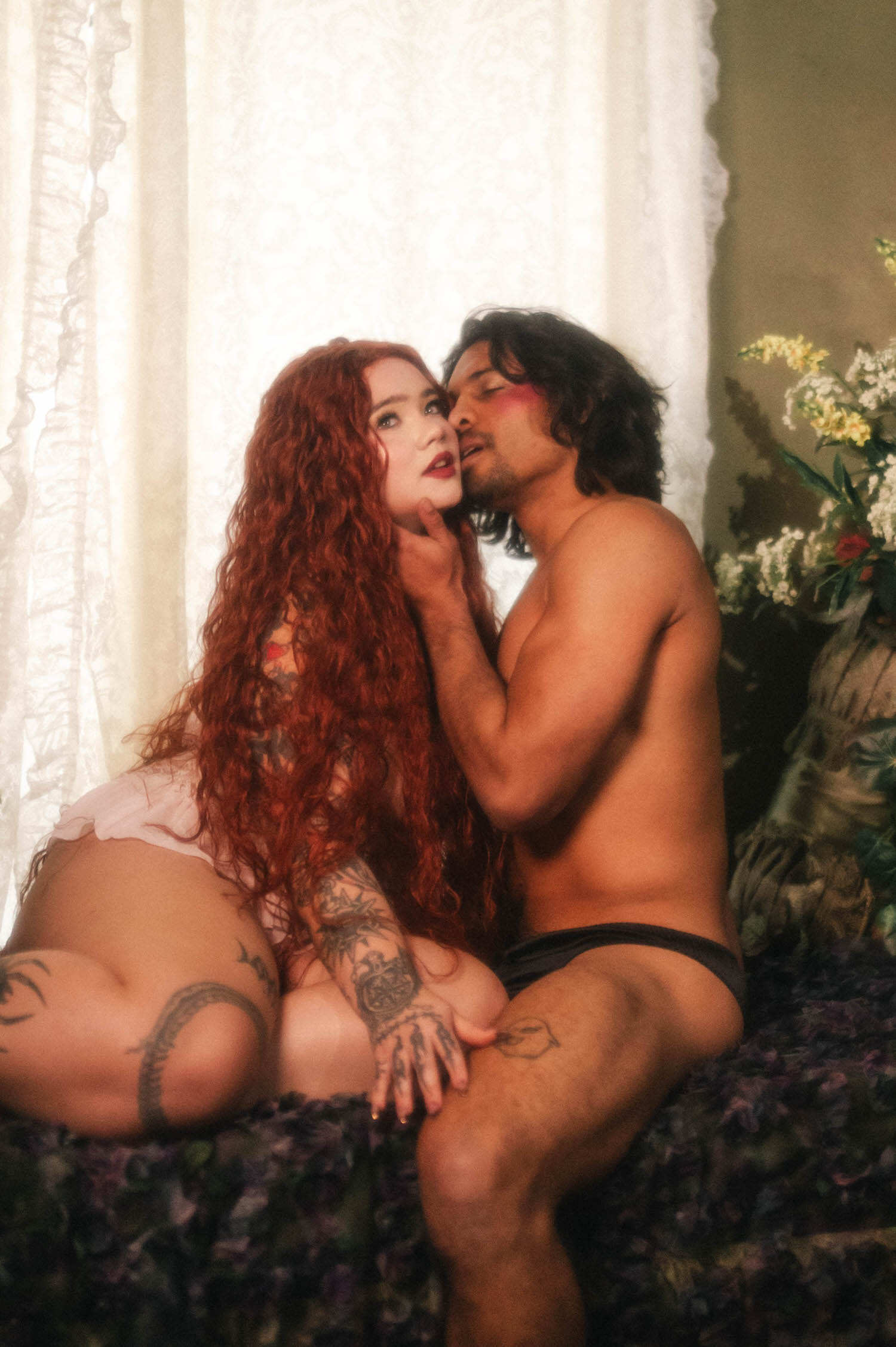
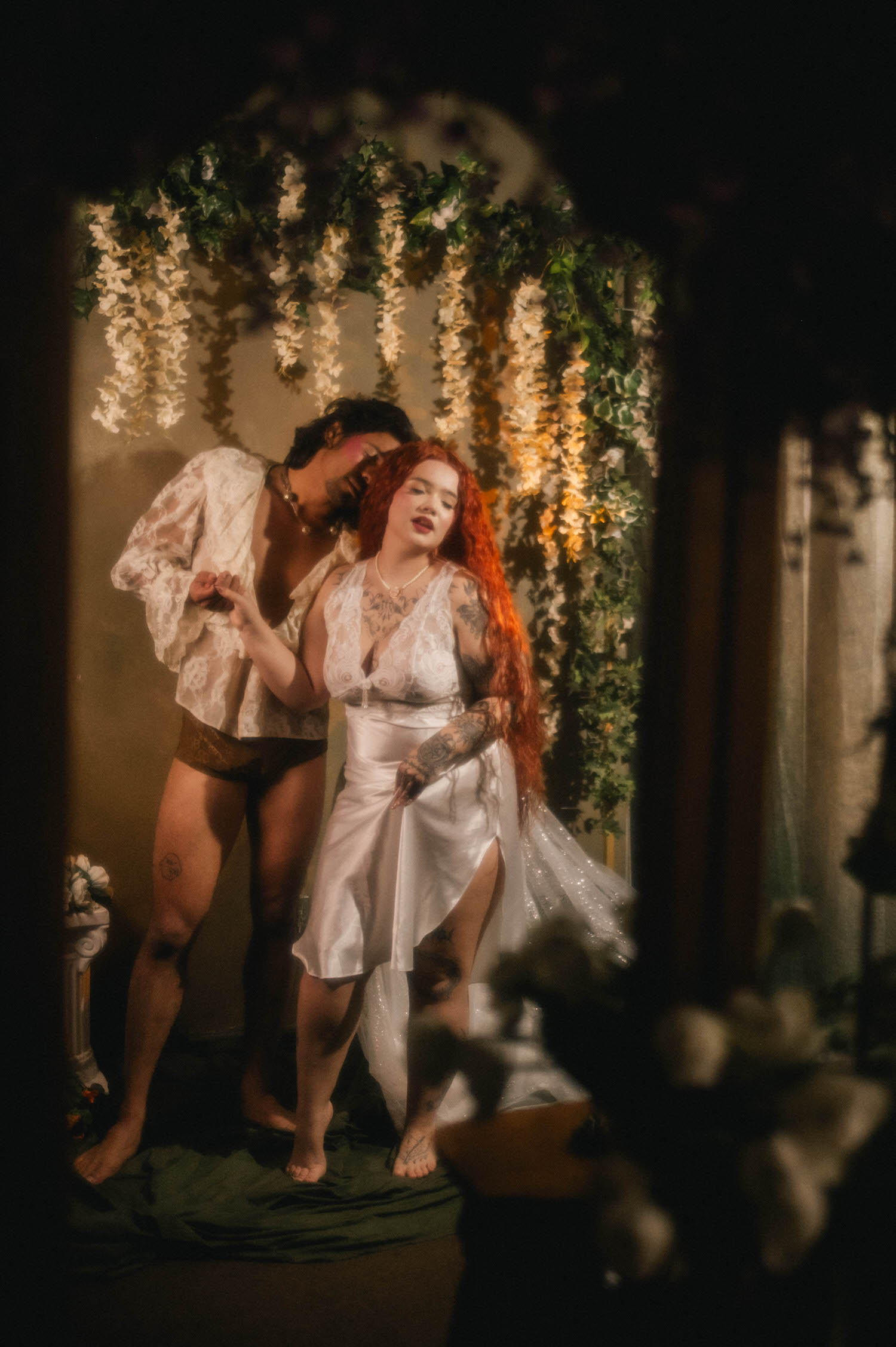
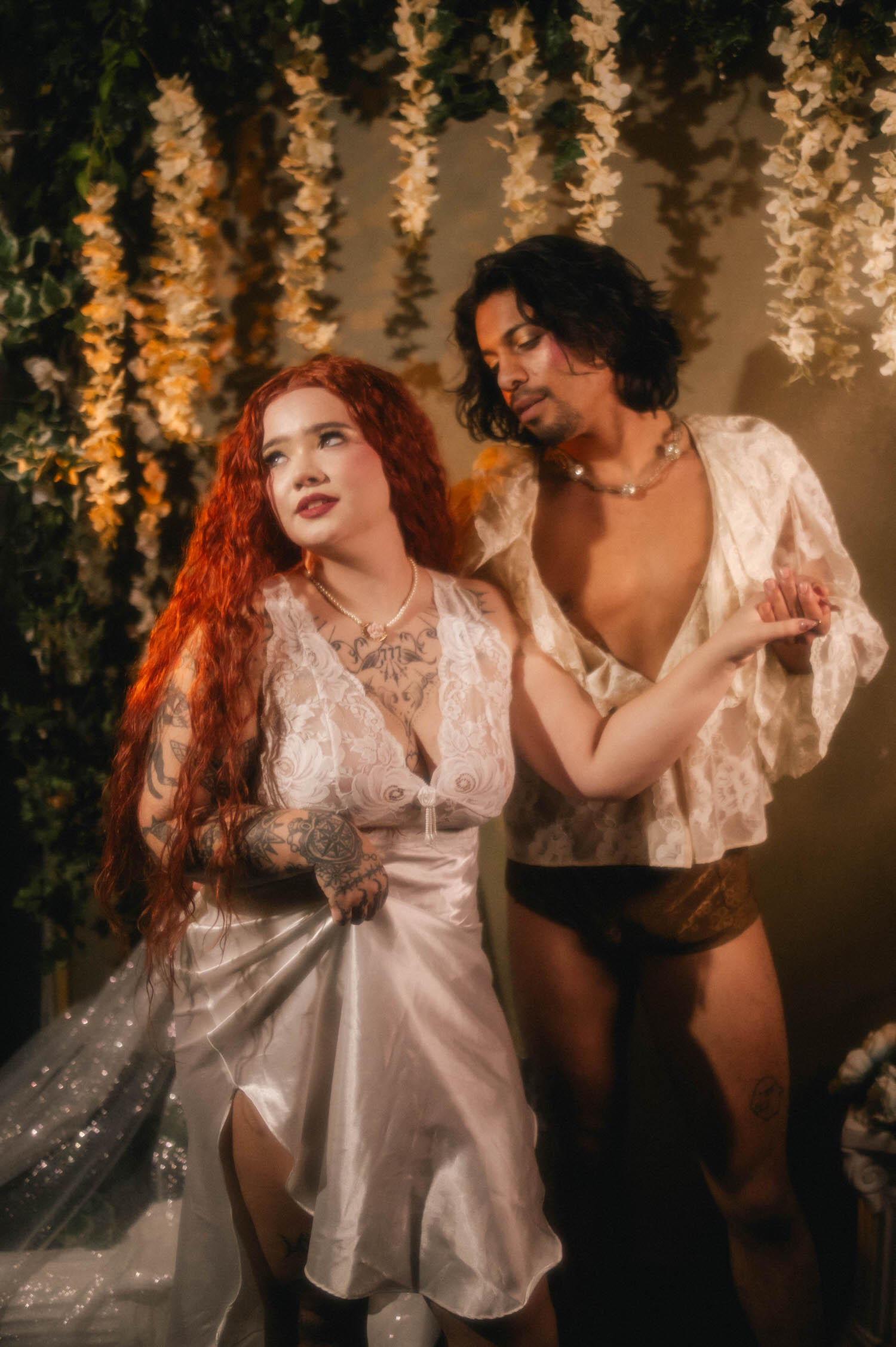
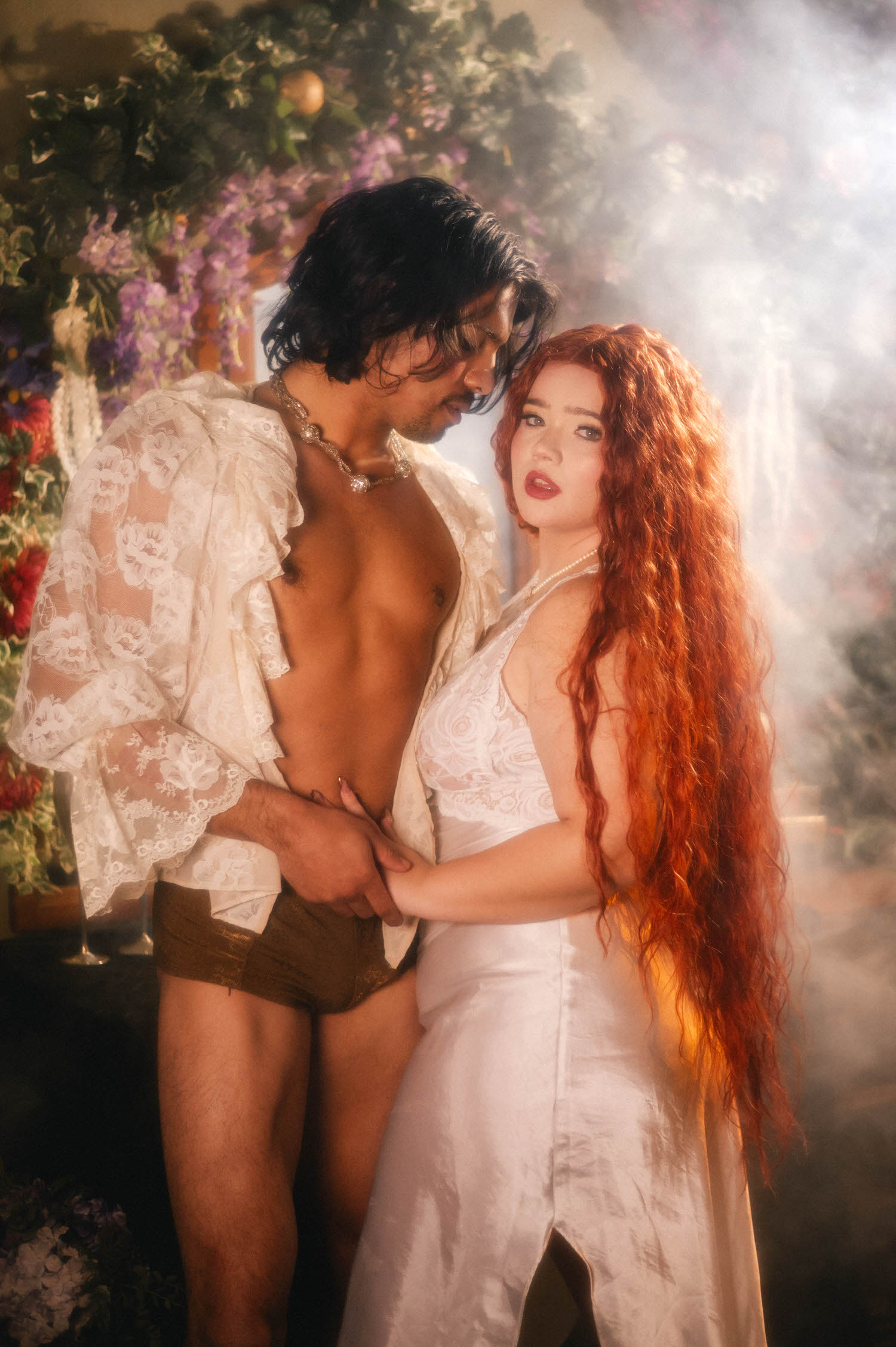
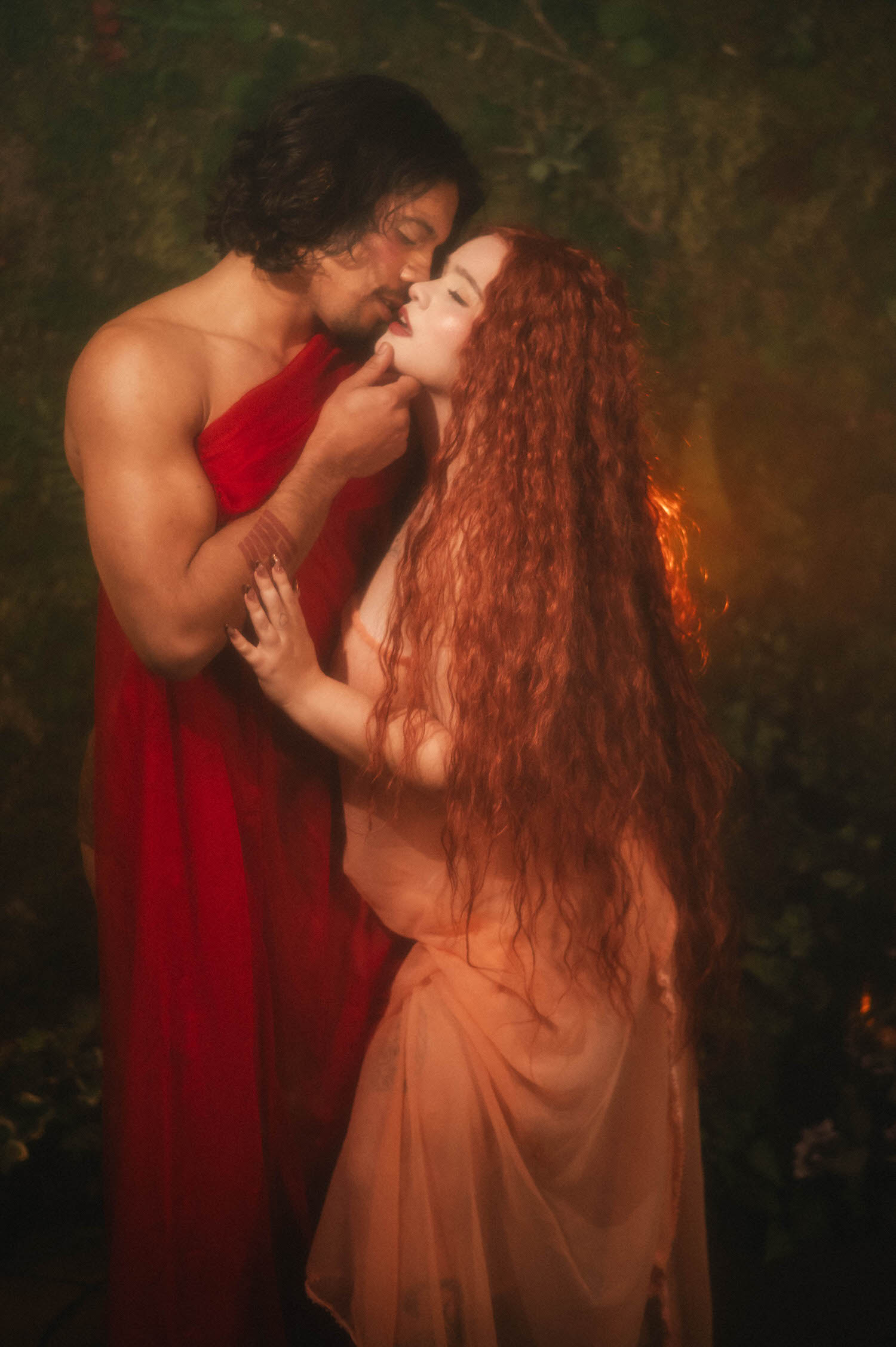
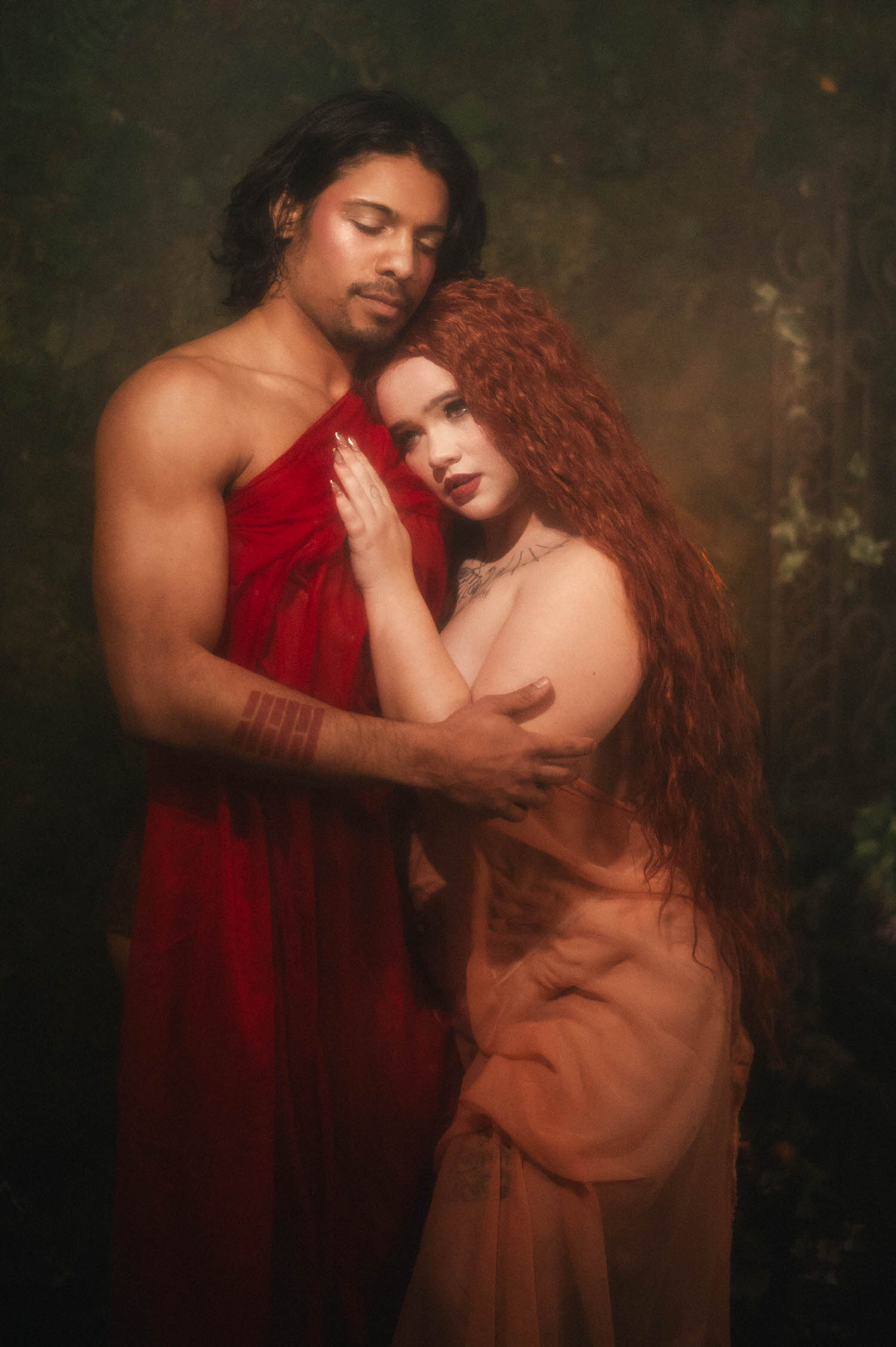
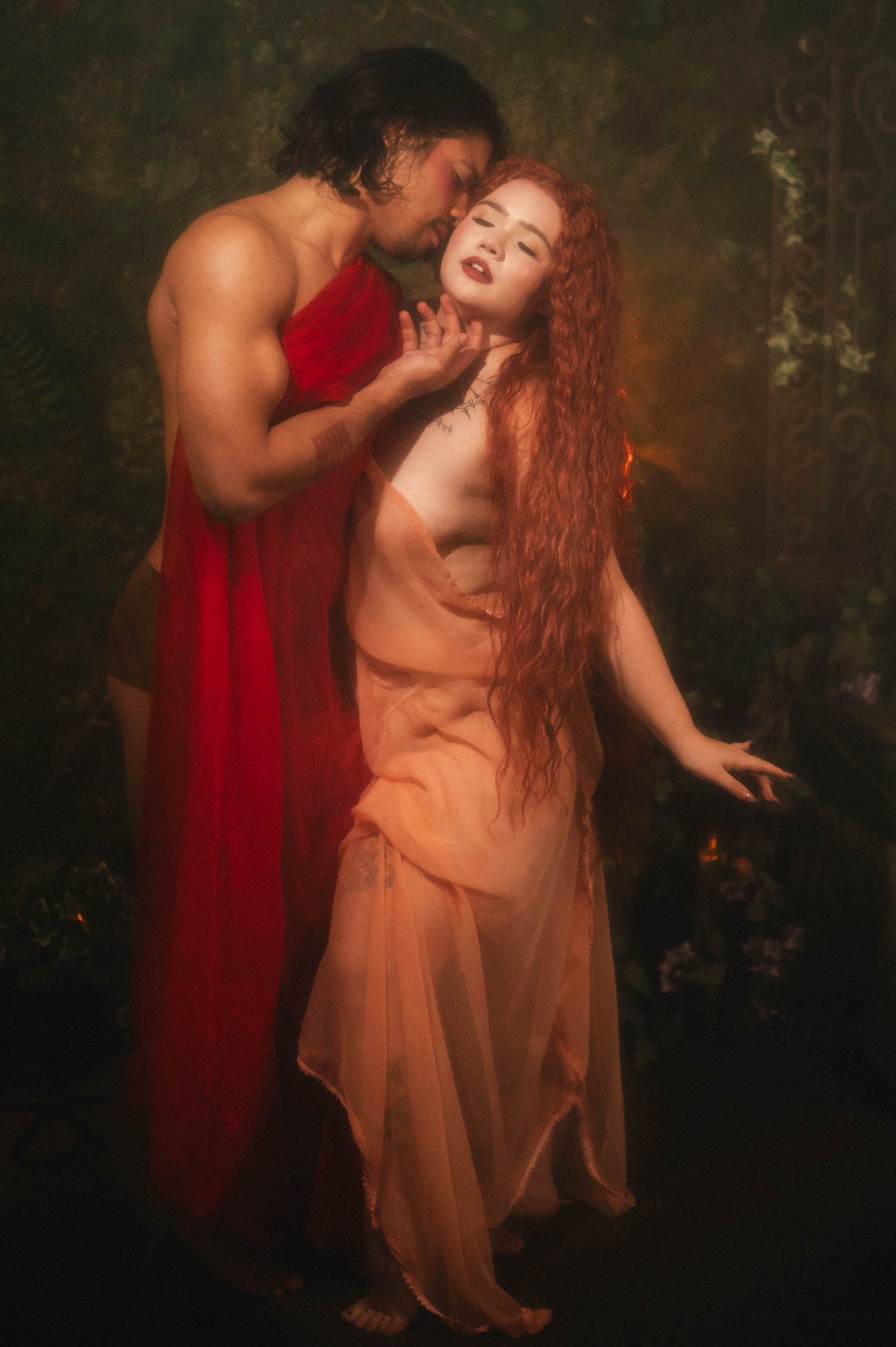
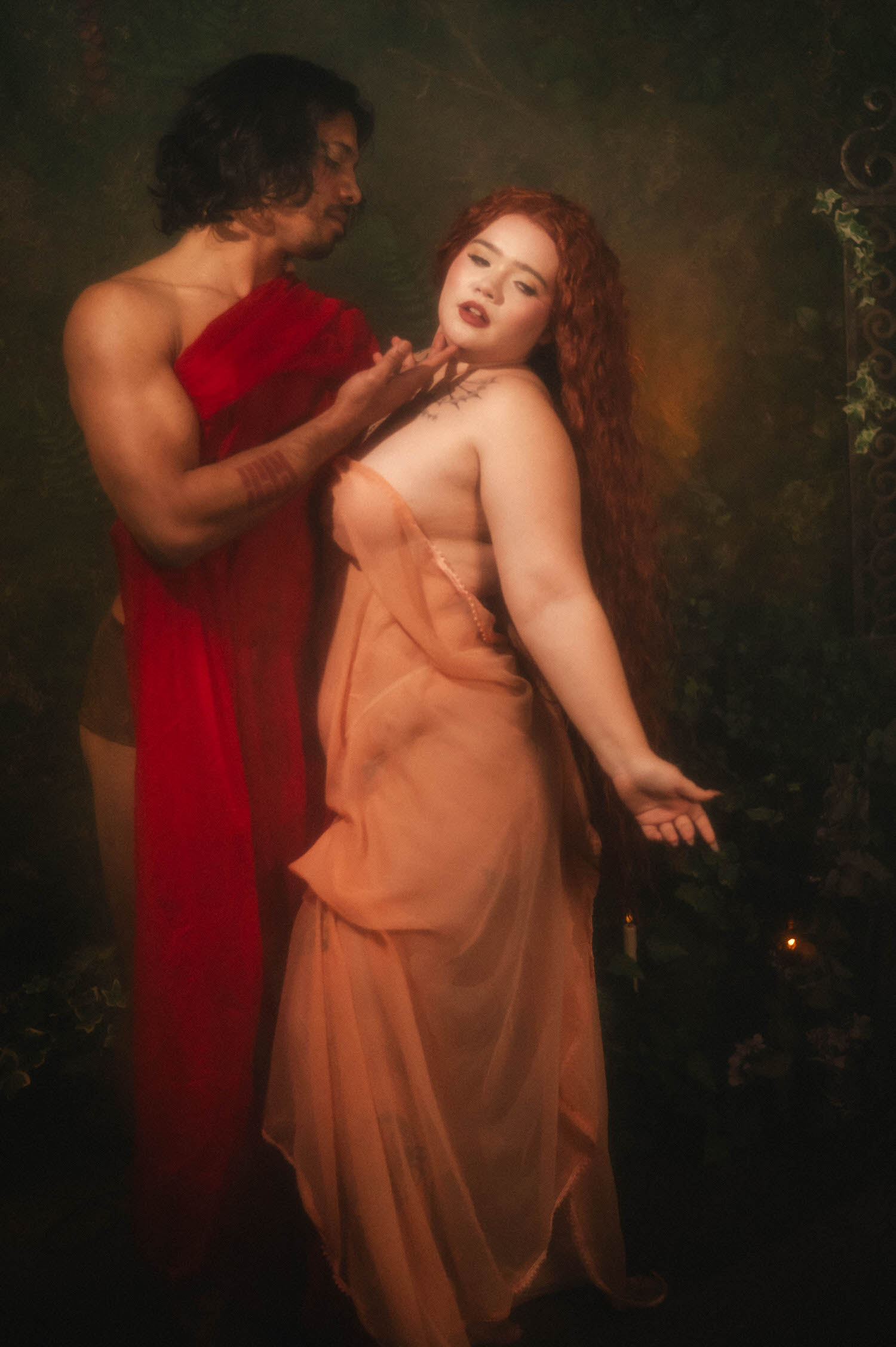
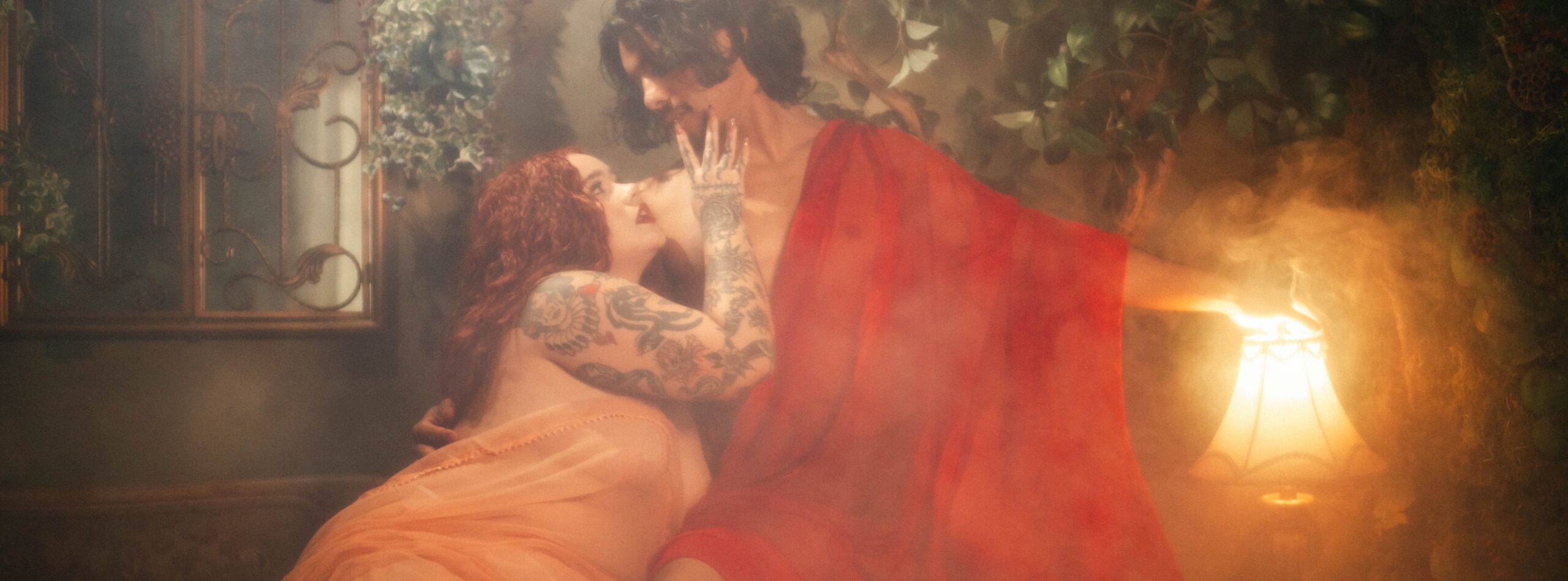
This Renaissance boudoir photoshoot features Chey and Finn, a real couple, across four looks inside my studio, with hair and makeup by Applications by Abby. I built the whole session around Renaissance and Pre Raphaelite art, not to recreate specific paintings, but to let two real people carry that same yearning and theatrical weight into their own poses.
What is a Renaissance Boudoir Photoshoot?
A Renaissance boudoir photoshoot borrows its posing, expression, and styling from Renaissance and Pre Raphaelite art without recreating a specific painting frame for frame. The goal is creating a mood, not copying a specific painting or image. Instead of matching a subject’s pose to a specific painting, I pull the emotional register those paintings live in (longing, theatrical expressions, props, etc.) and let a real couple move through it in a way that’s specific to them.
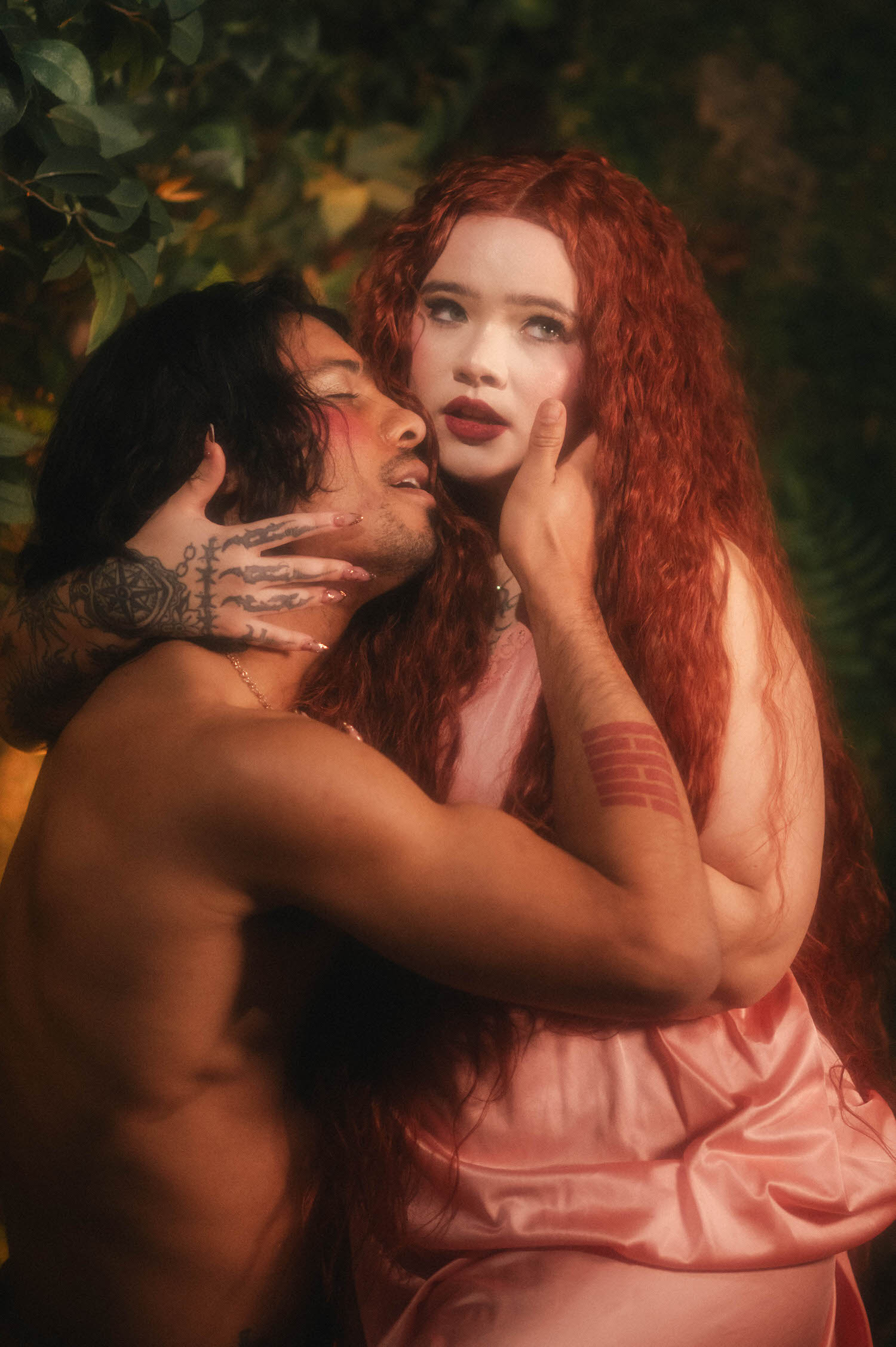
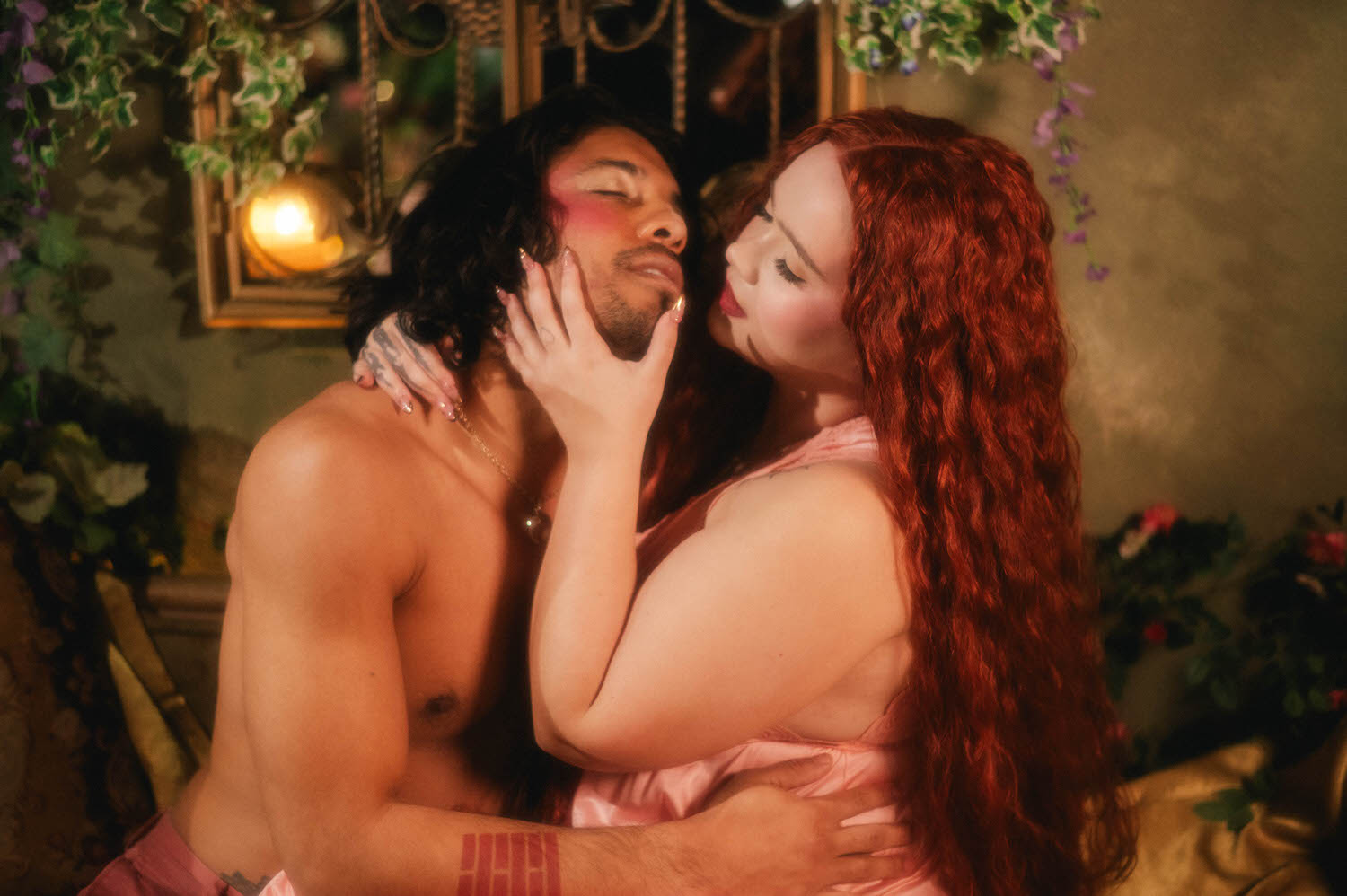
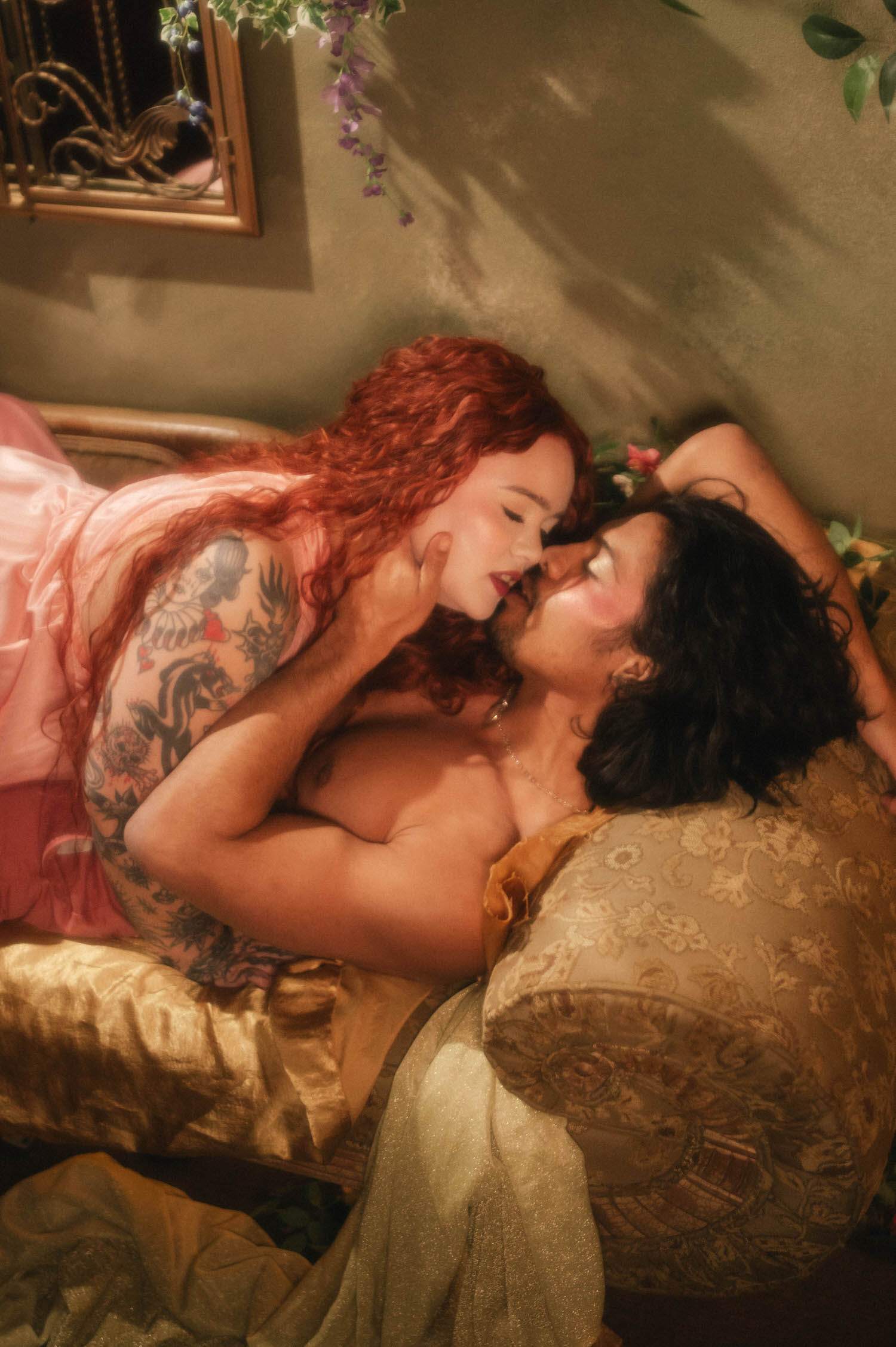
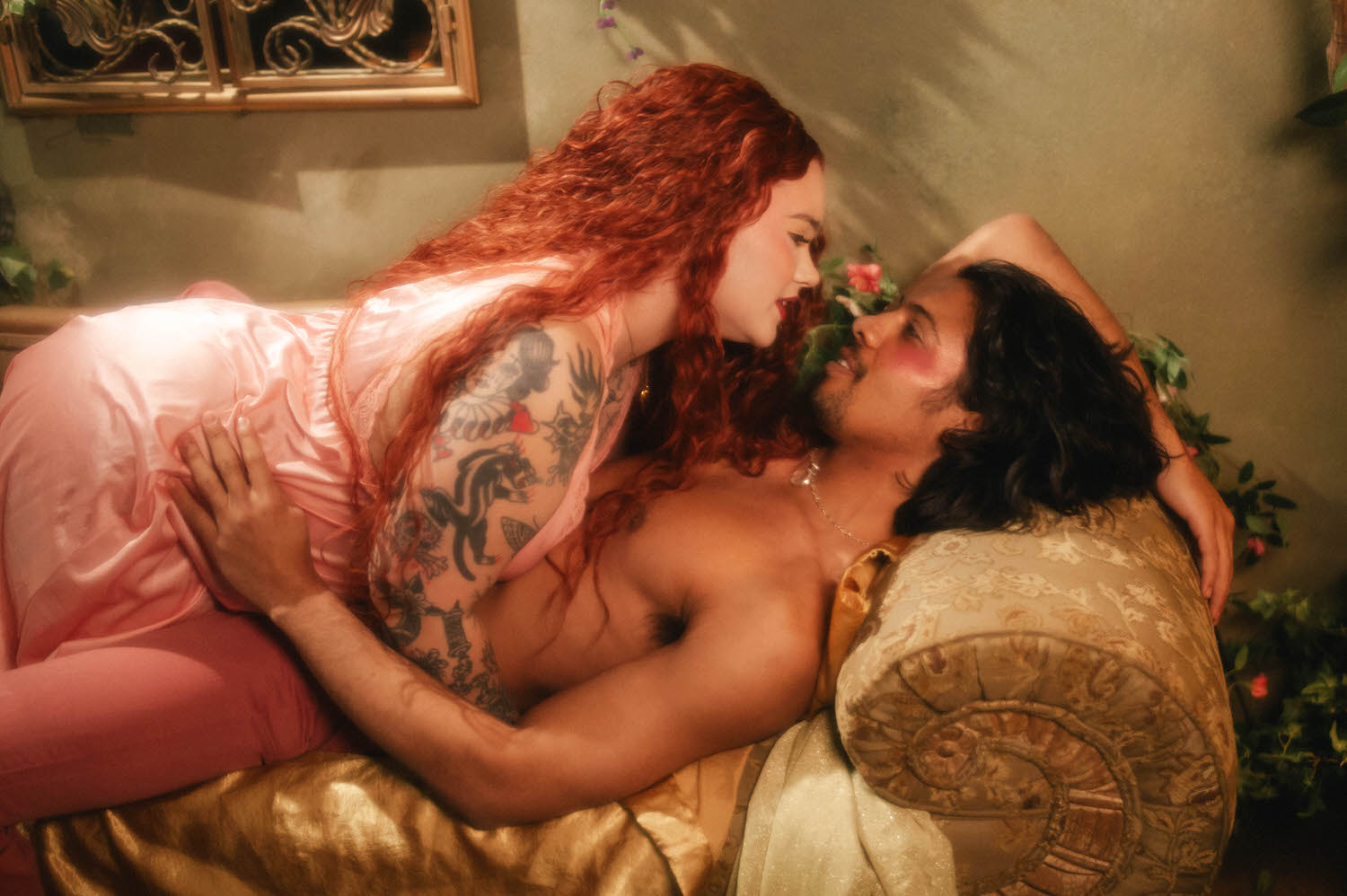
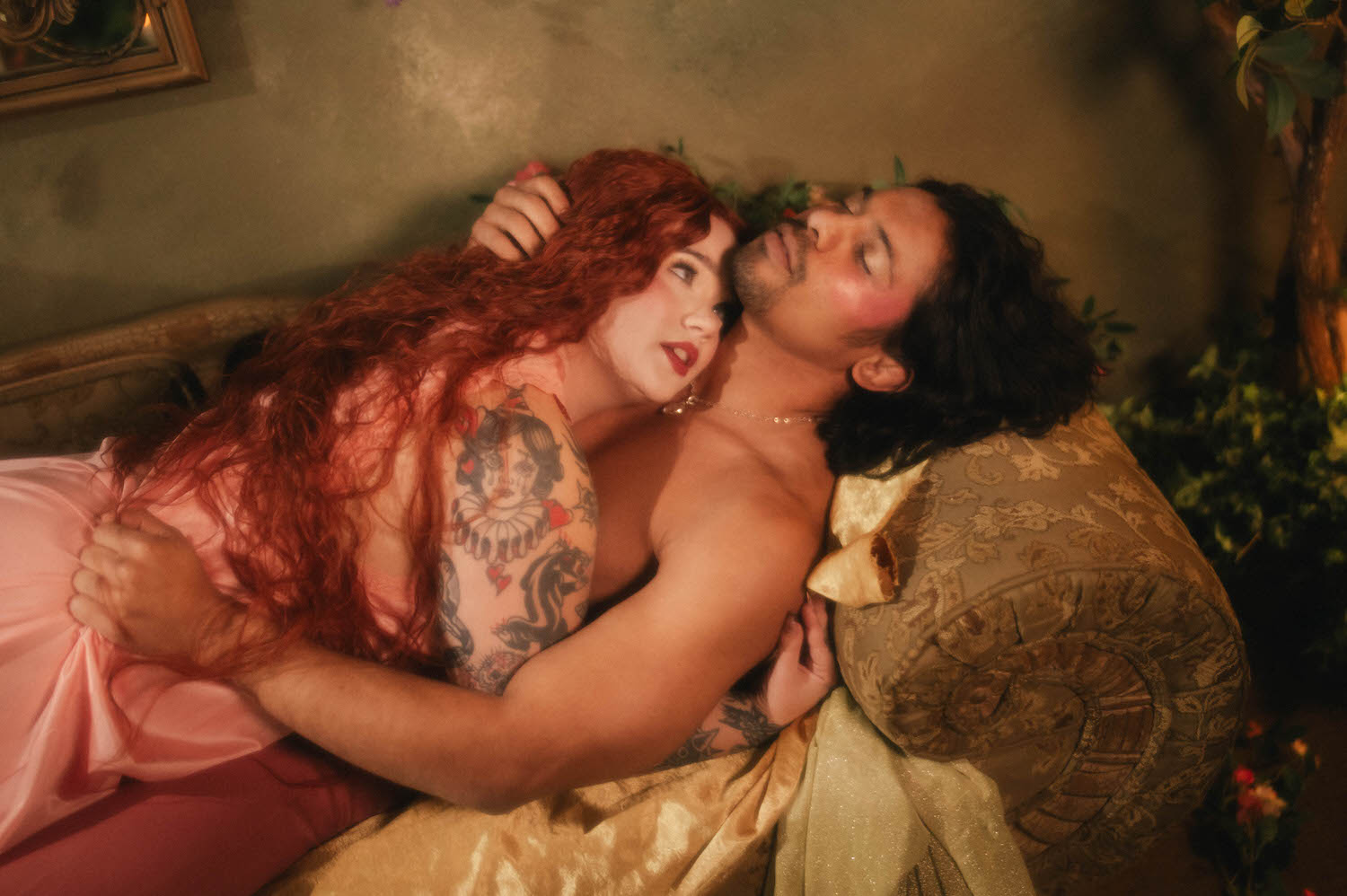
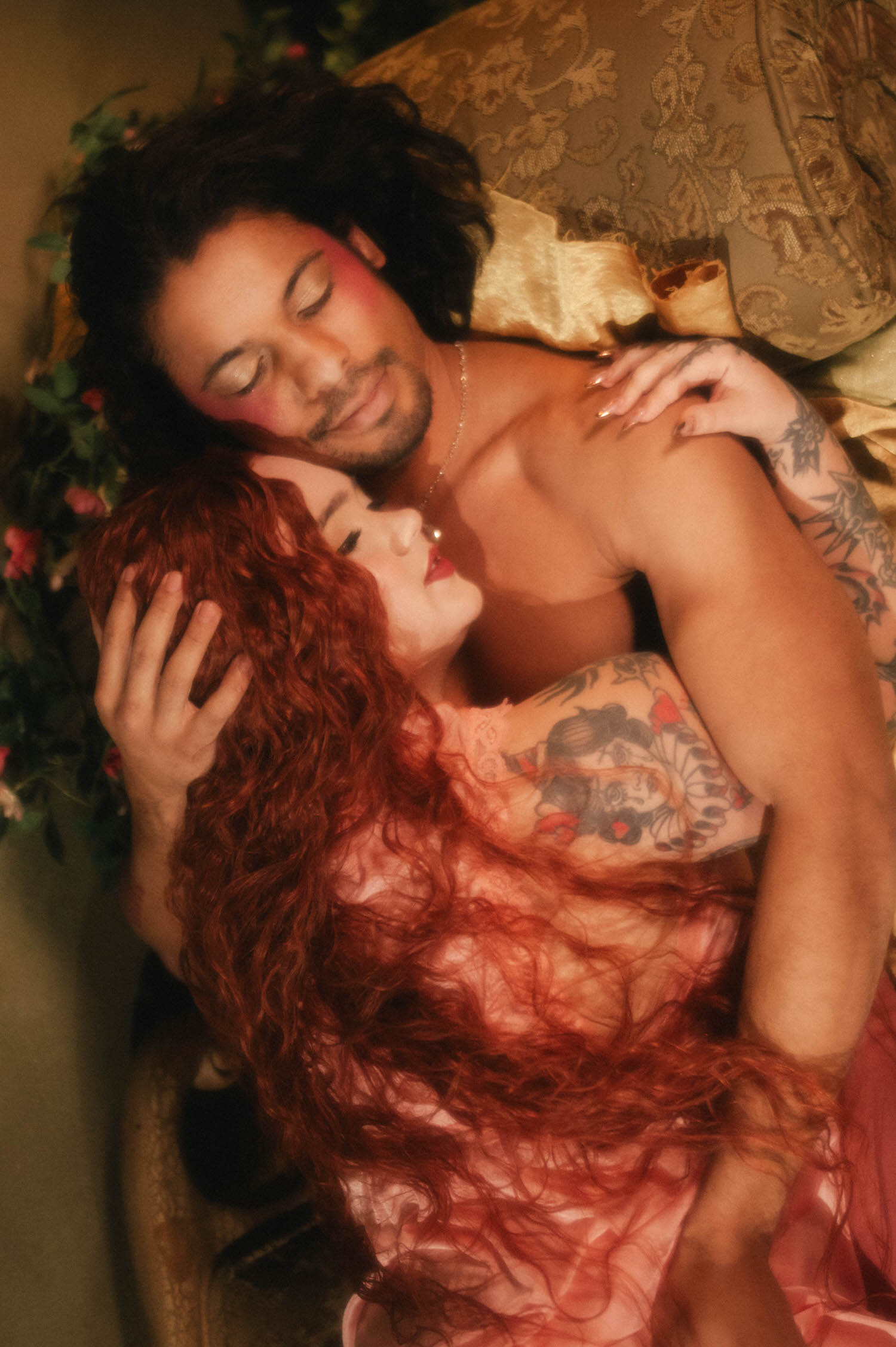
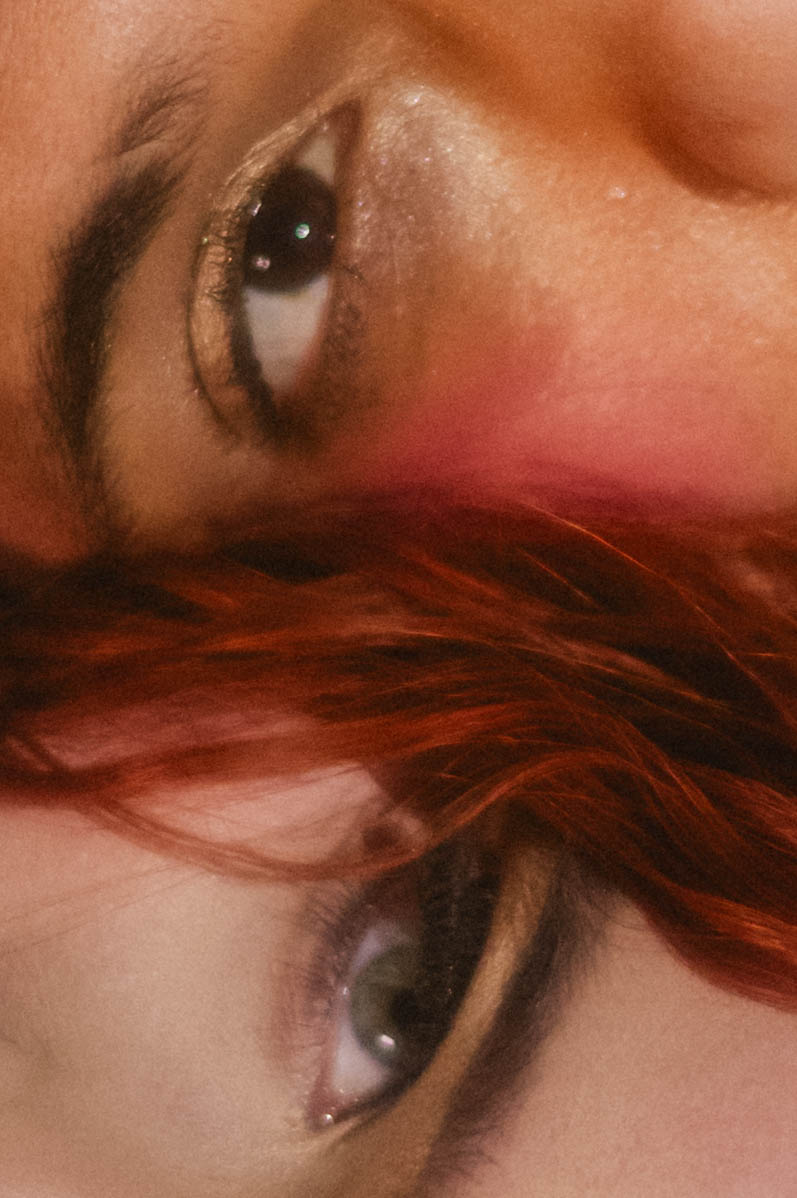
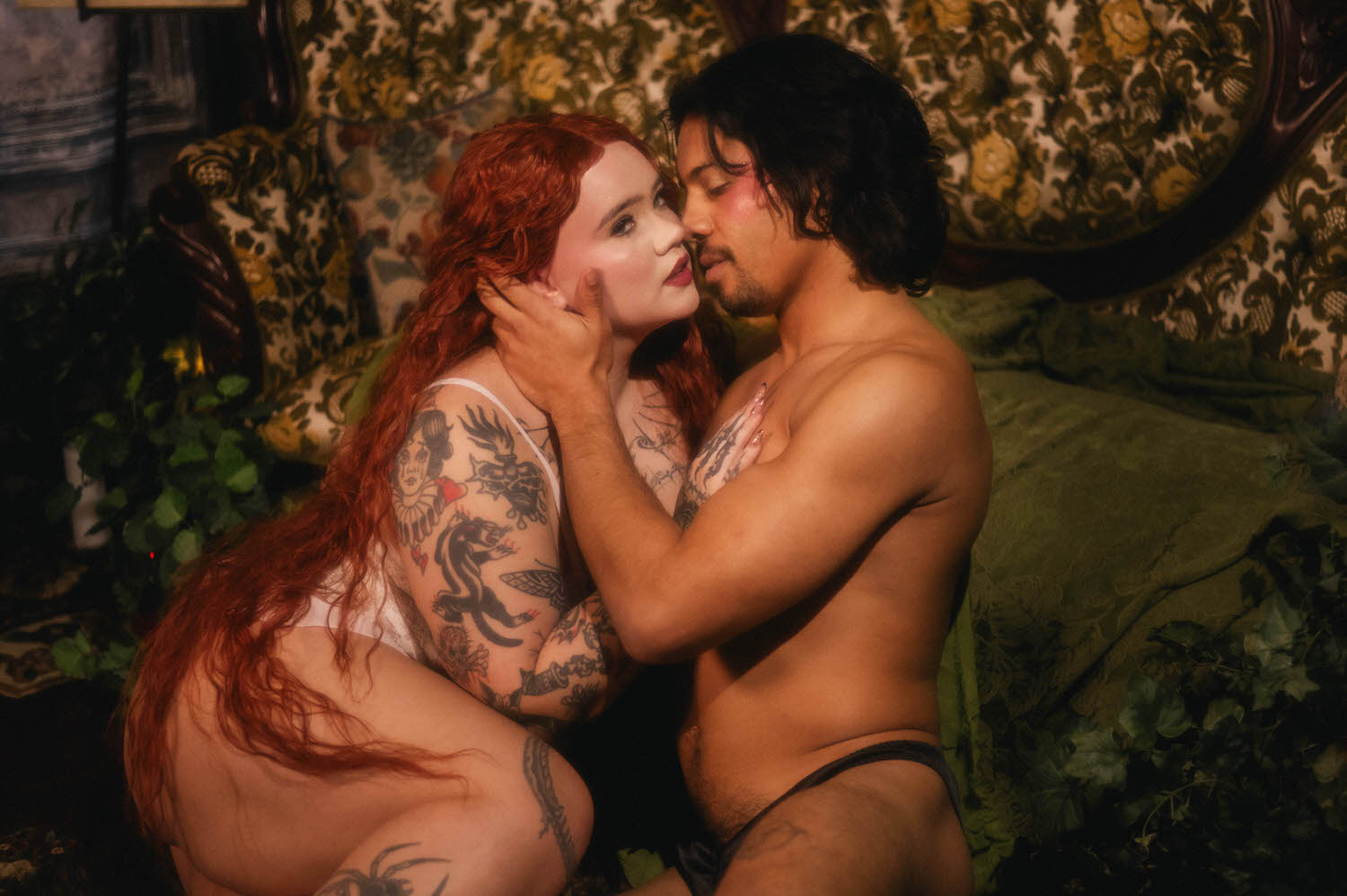
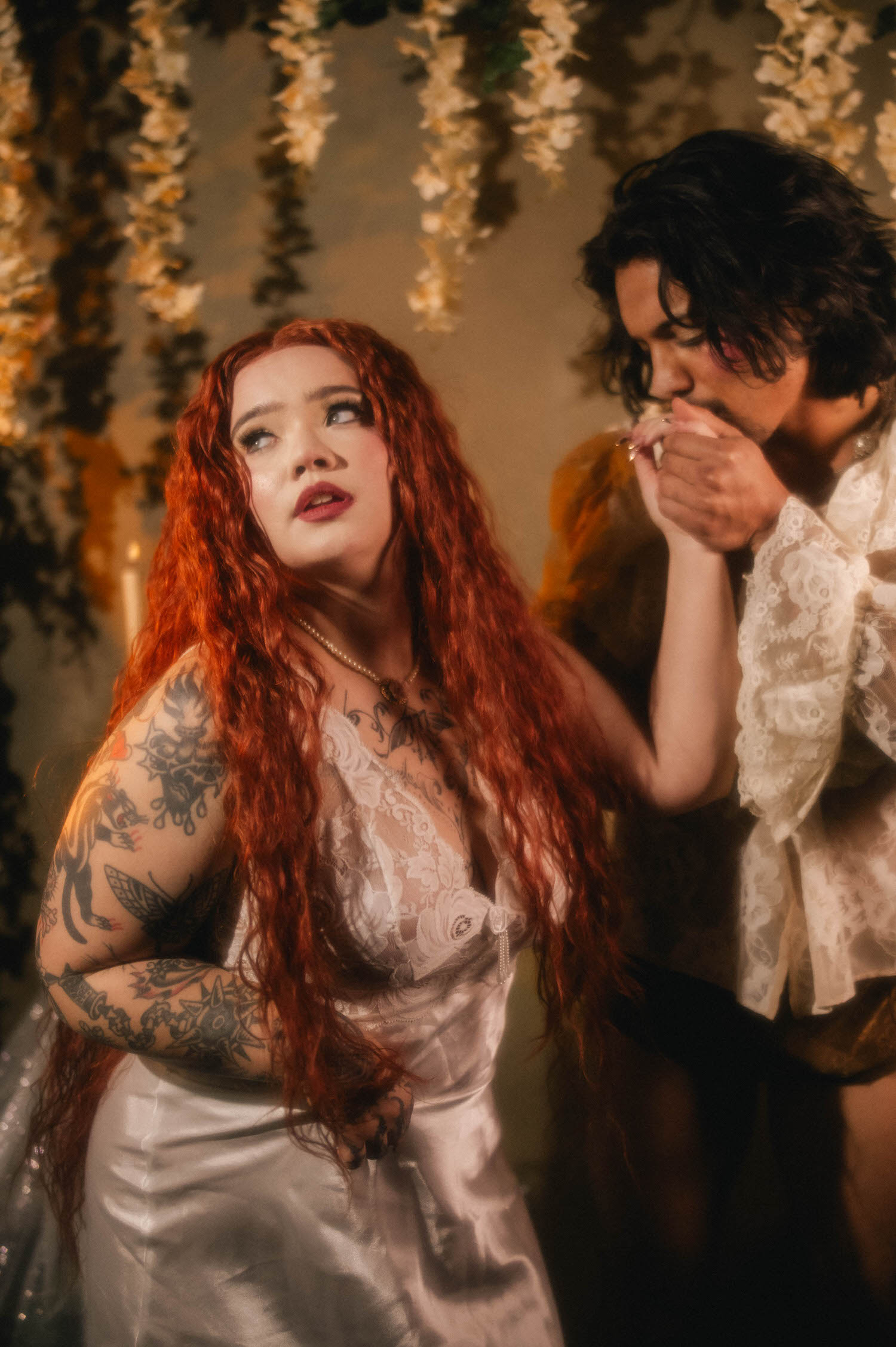
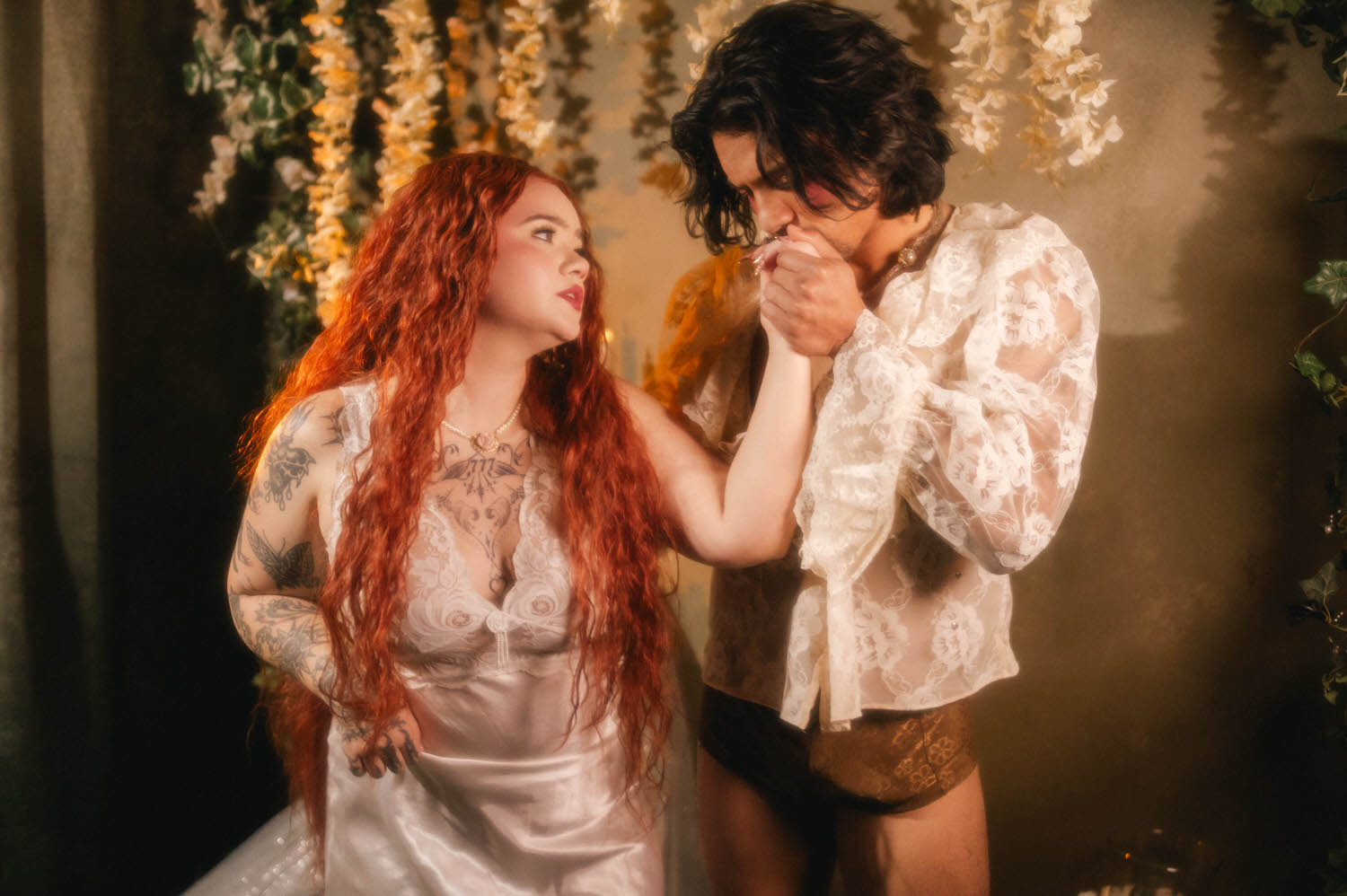
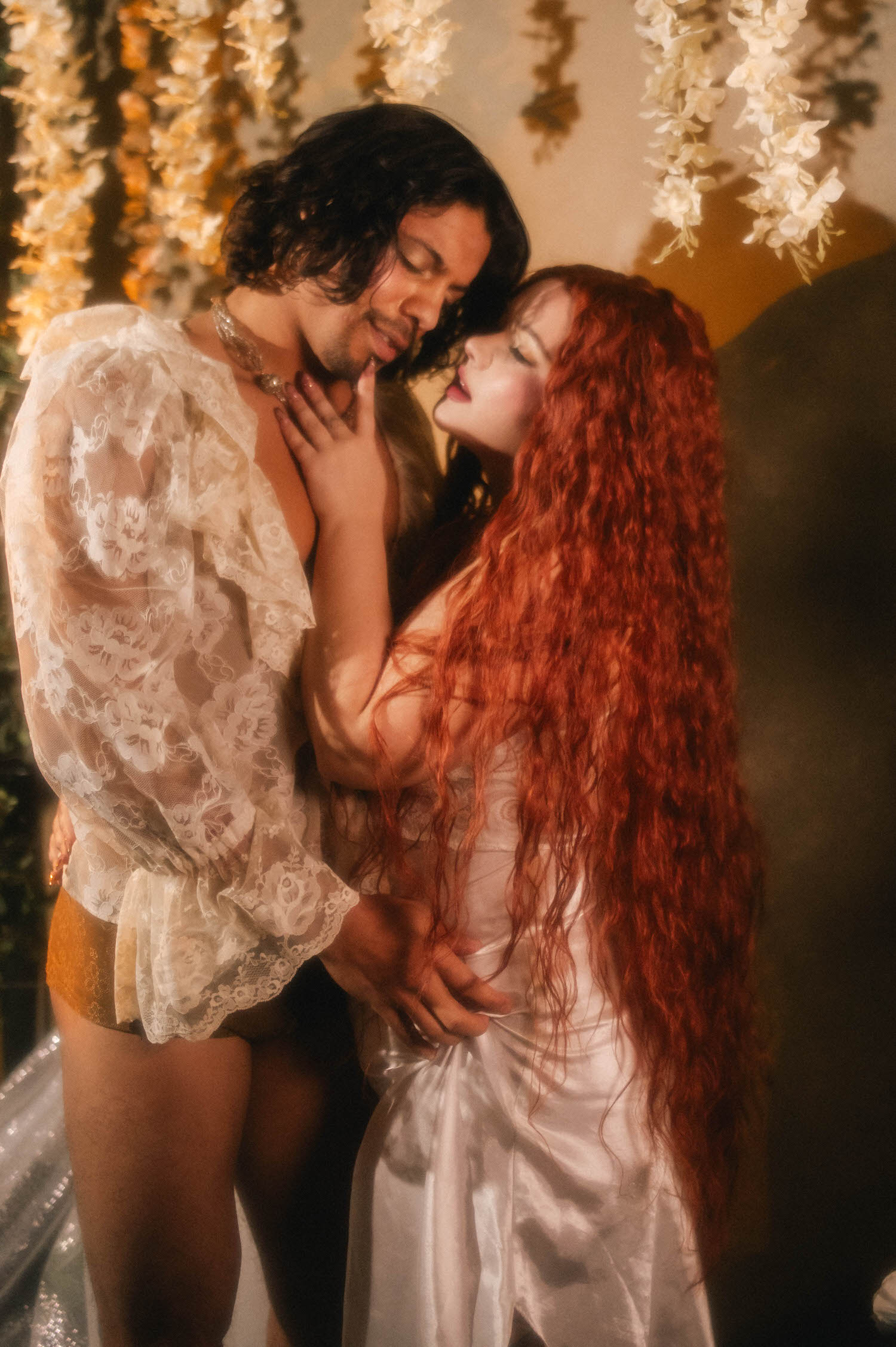
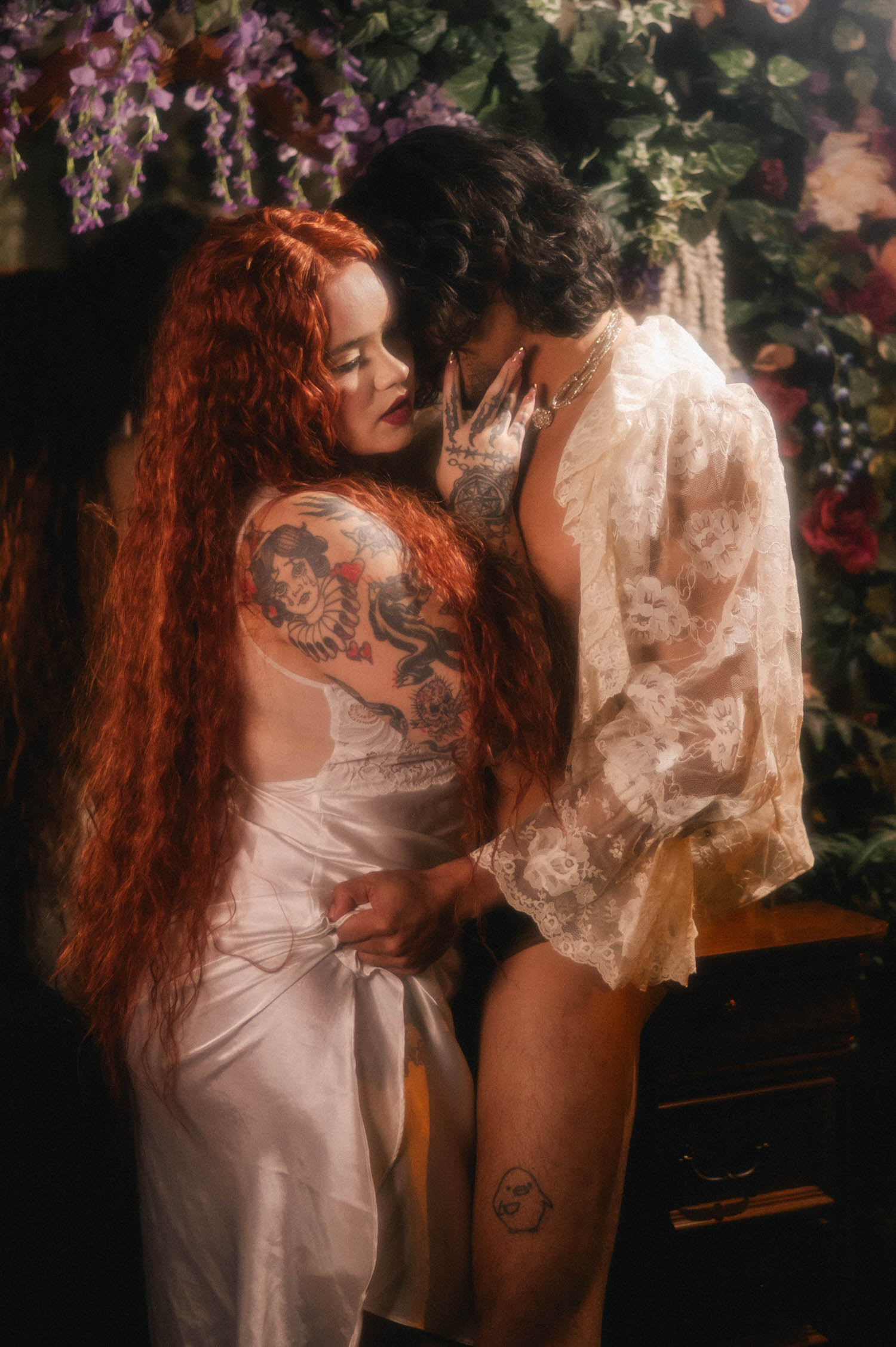
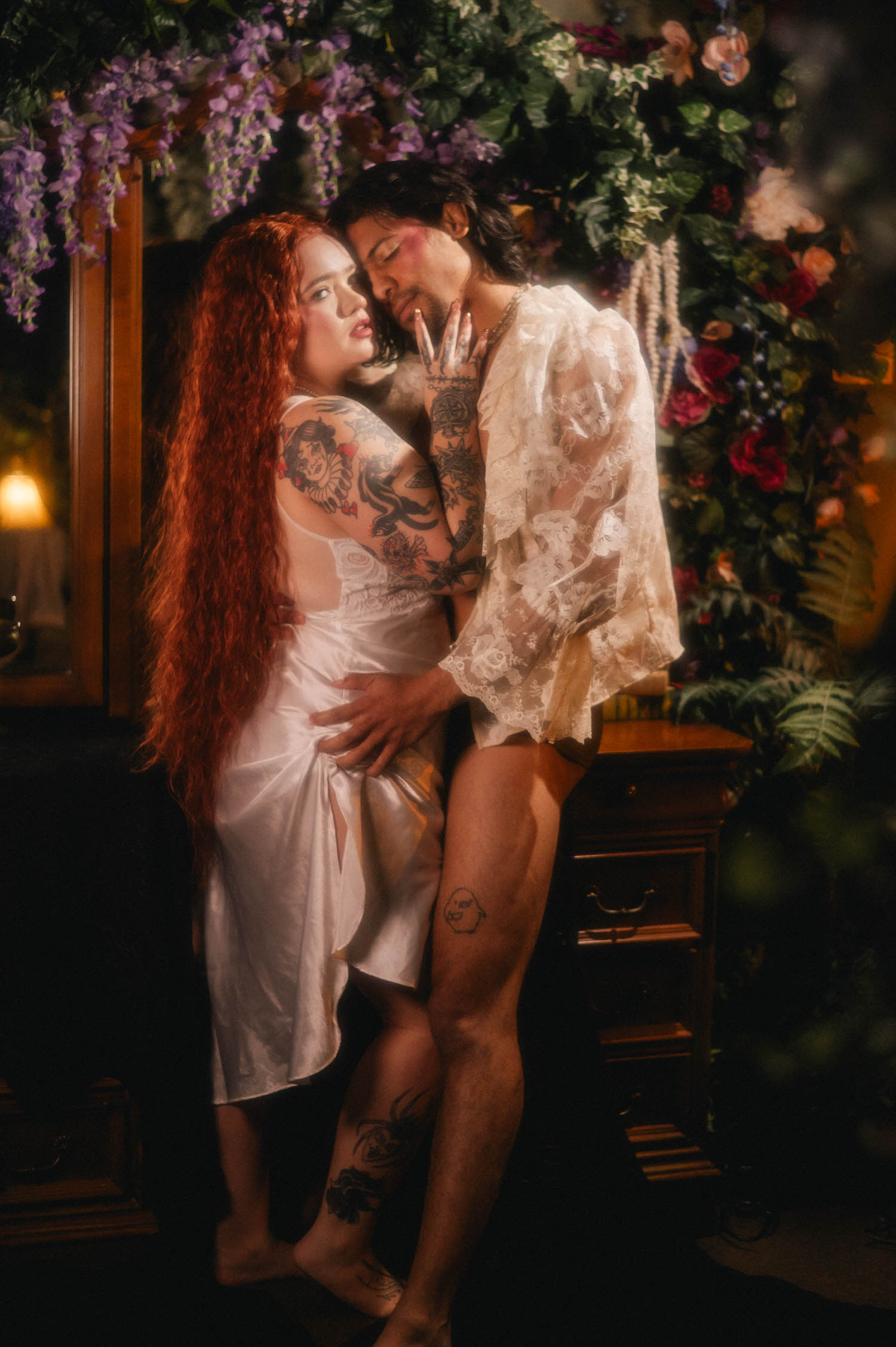
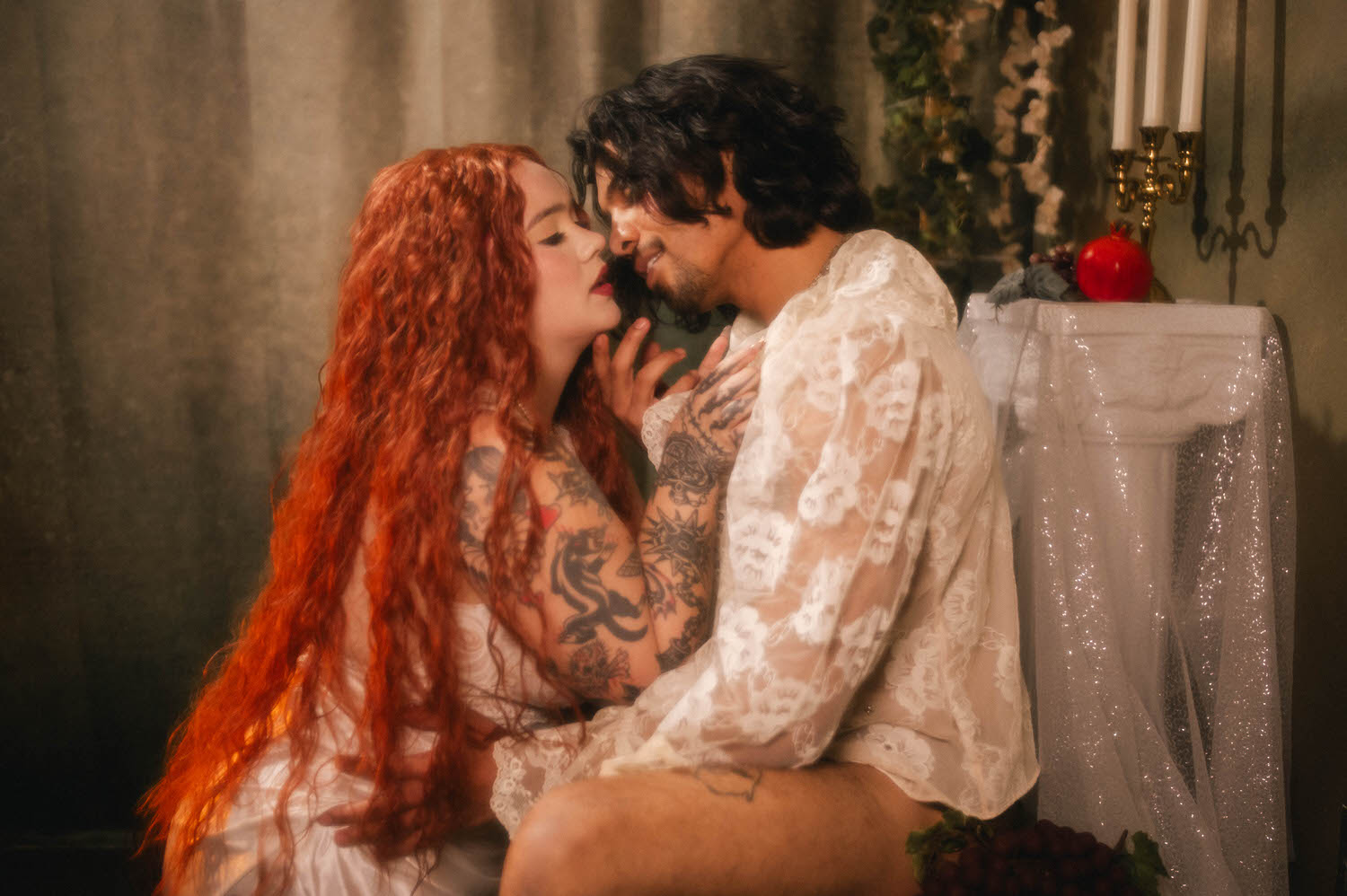
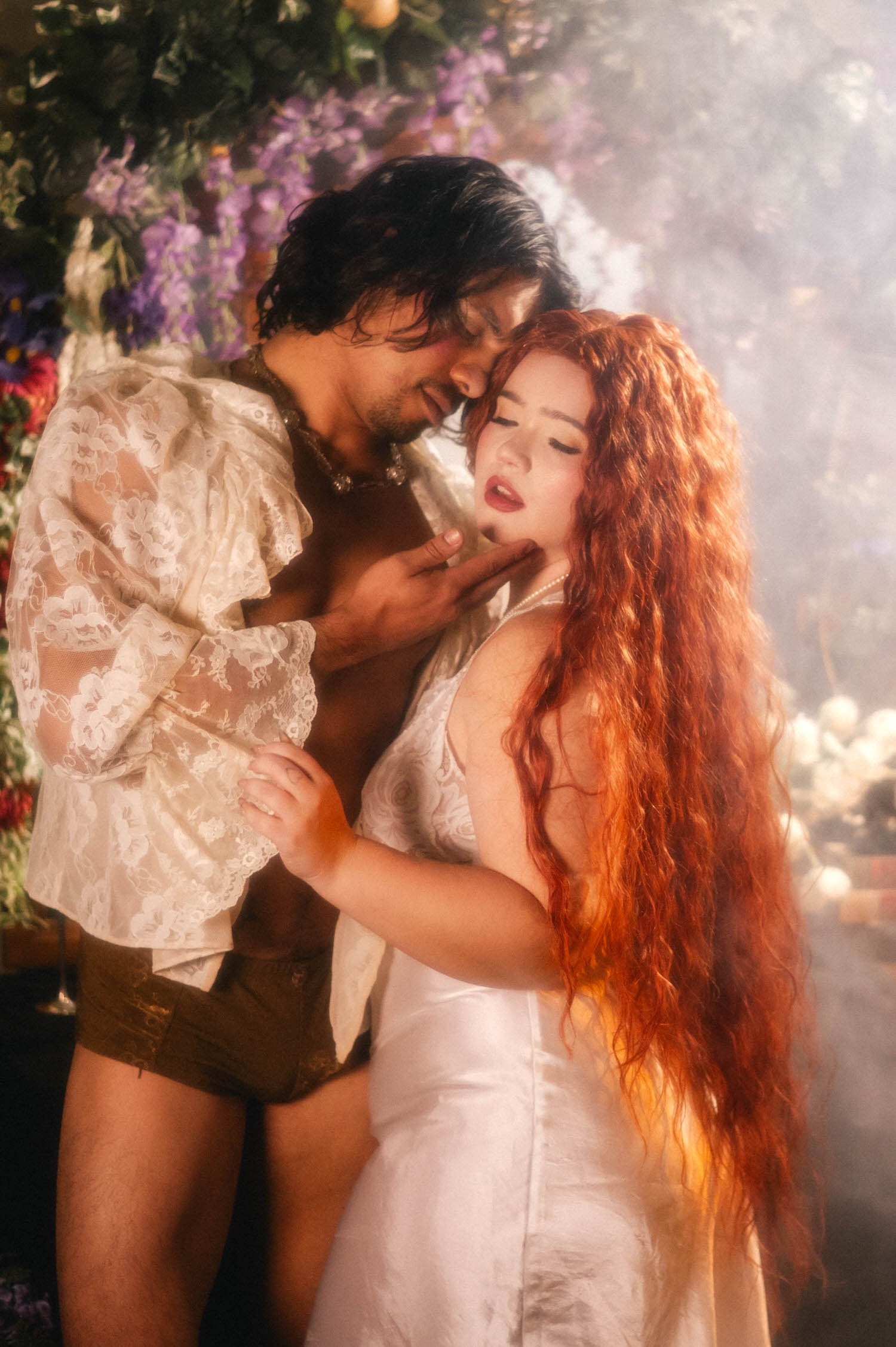
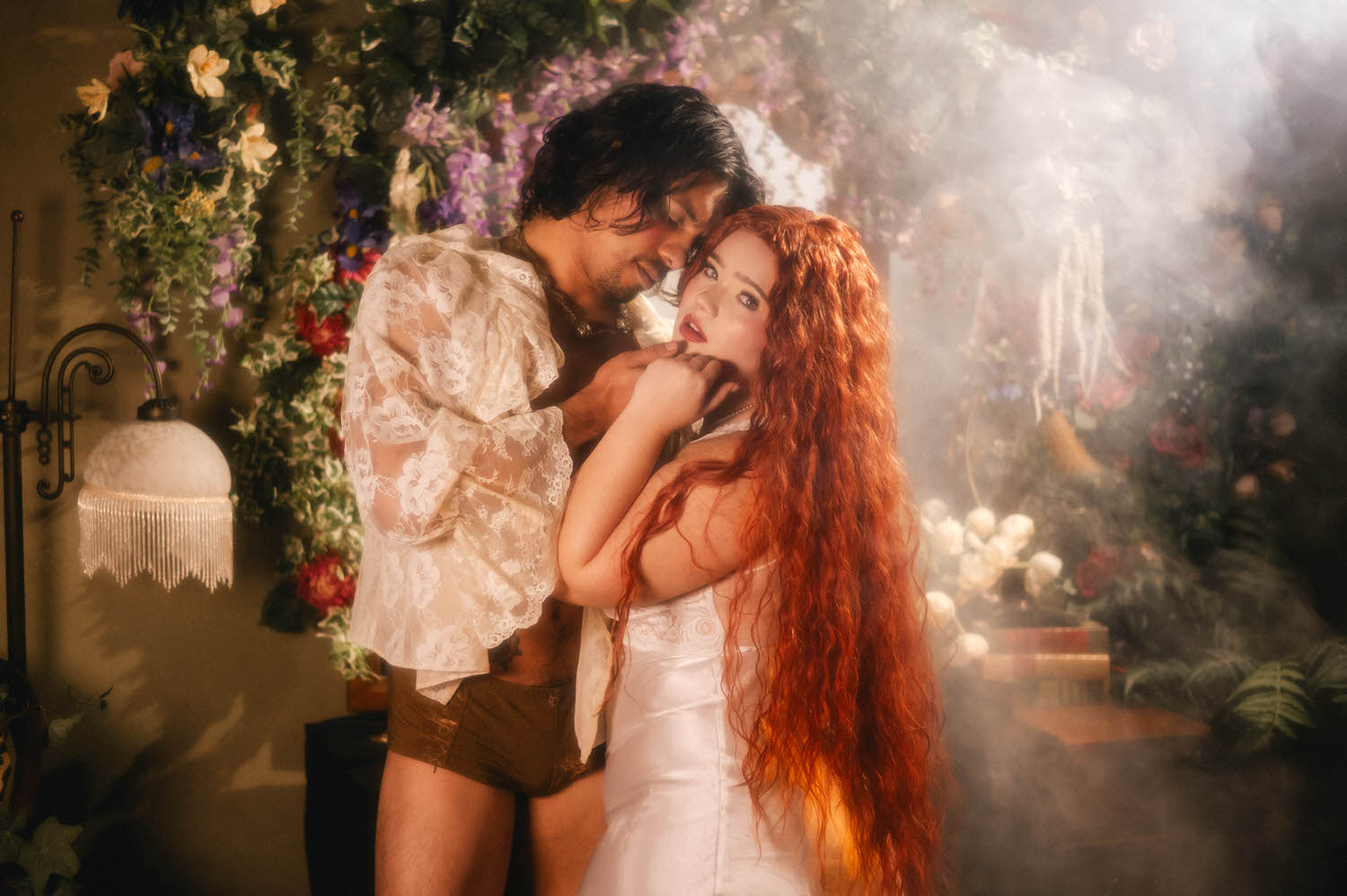
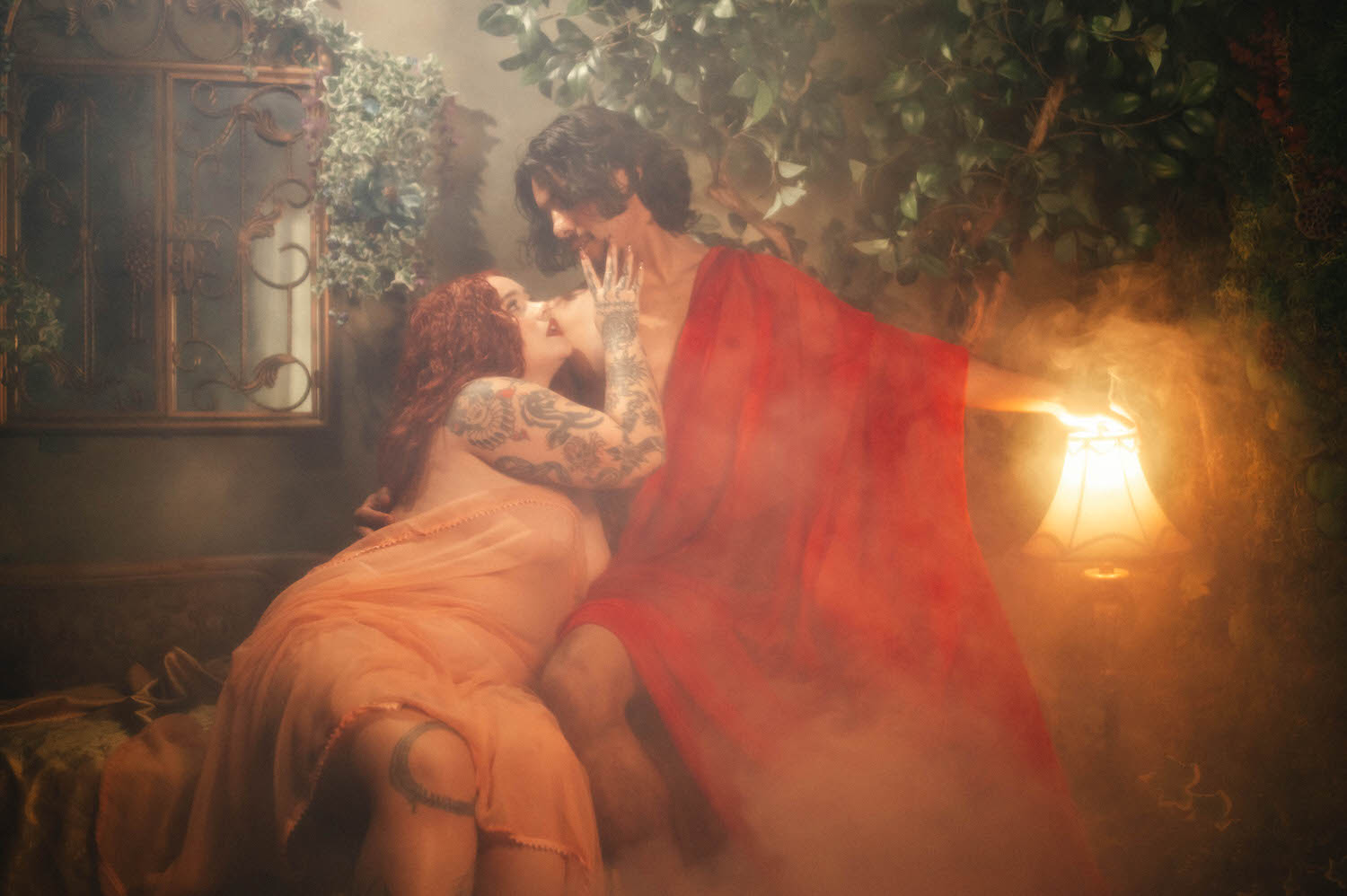
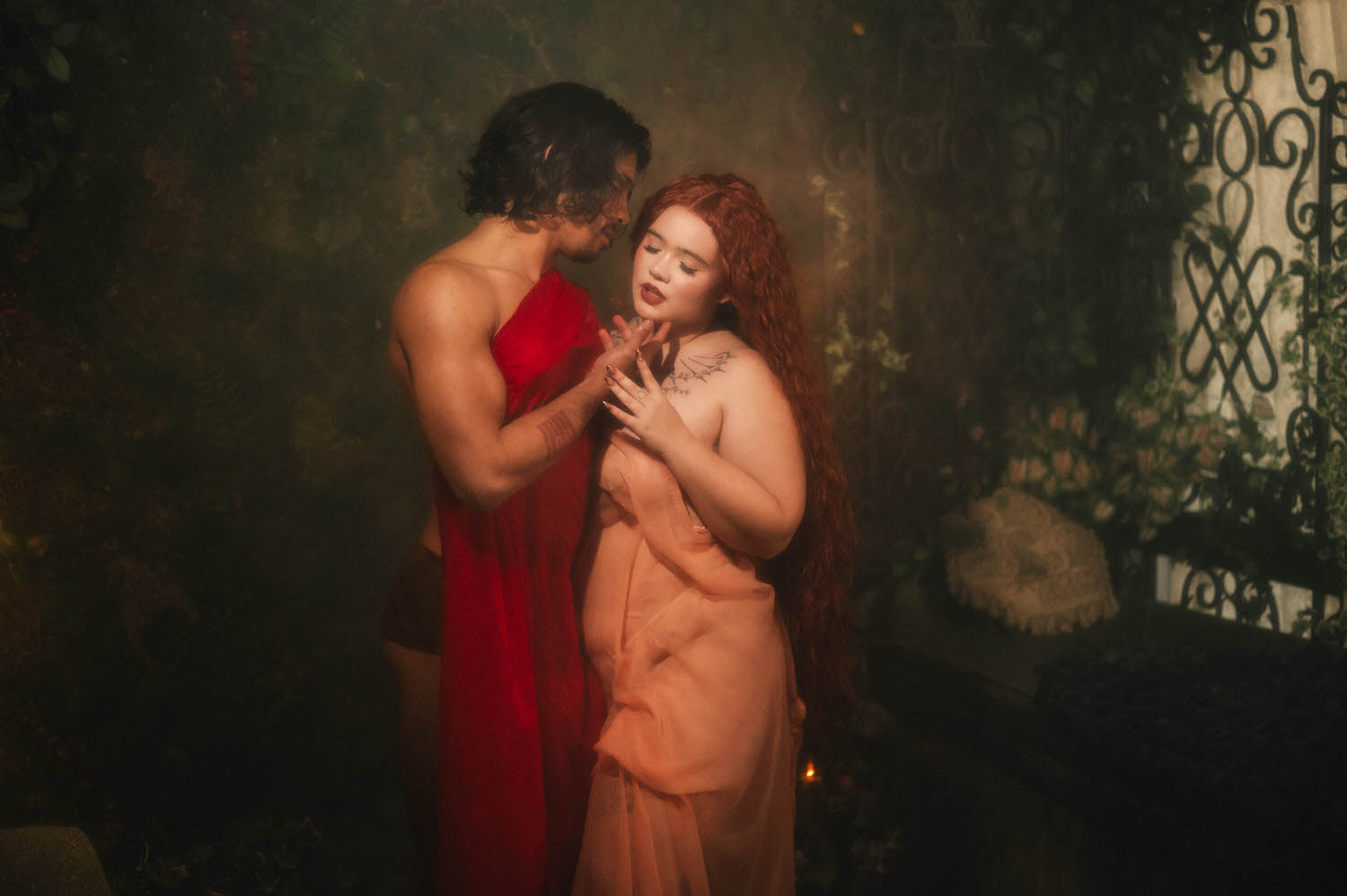
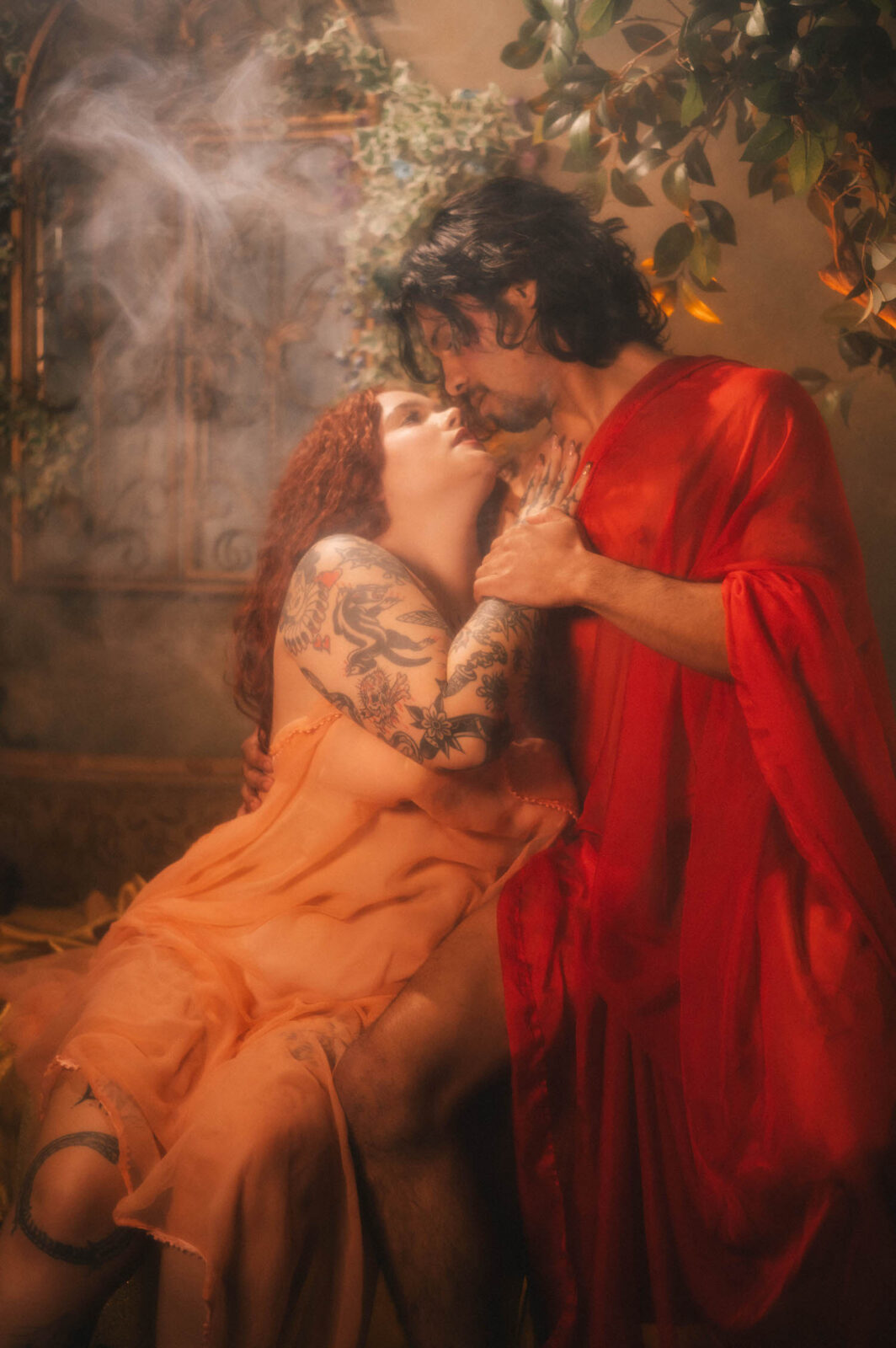
For Chey and Finn, that meant close, searching eye contact, hands that reach before they touch, and expressions that hold more emotion than a “typical” boudoir pose usually asks for. The wardrobe, the props, and even the fog all exist to support that same mood.
What Art Movements Shaped this Renaissance Inspired Photoshoot?
Several overlapping art movements fed into this Renaissance inspired photoshoot. Renaissance painting gave me the foundation: the return to studying the human body with close anatomical attention, and a warm, candlelit palette to match.
The Pre Raphaelite Brotherhood added the emotional and romantic poses, wardrobe, and props used throughout the session. Formed in mid nineteenth century England, this group of painters rejected the polished, idealized figures that had come to dominate art after Raphael and went looking for something rawer instead. Their subjects tend to look directly at the viewer with parted lips and unguarded expressions, hair loose and wild rather than styled into place. That’s exactly the quality I wanted from Chey, whose deep red hair is the one detail that stayed unchanged across all four looks.
None of these references were meant to be literal. I never asked either of them to hold a pose lifted straight from a specific canvas. I wanted the feeling underneath those paintings, translated into a Renaissance boudoir photoshoot with two people who share a life together, not two models meeting for the first time on set.
Who Are Chey and Finn, the Real Couple Behind This Renaissance Boudoir Photoshoot?
Chey (@thecheydawn) and Finn (@infinitelove555) are a real couple, not models hired for the day. Both work in creative fields, and both came to me already knowledgable in the kind of art history language I build my sessions around, so when I mentioned contrapposto or Pre Raphaelite hand posing, neither of them needed it explained.
Chey and Finn, who are a part of the queer community, wanted to center their styling on artistry and romance, rather than styling controlled by “gender norms”. As someone who is also in the queer community, I love providing a safe space for humans to freely expression themselves in the ways that feels best to them. This session is an example of queer couples boudoir styling where wardrobe and styling are not restricted by gender norms.
Finn opted to have his makeup done paired with lace wardrobe pieces matching Chey perfectly. All the hair and makeup artists I work with are inclusive and supportive of the LGBTQ+ community and are trans affirming, so you can rest assured that you can freely express yourself when you are at Royal Lune Studio.
How Did This Session Style Four Different Renaissance Inspired Looks?
Every look in this Renaissance boudoir photoshoot was built around a different piece of the mood board, moving from soft and romantic toward something closer to classical sculpture by the end.
Look One: Matching Coral Tones and a Vintage Olga Nightgown
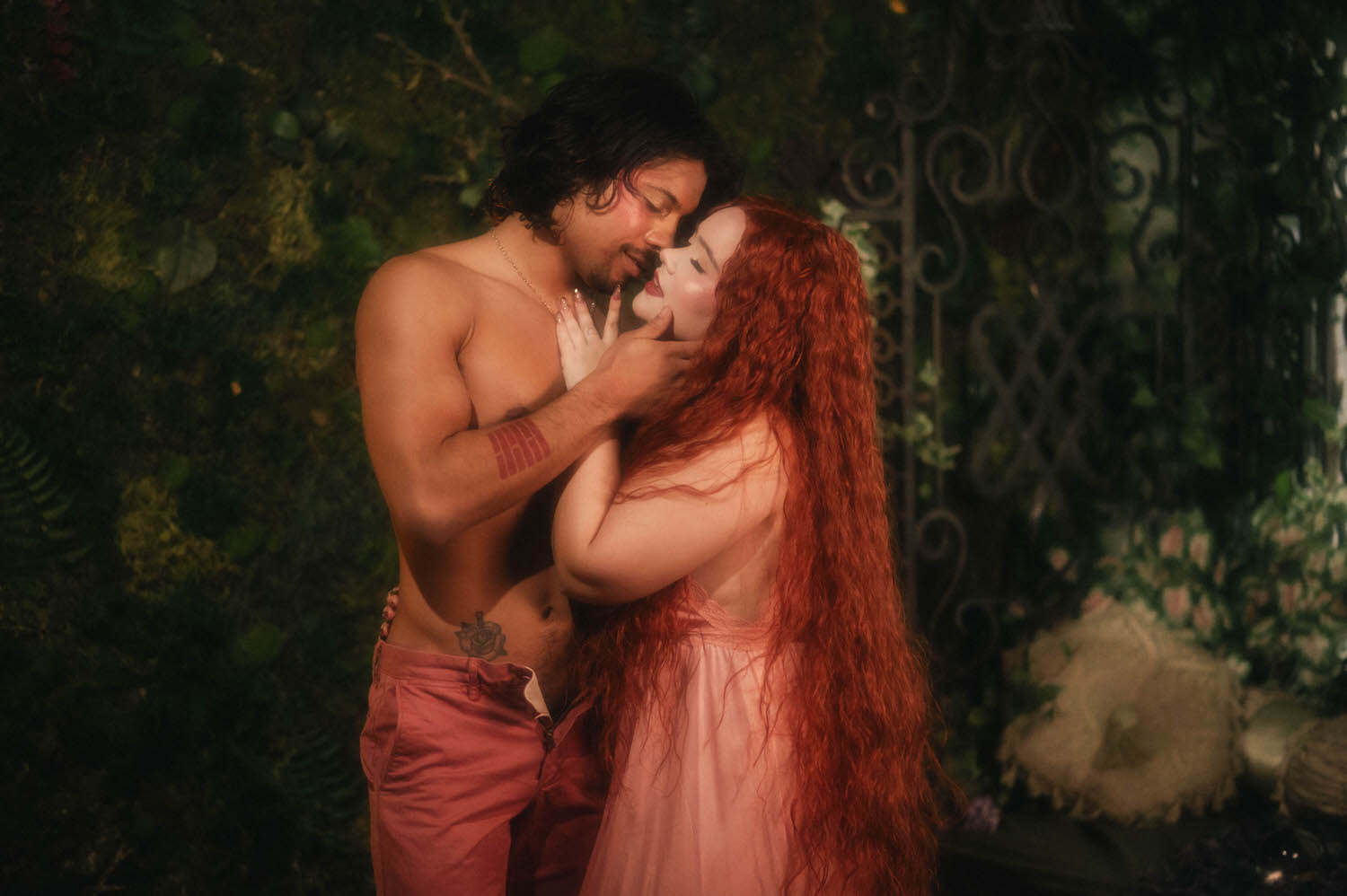
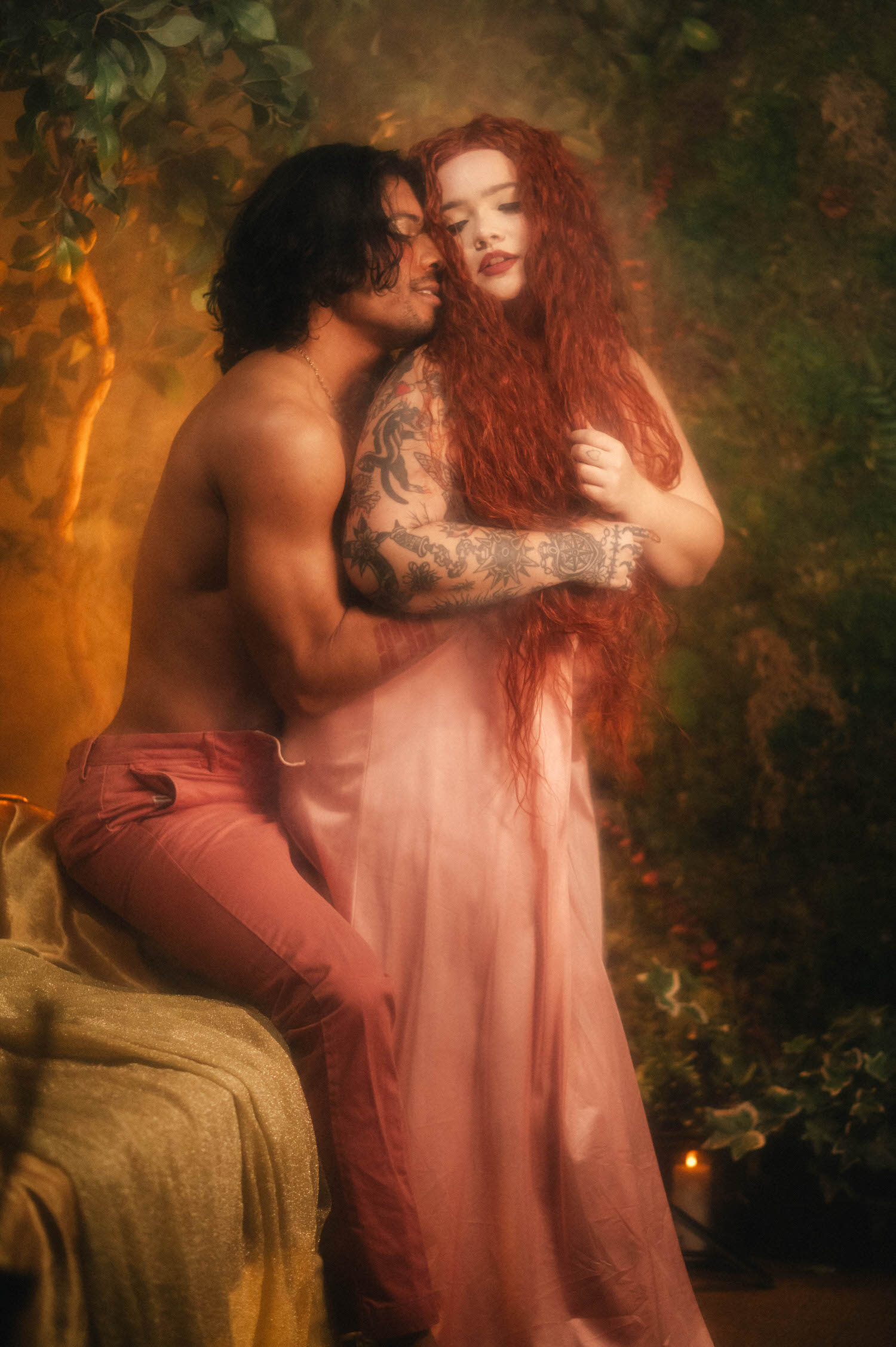
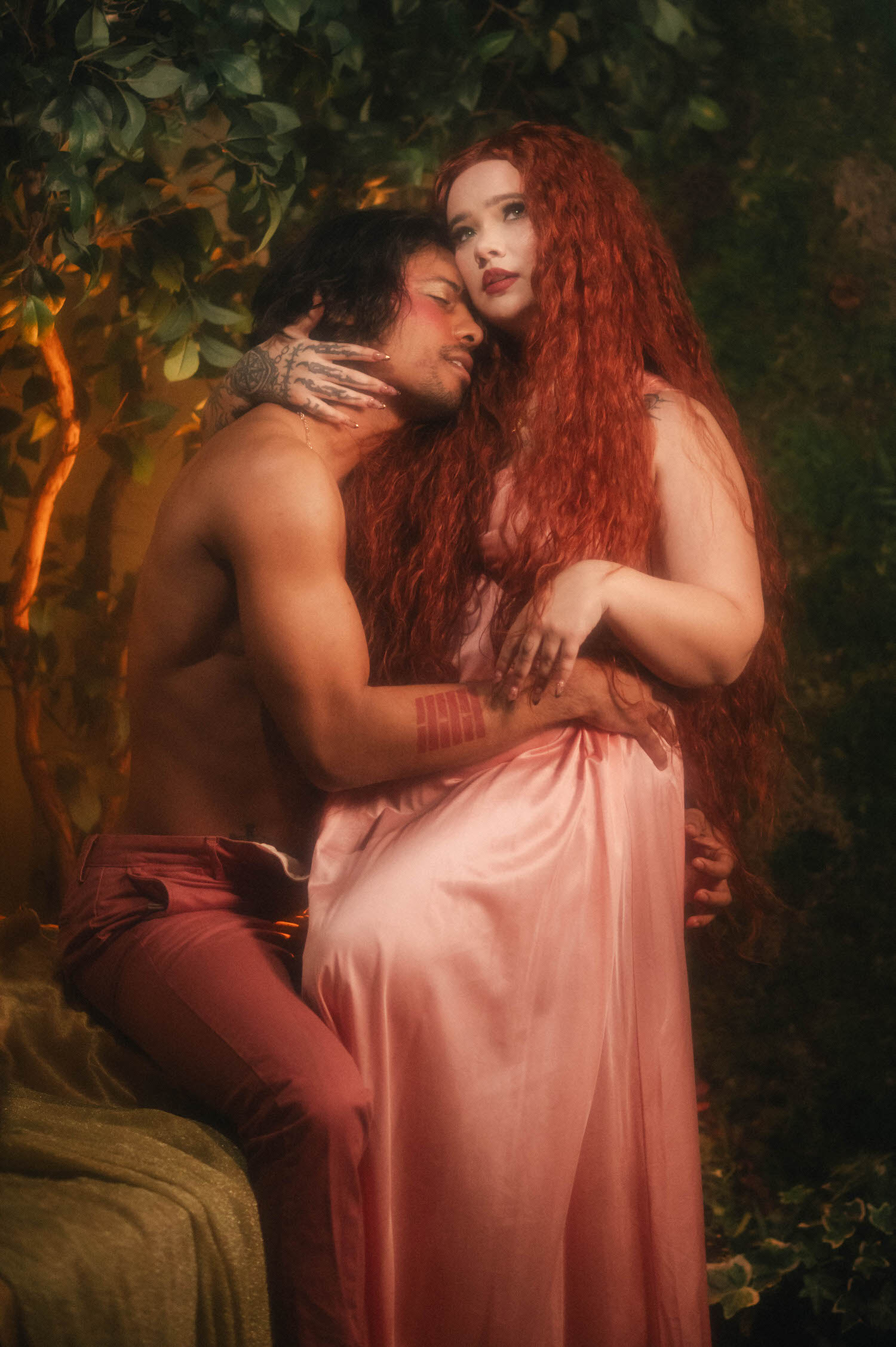
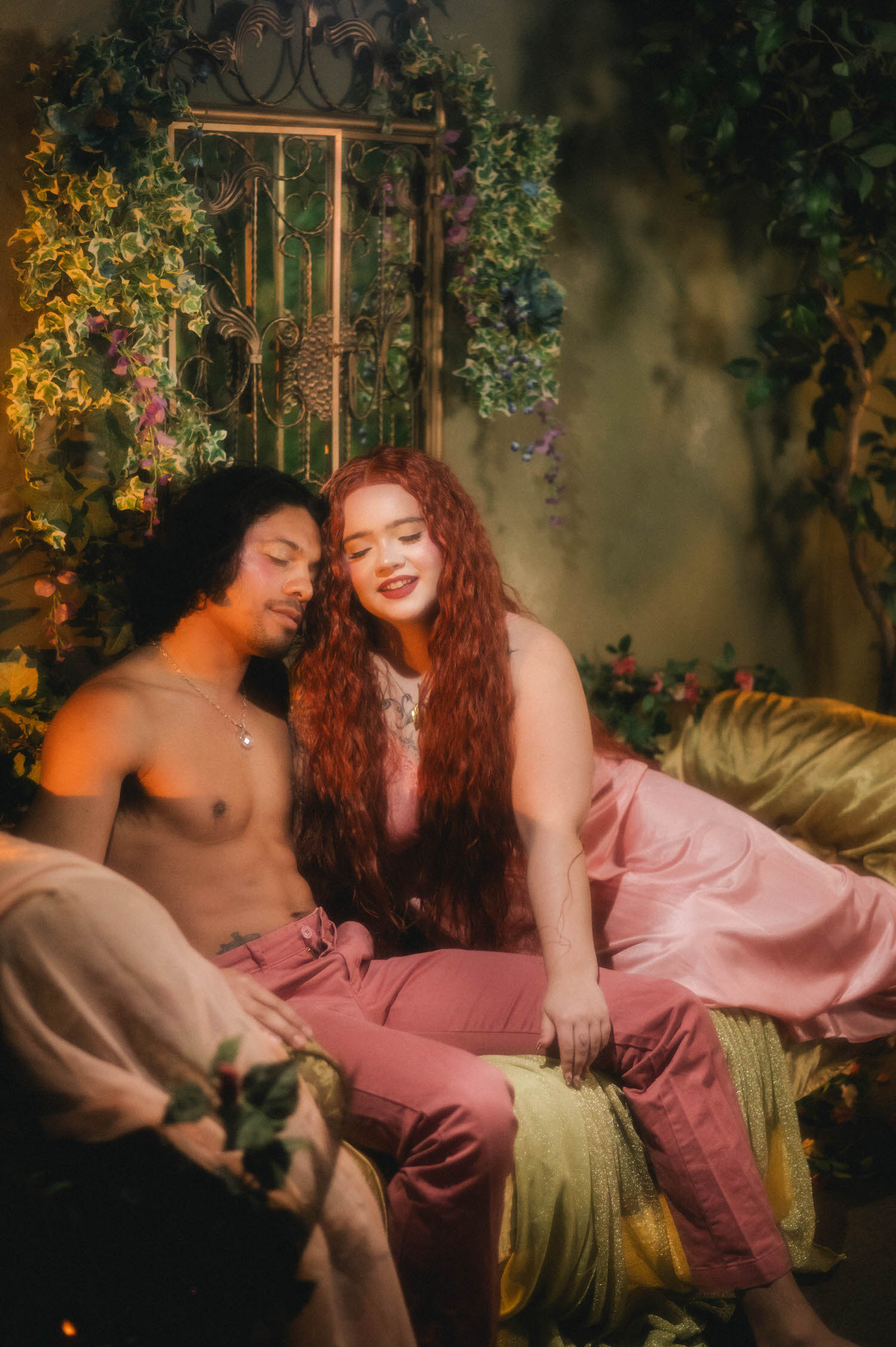
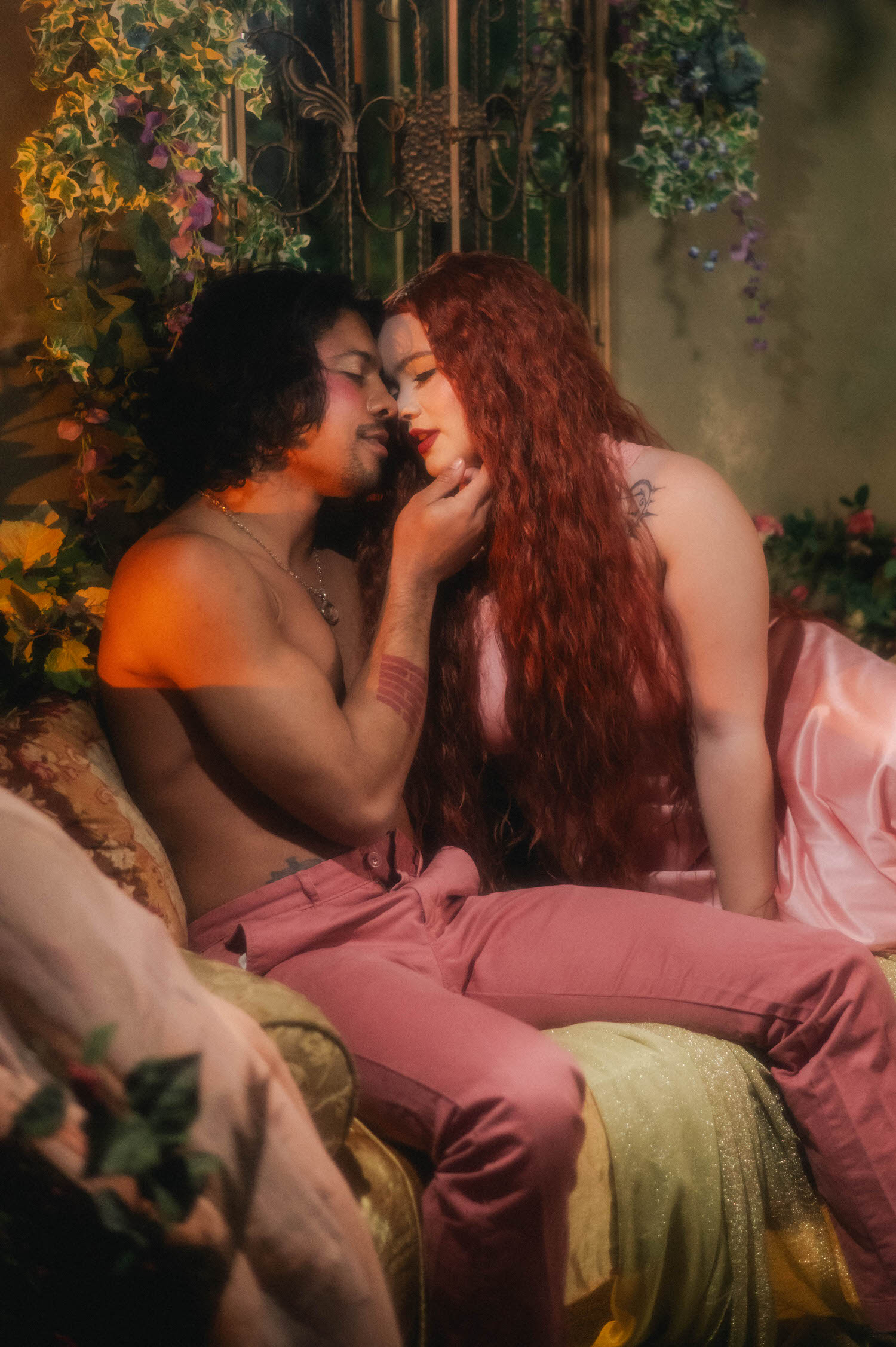
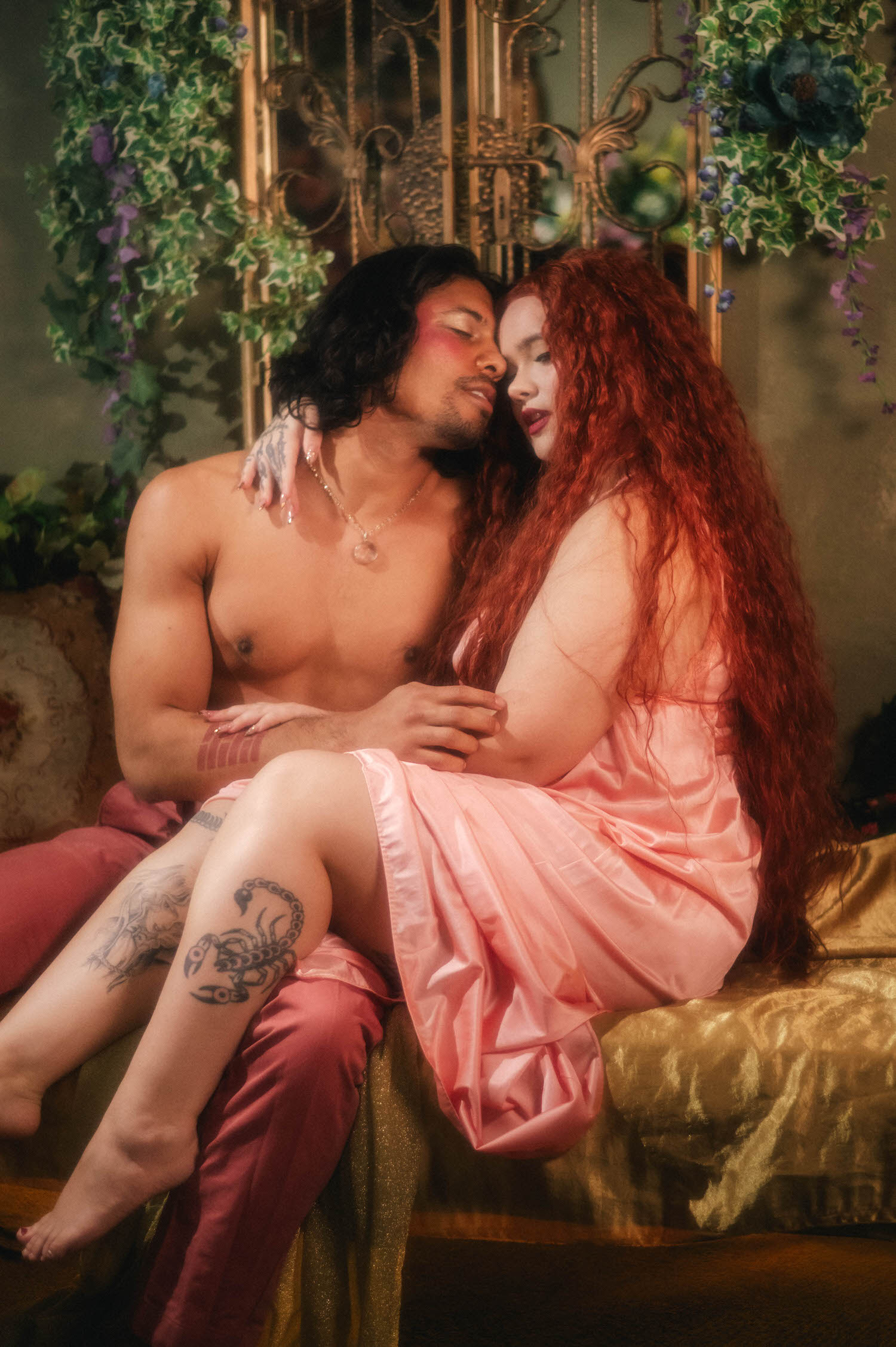
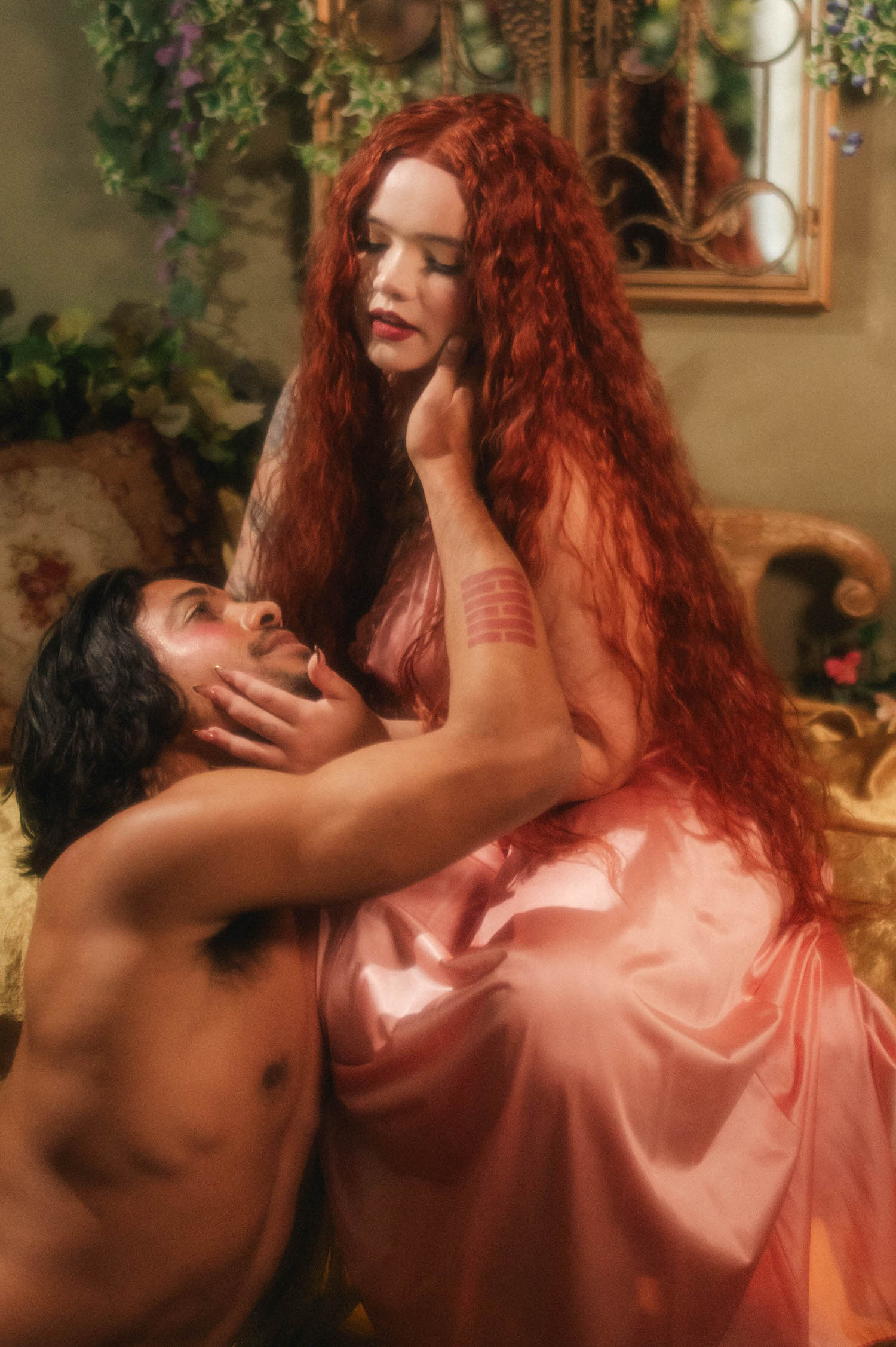
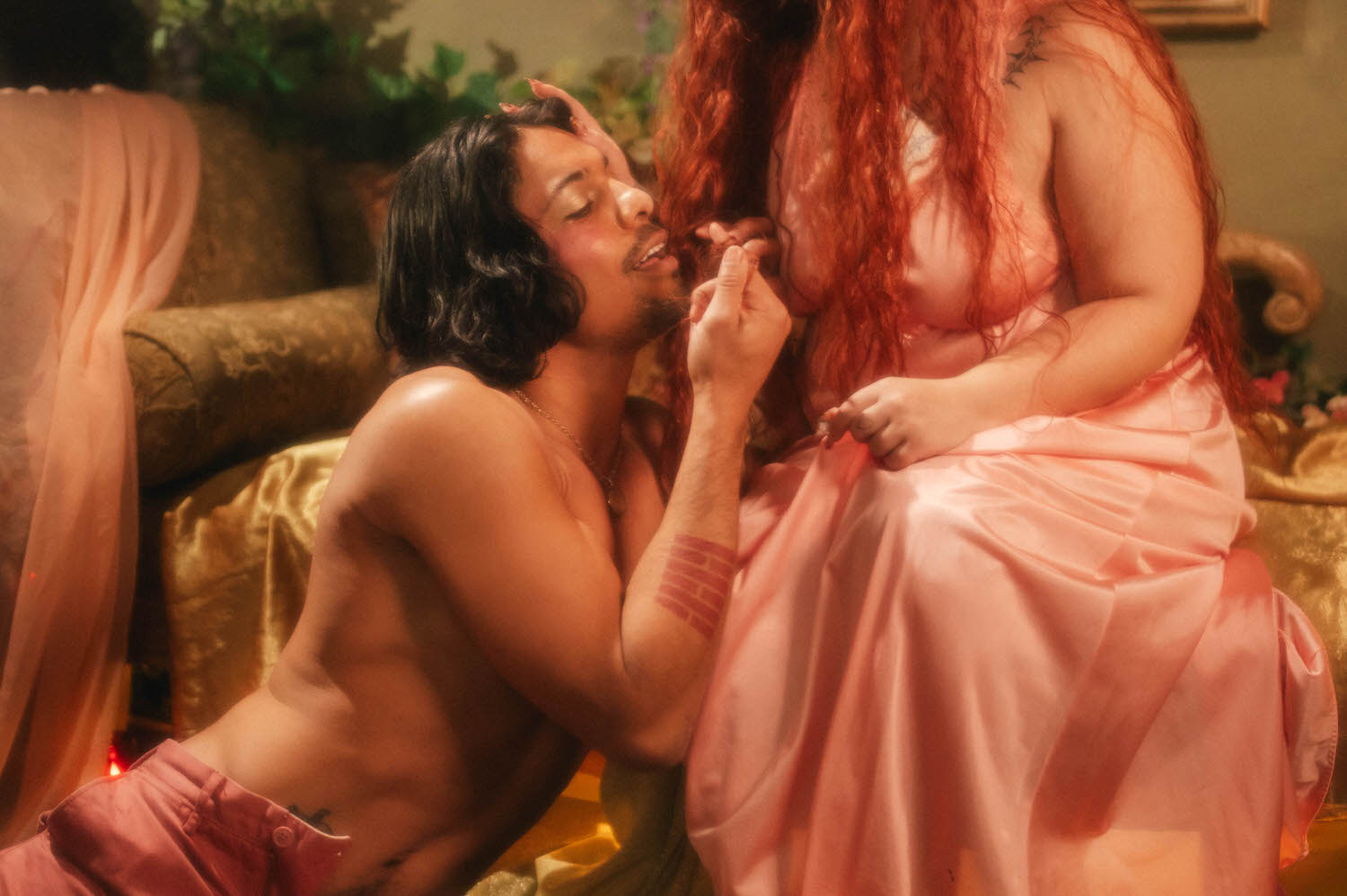
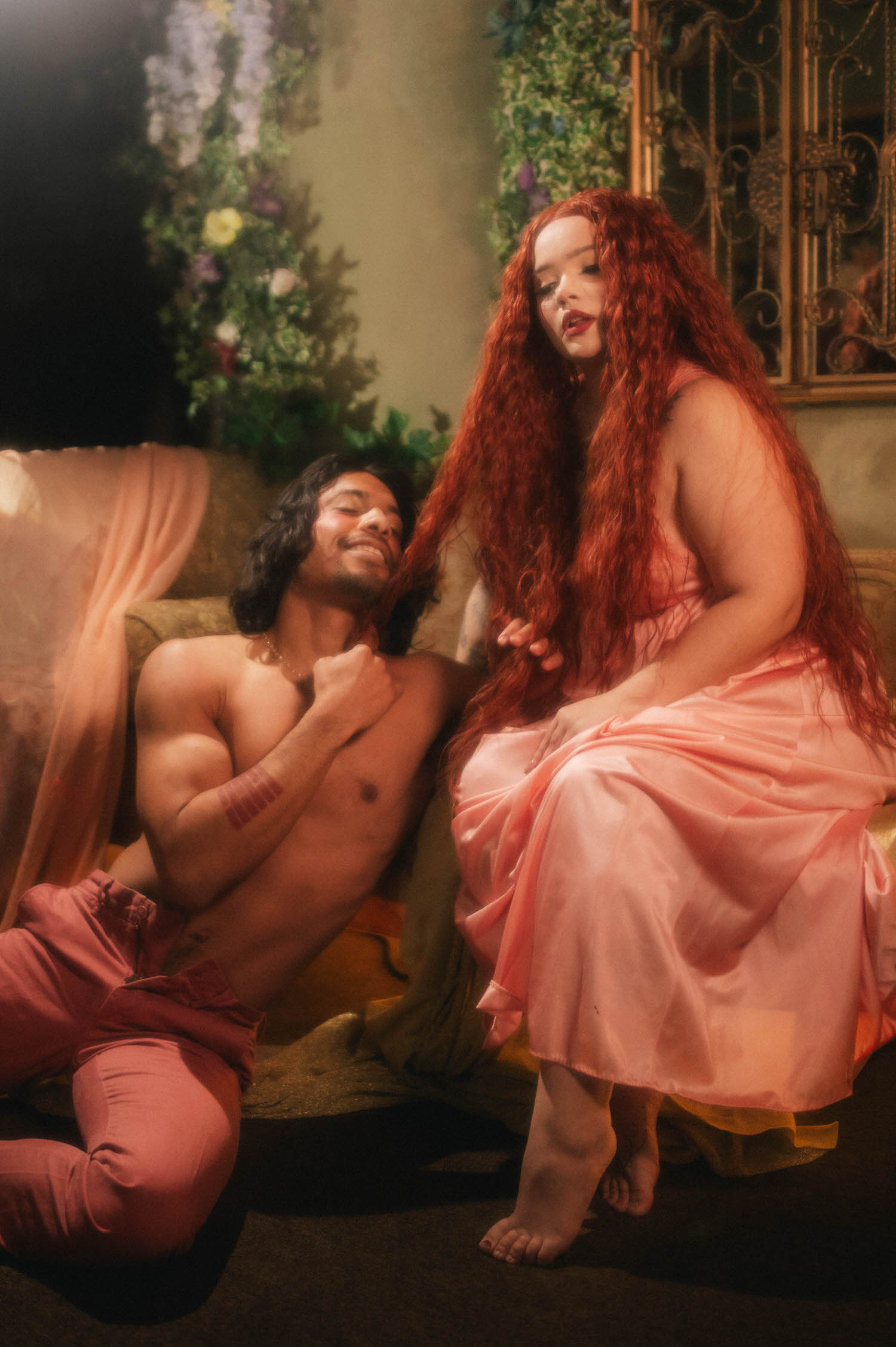
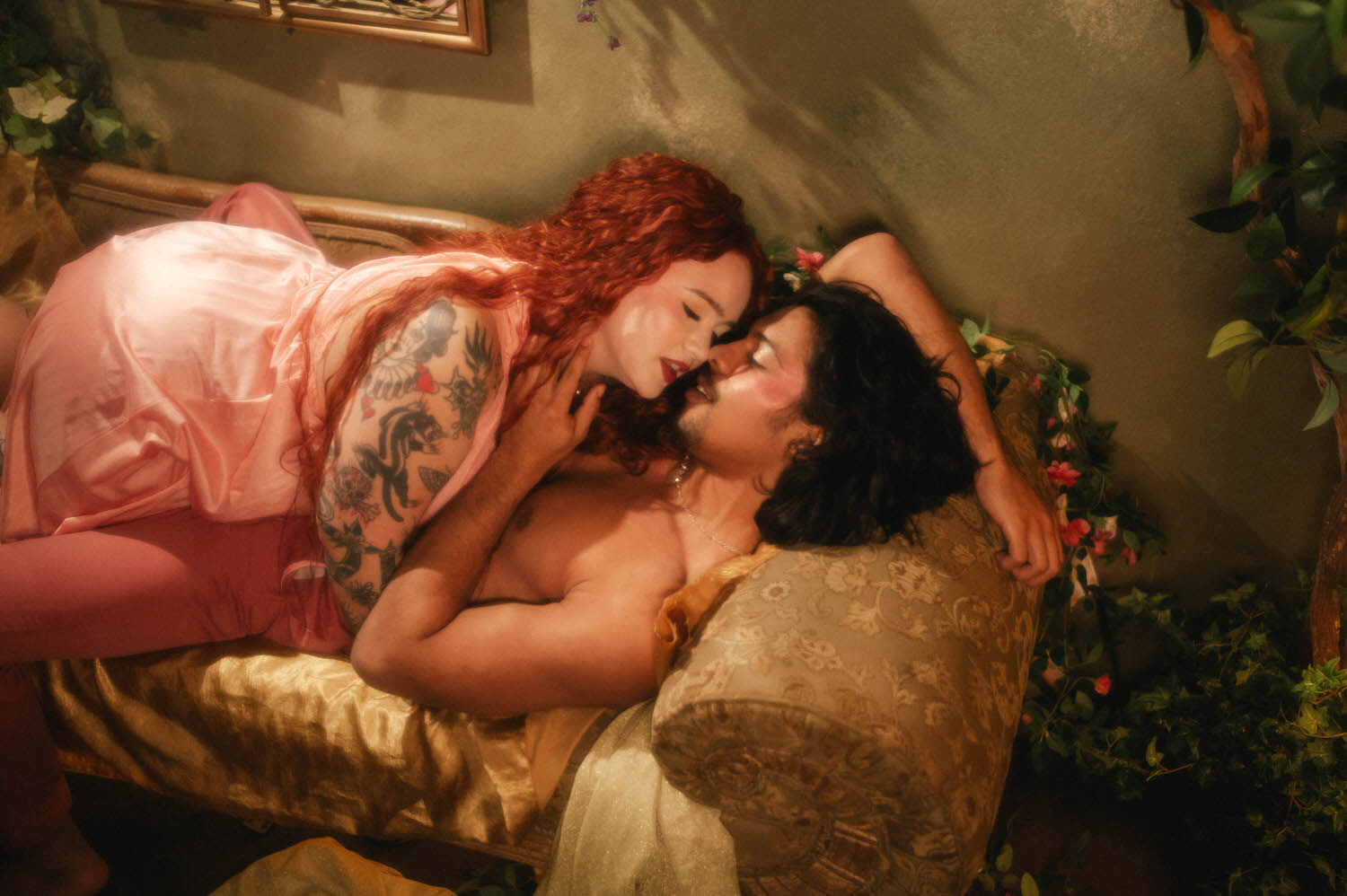
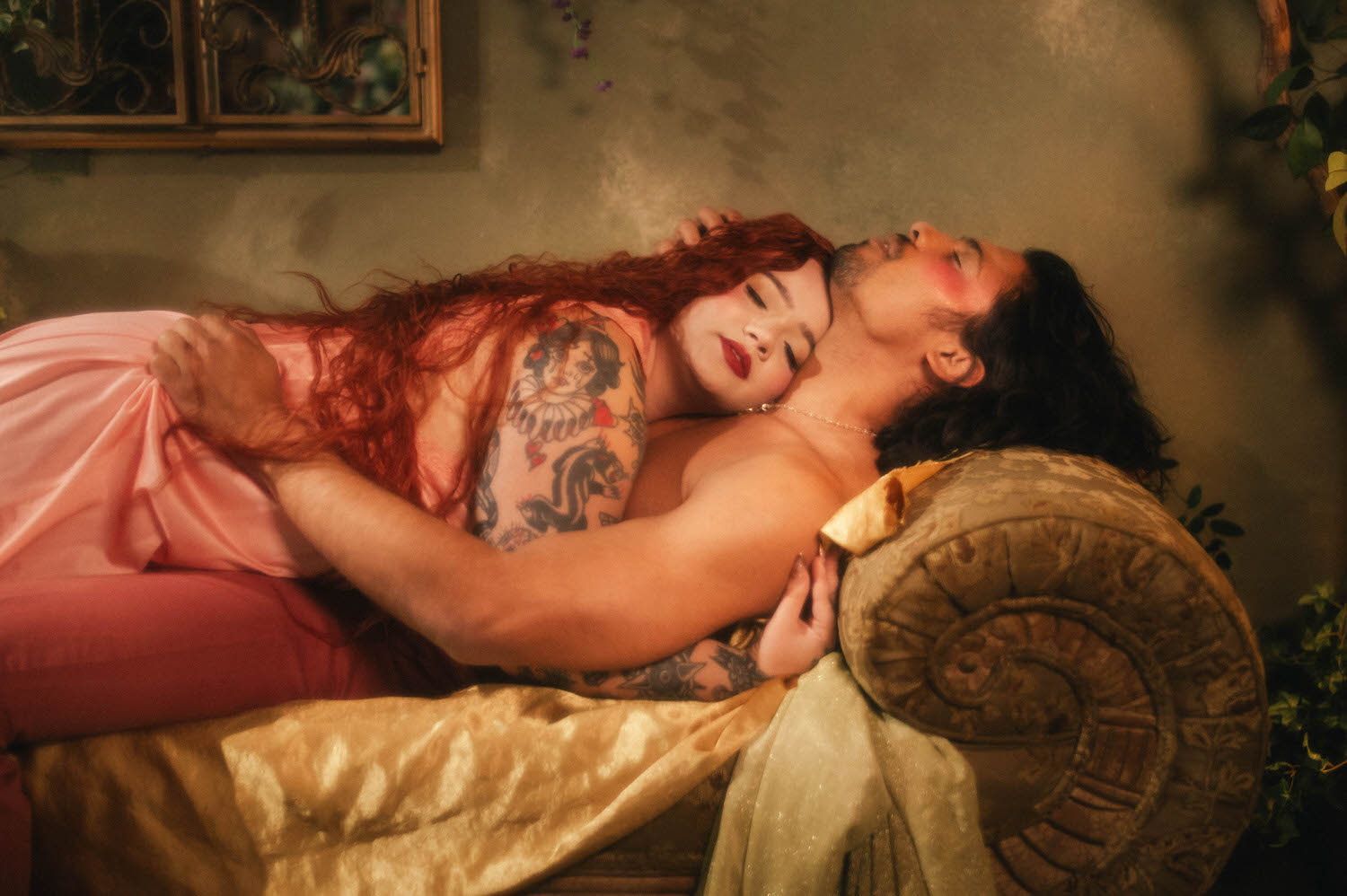
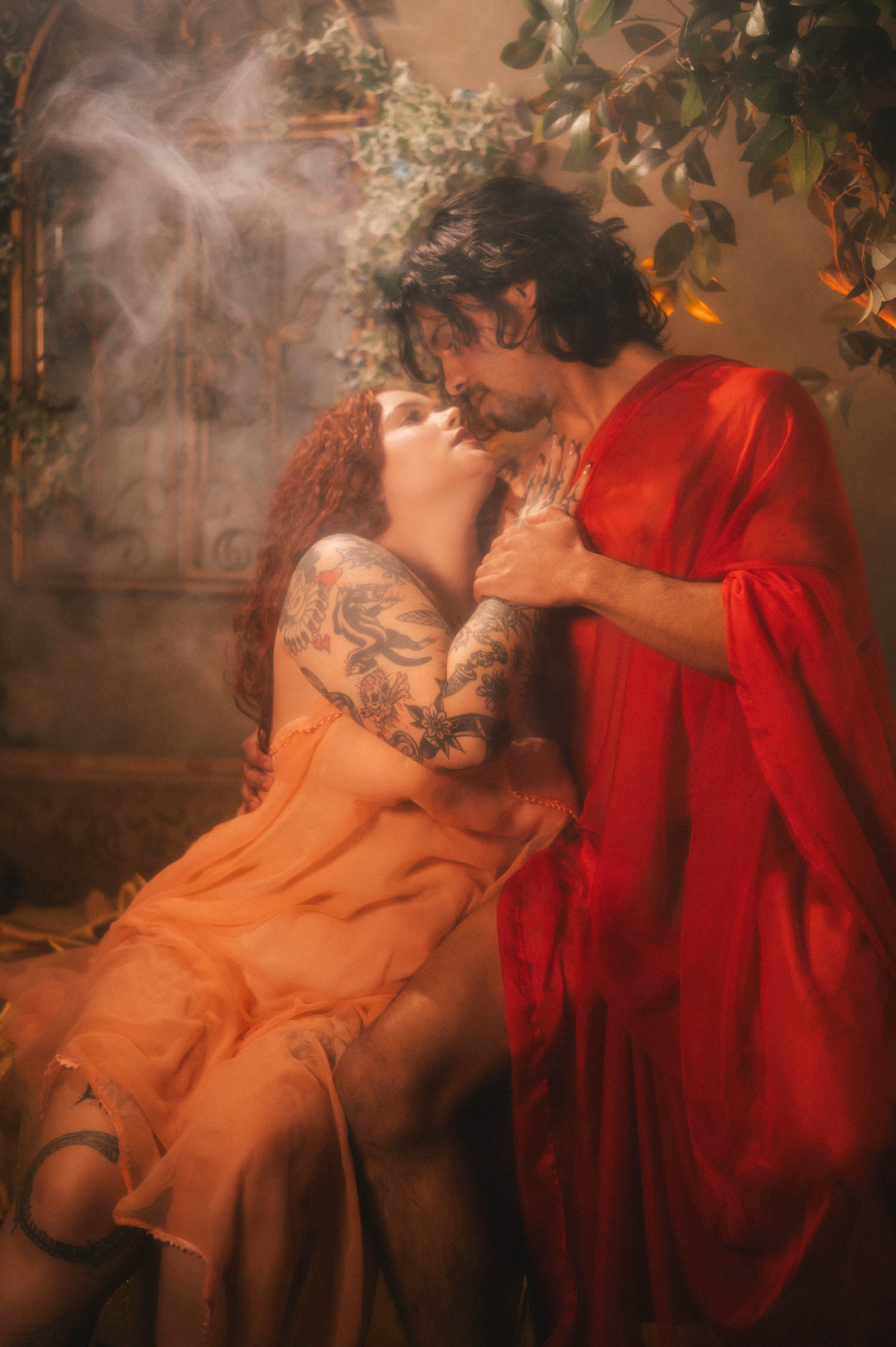
Chey opened the session in a coral vintage Olga nightgown with a deep V-neck and a satin-like sheen that caught the candlelight. Finn matched her in coral toned pants, worn without a shirt, with a thin silver chain and a rose tattoo visible near his waist. I shot this look against a wall of ivy and a wrought iron gate room divider, using warm amber lighting and a haze that softened every edge in camera.
The posing here stayed close, foreheads nearly touching, her hand resting at his jaw in more than one frame. This was the gentlest of the four looks, meant to ease both of them into the more theatrical posing that came later.
Look Two: Vintage Lingerie Set
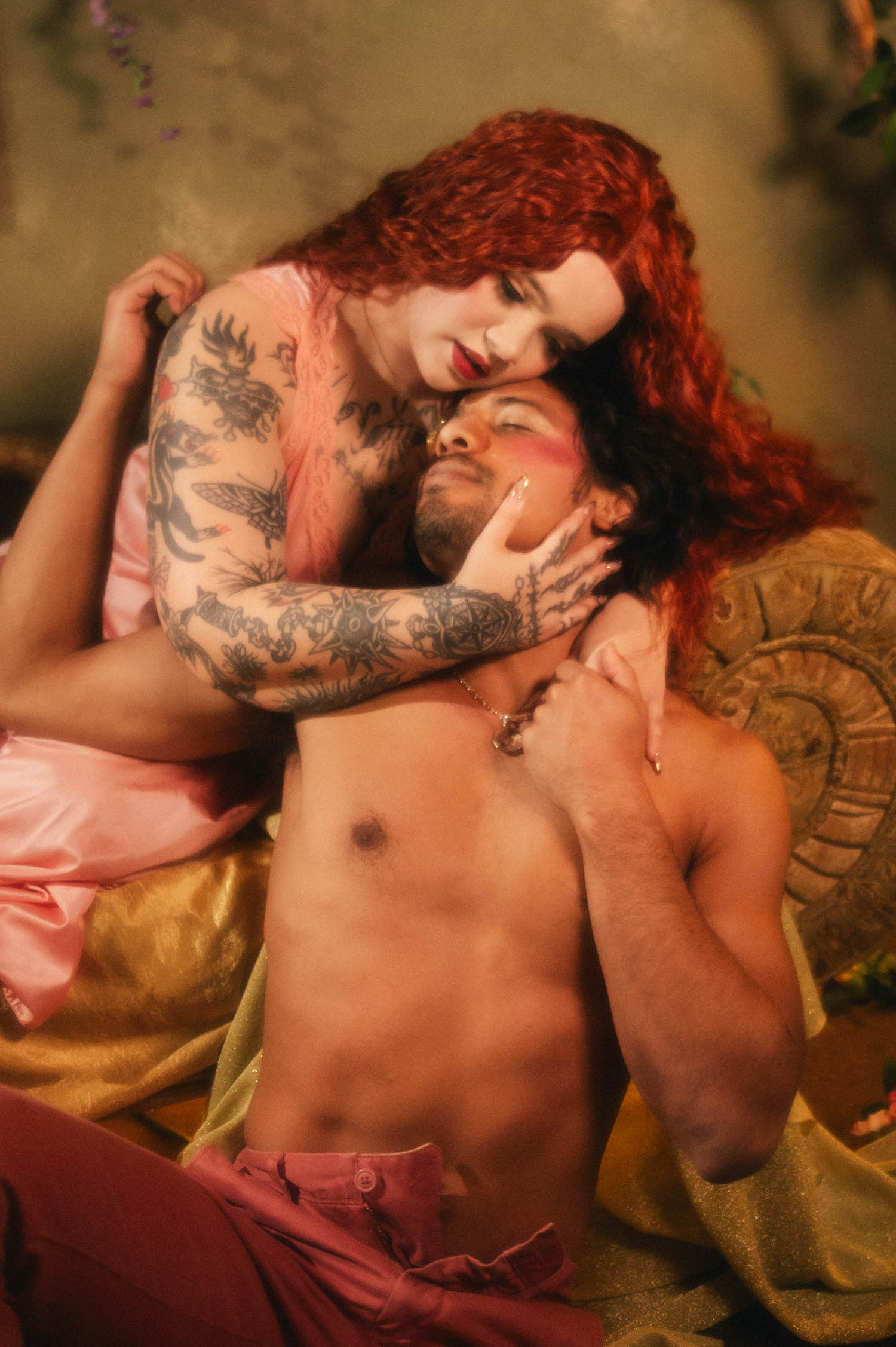
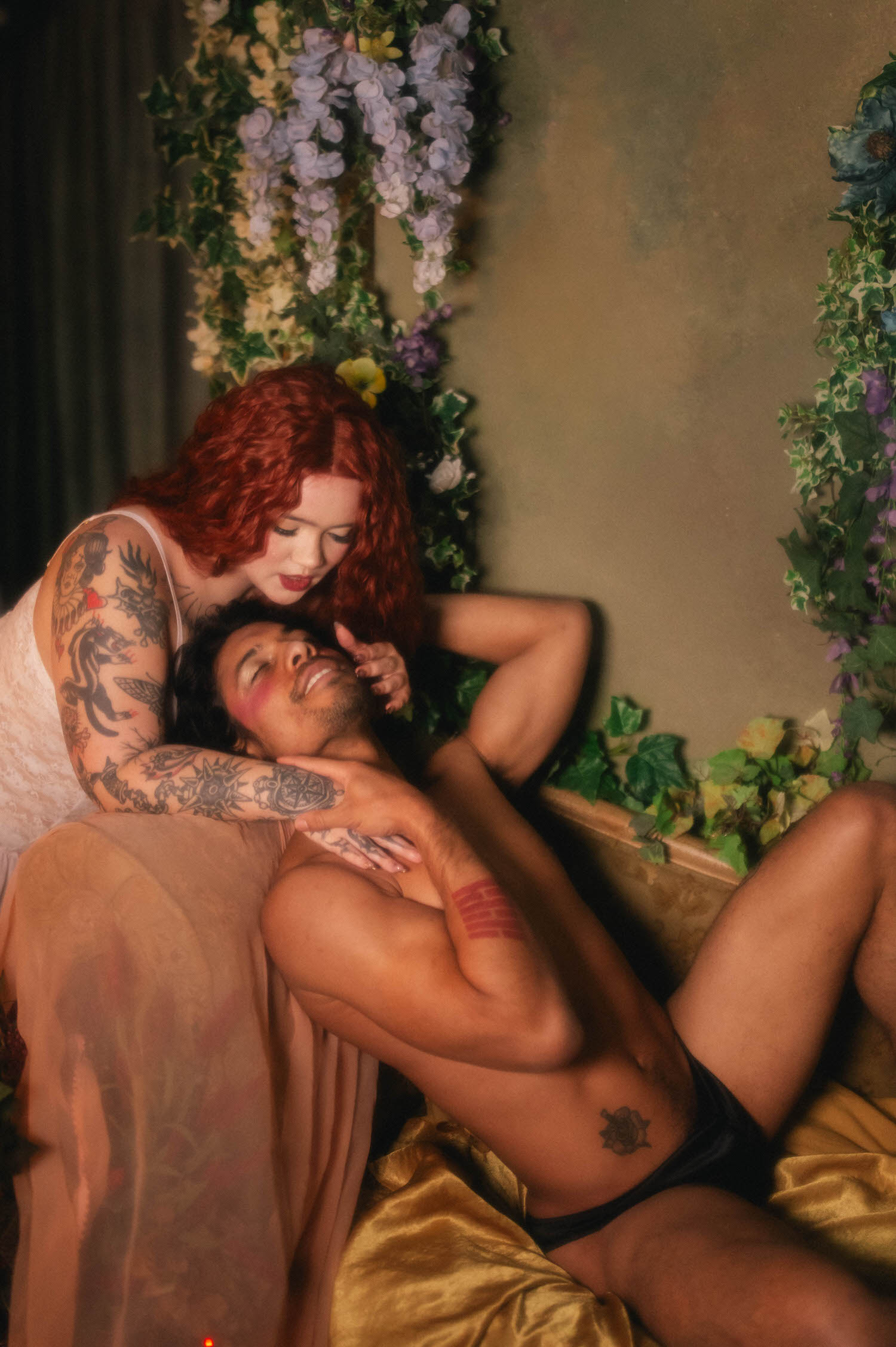
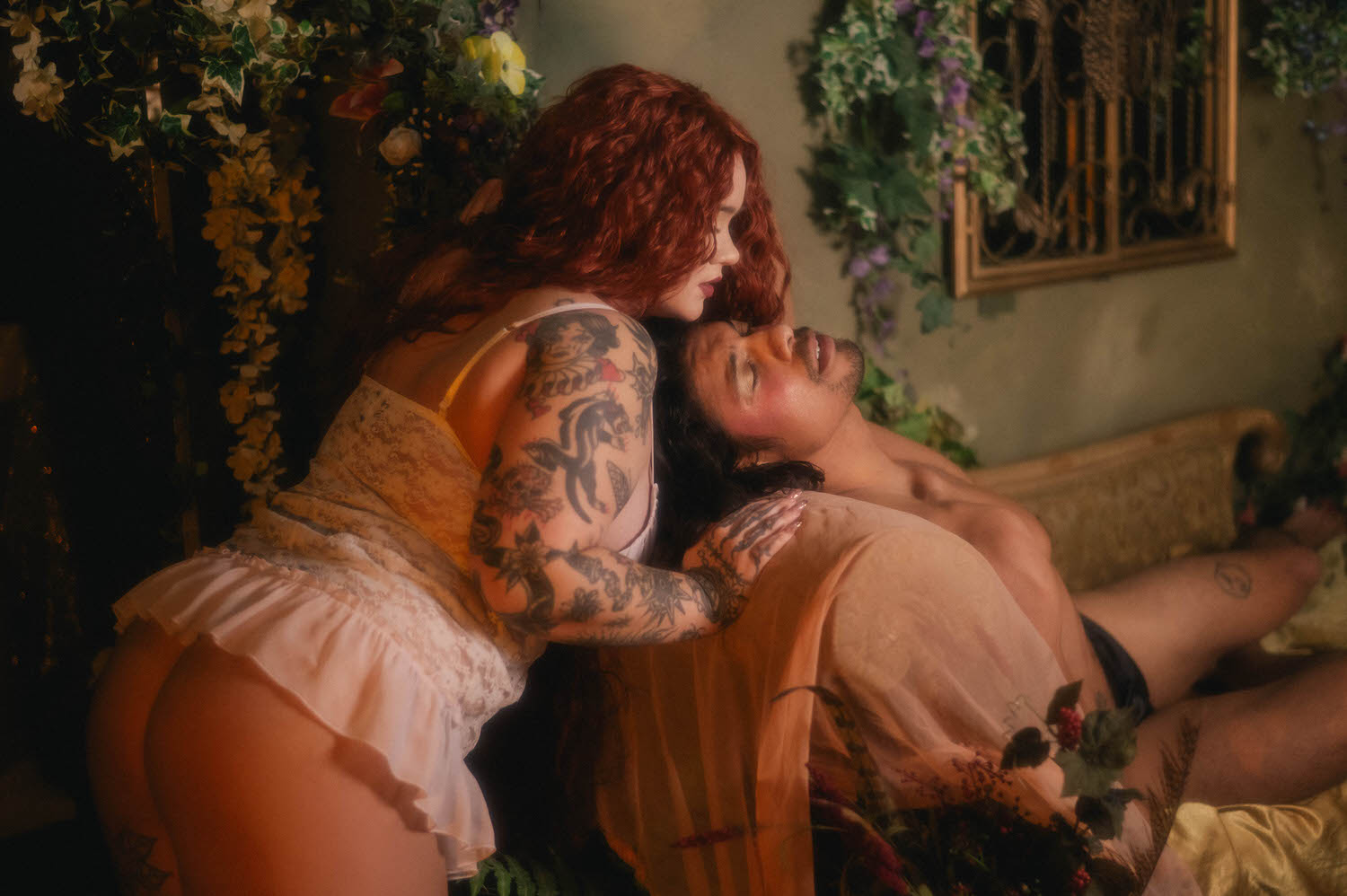
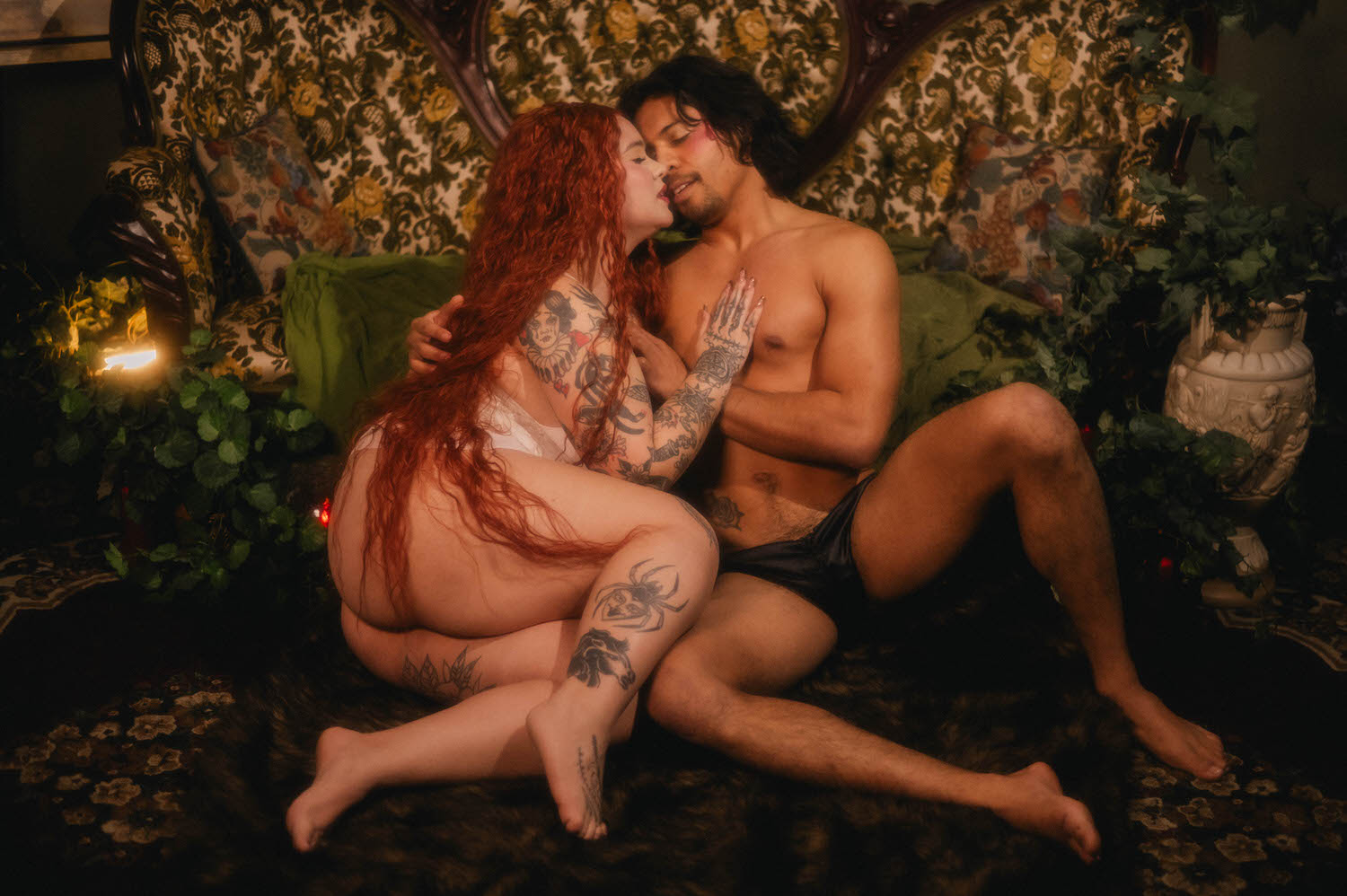
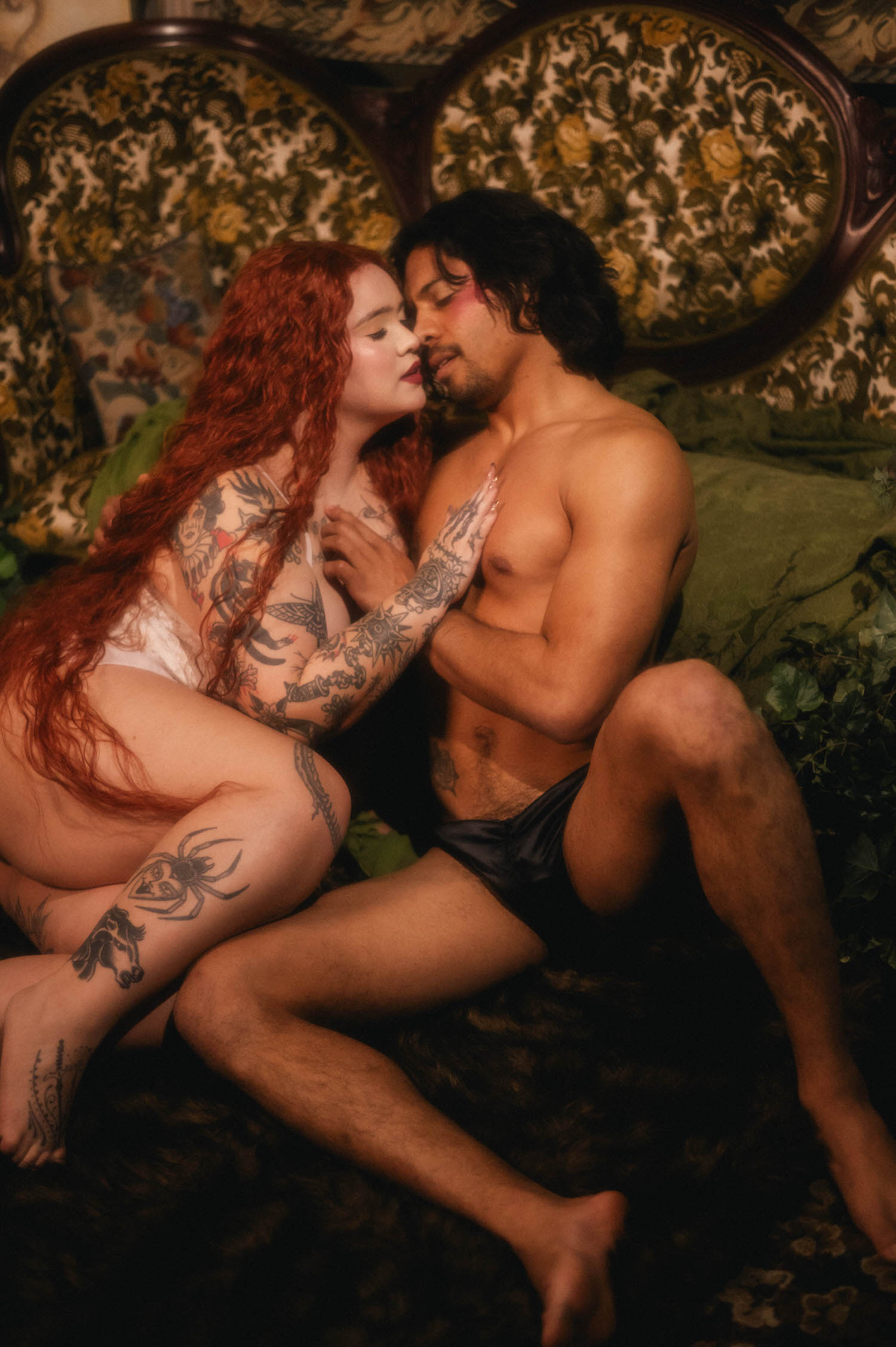
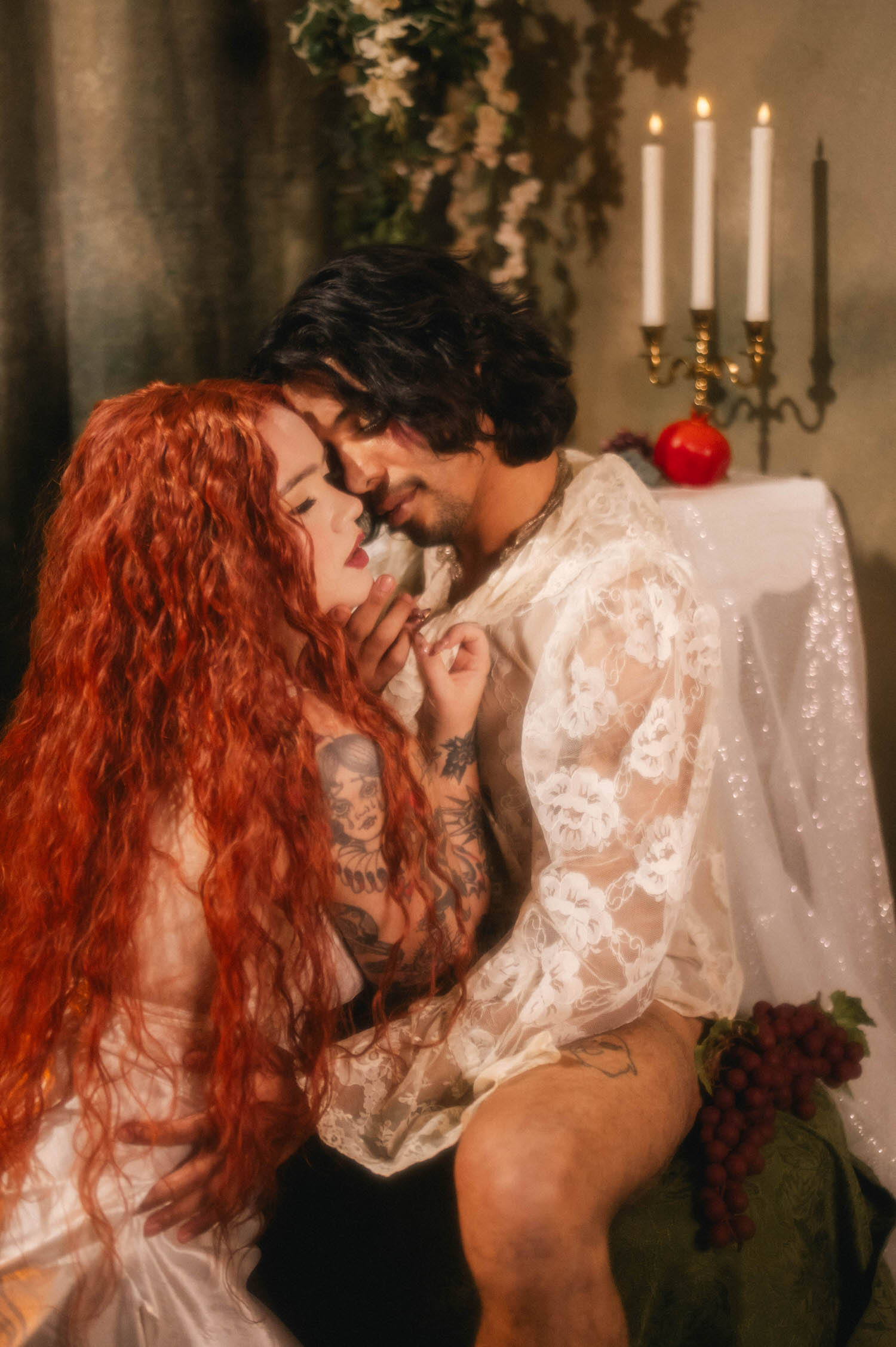
For the second look, Chey wore a white vintage lace piece with a ruffled hip trim, while Finn stayed in simple black fitted briefs. I moved the set into a denser floral arrangement, working in yellow, pink, and white blooms alongside a gold framed mirror I’d propped against the wall. Posing leaned into more reclined, entwined positions, her leaning over him, his eyes closed against her collarbone in several frames.
Look Three: Victorian Lace Top and a Vintage Bridal Nightgown
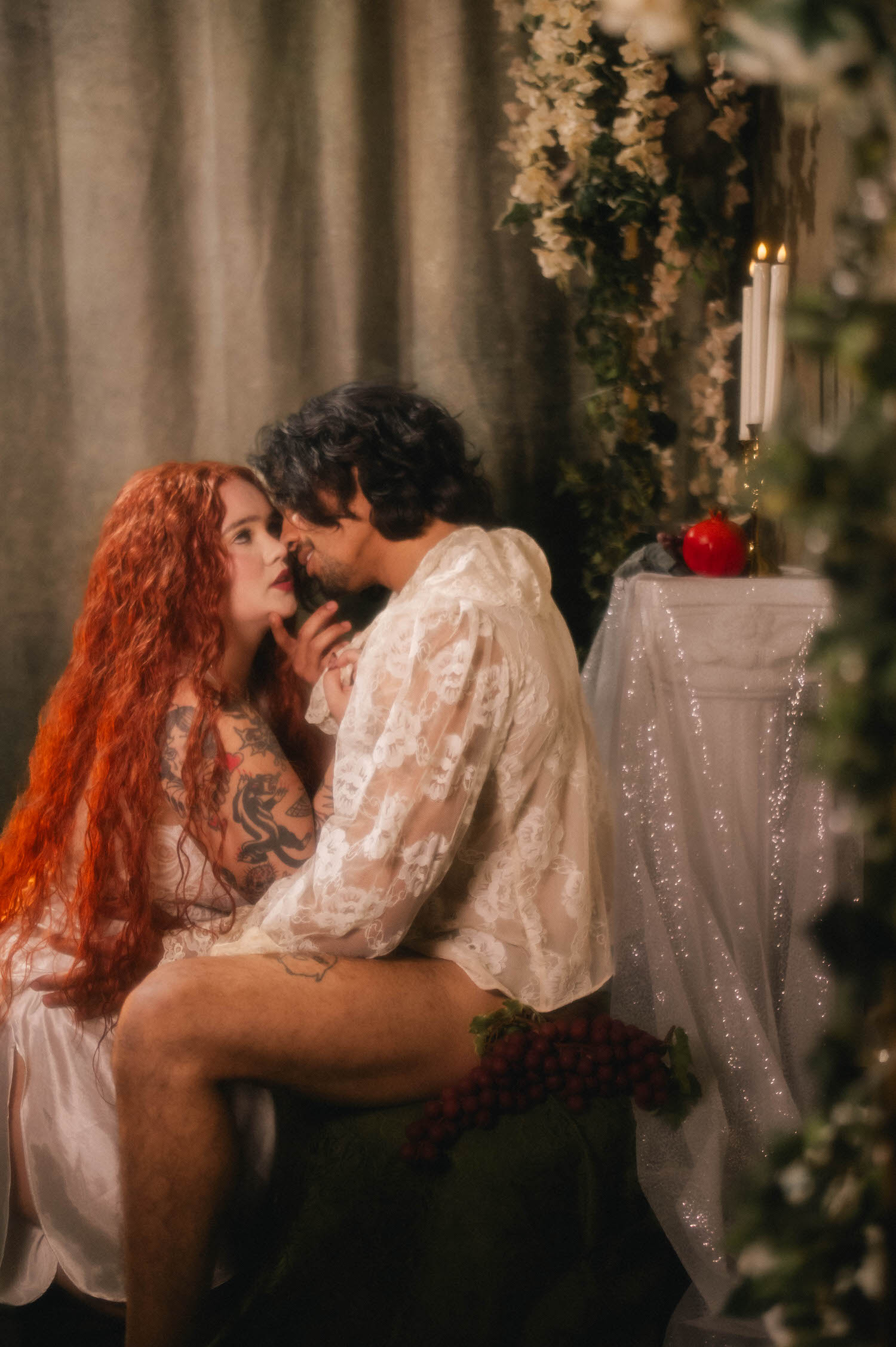
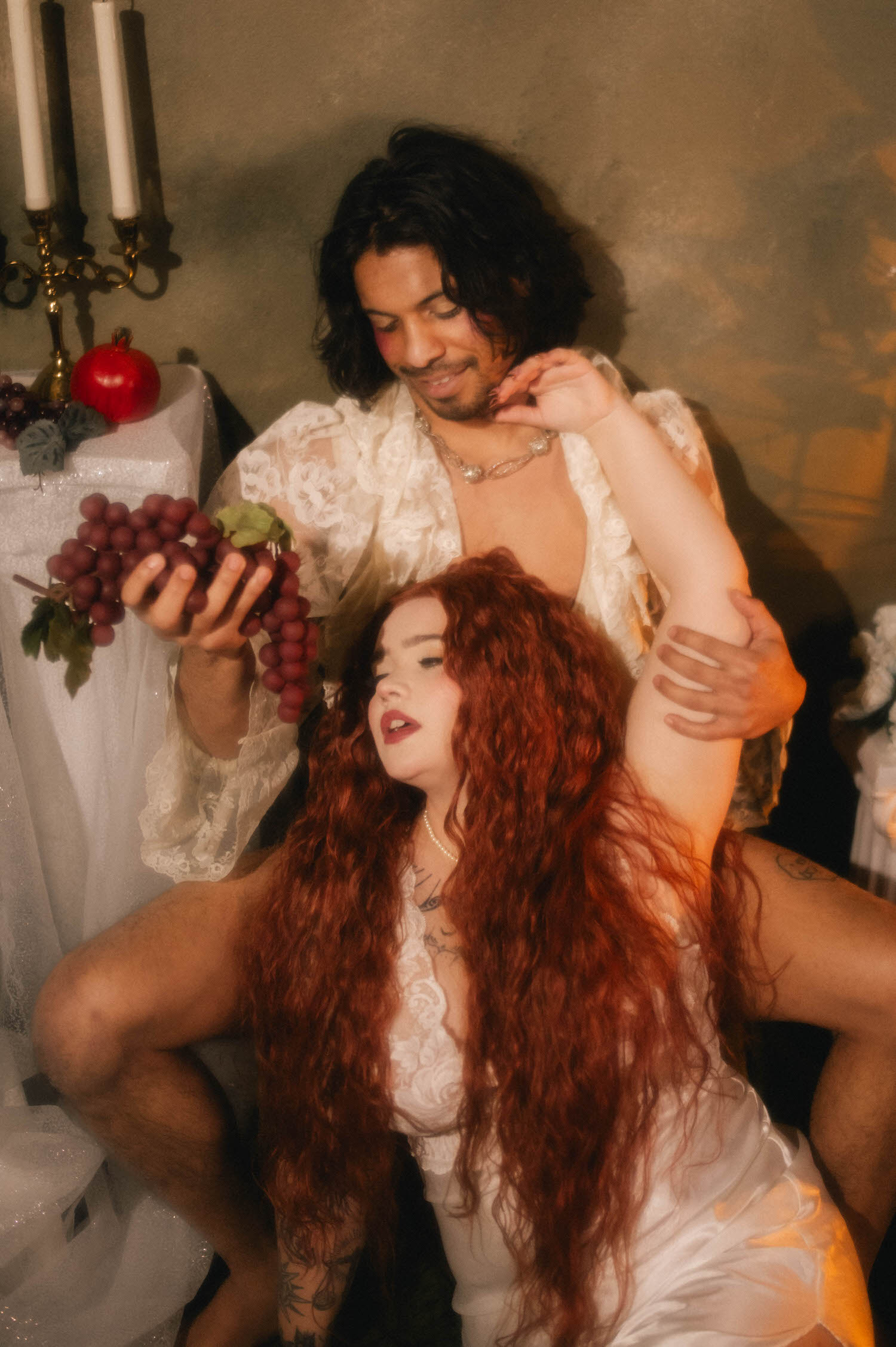
Look three paired a white vintage nightgown on Chey with a sheer white Victorian style lace top on Finn, sleeves ruffled at the wrist, worn open at the chest over dark fitted briefs. I built this set around a floral archway of white wisteria and ivy, plus a smaller vignette with a brass candelabra, a faux pomegranate, and a cluster of grapes staged on a glittering white pedestal.
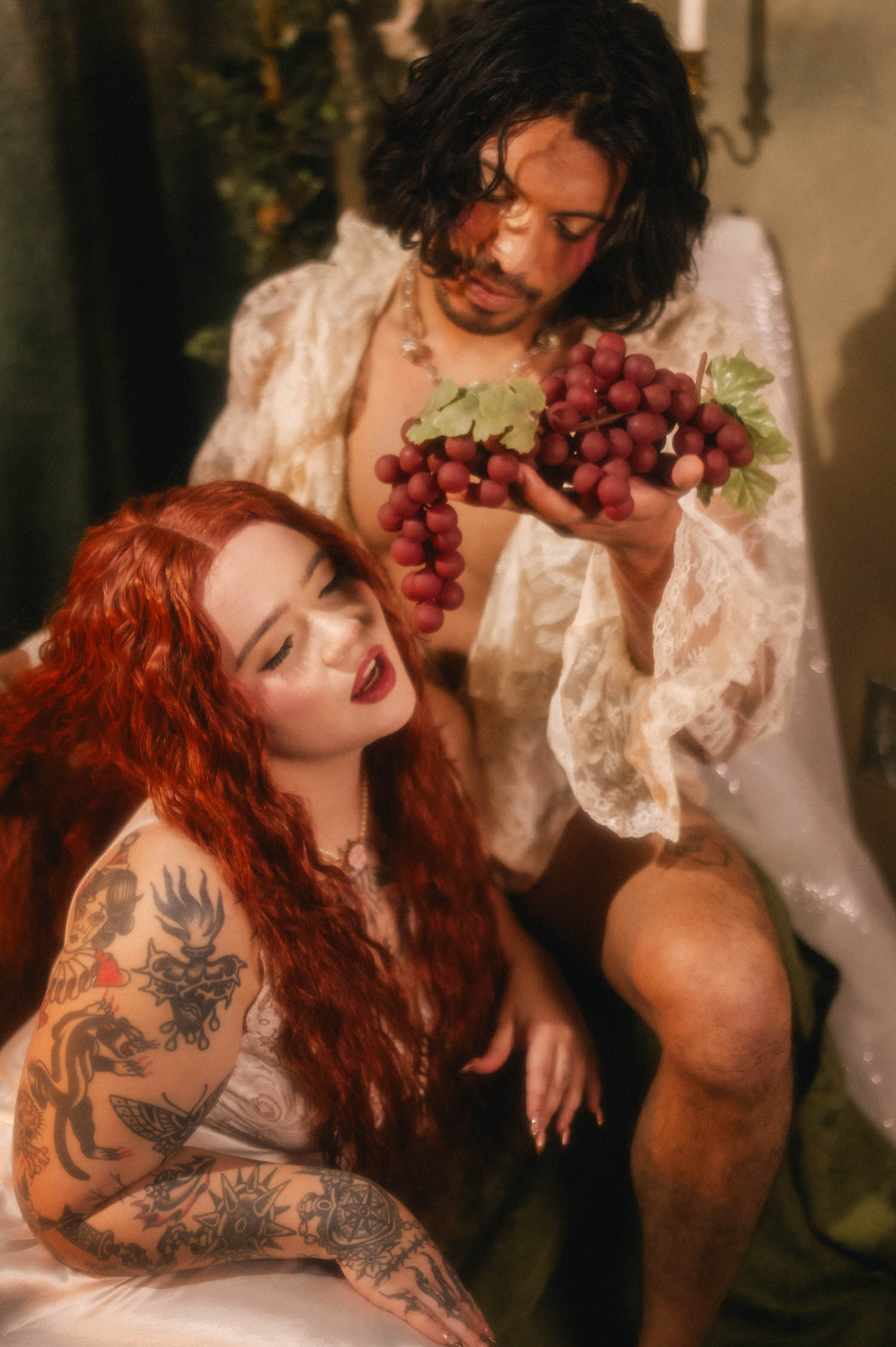
This is also where Finn fed Chey grapes from his raised hand, her head tilted back against his arm. That gesture wasn’t just a pretty prop moment. Grapes show up constantly in Renaissance and Baroque painting as a symbol of abundance and pleasure, so having Finn offer them to Chey directly ties this look back to that same visual tradition rather than sitting in the frame as decoration.
Look Four: Wet Silk Fabric and the Art of Sculptural Posing
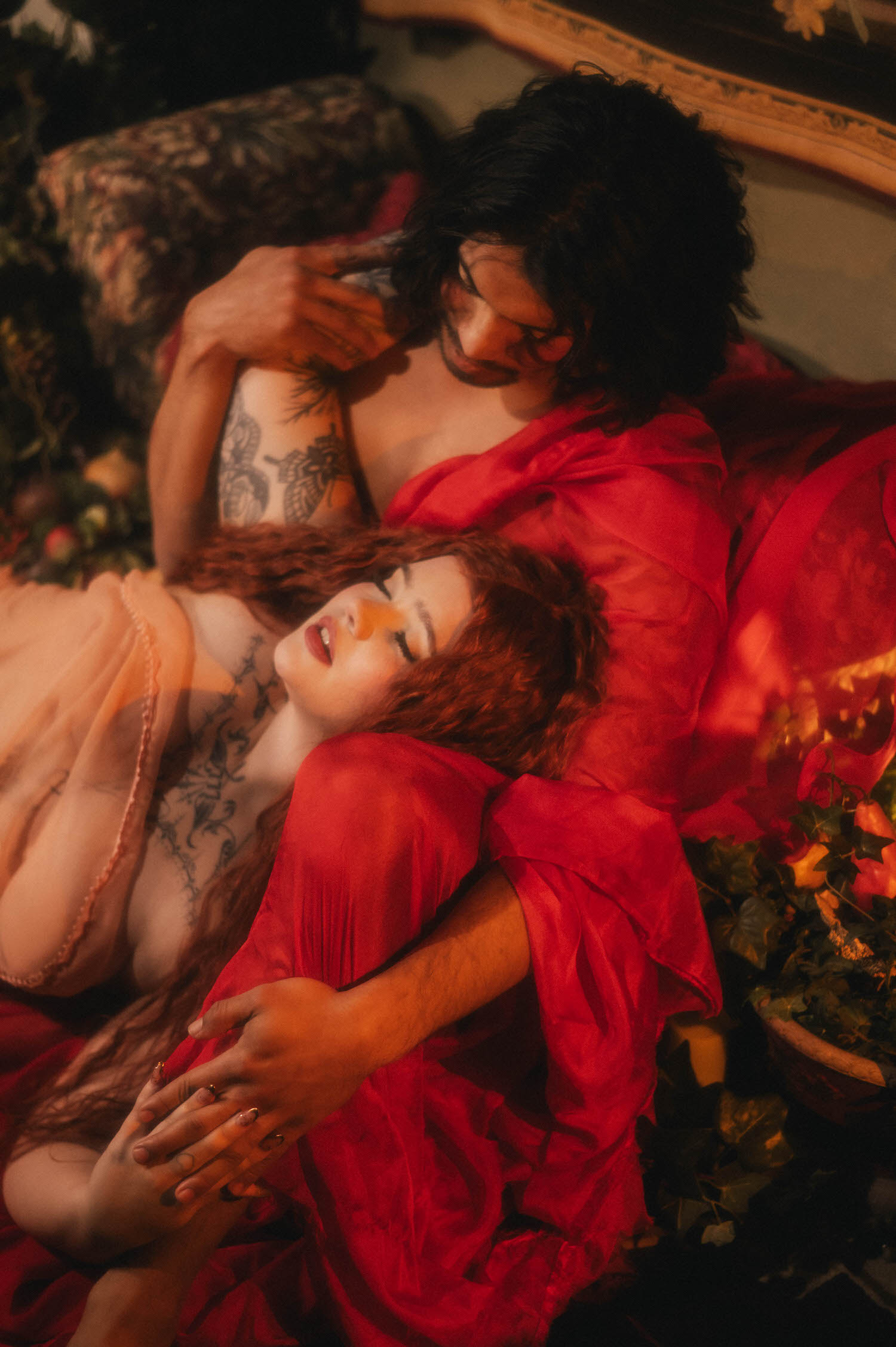
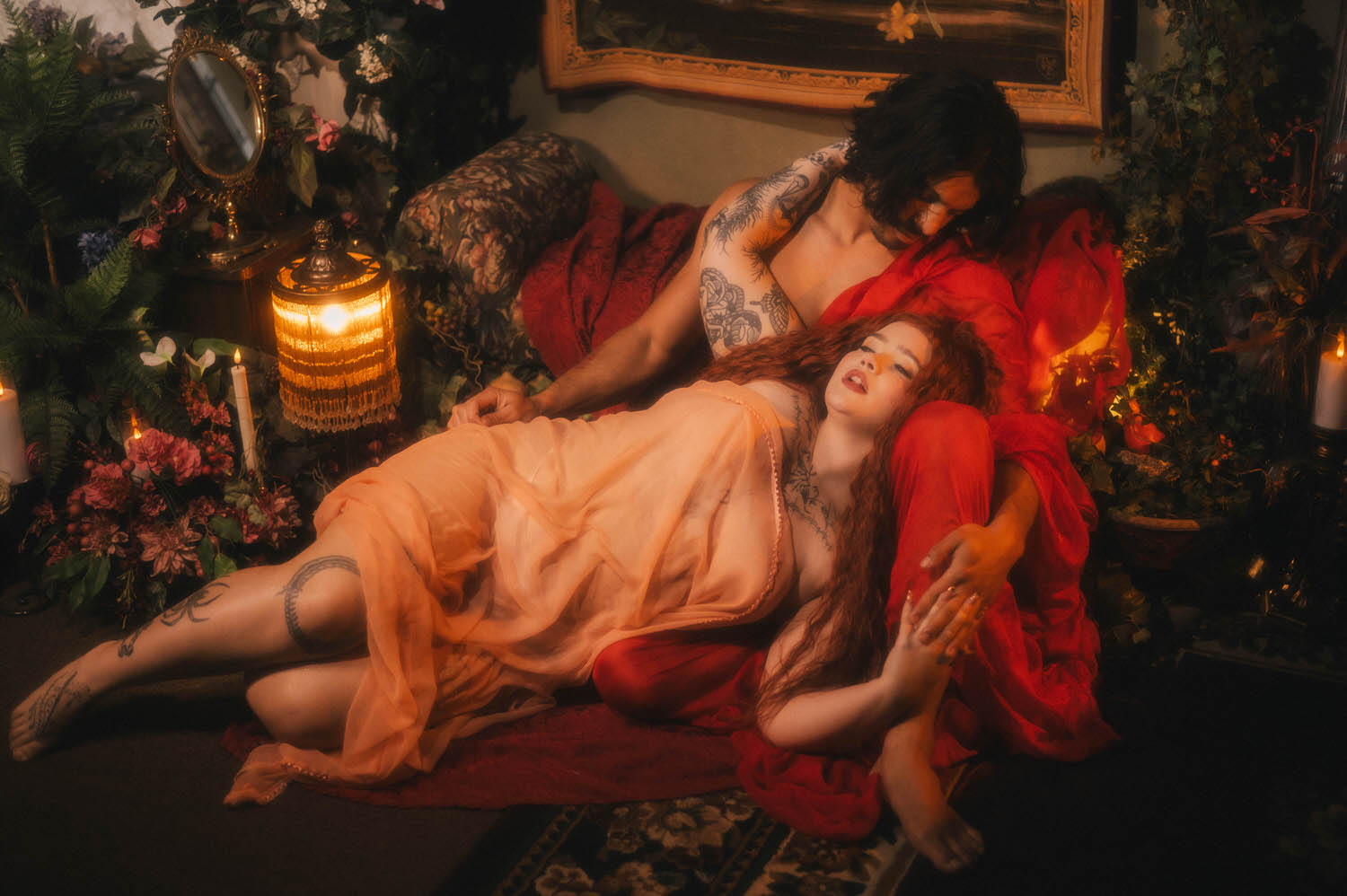
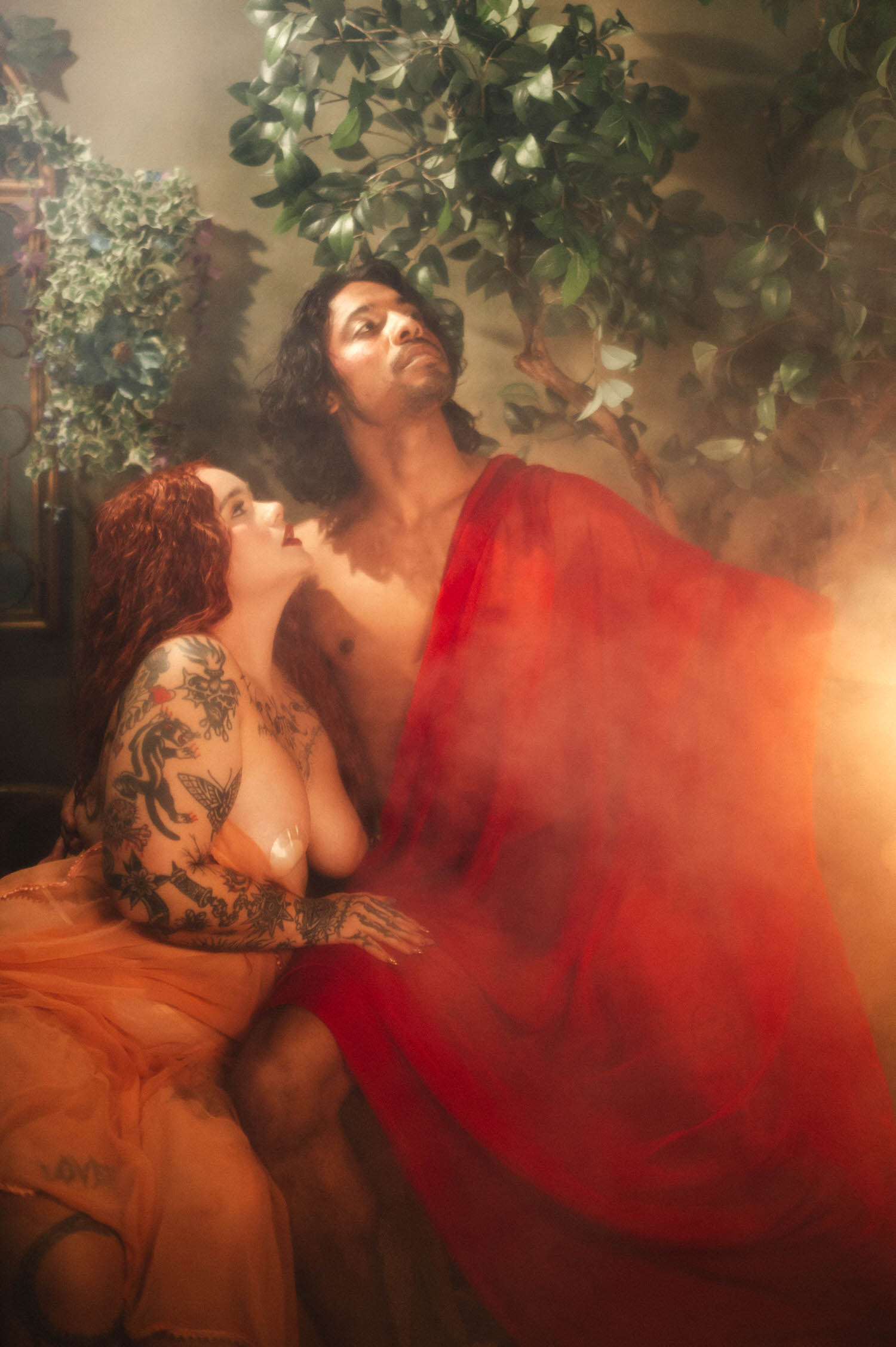
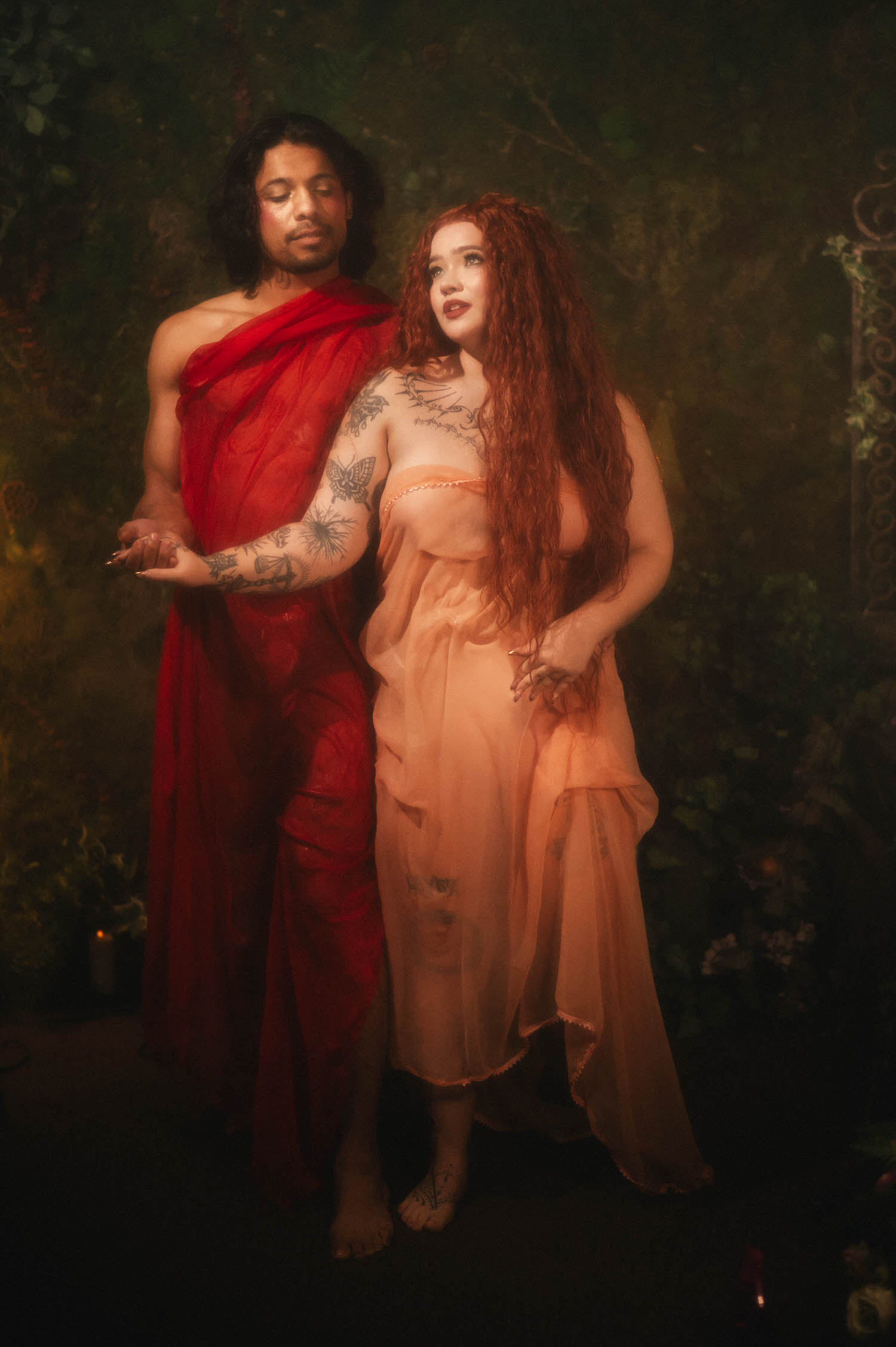
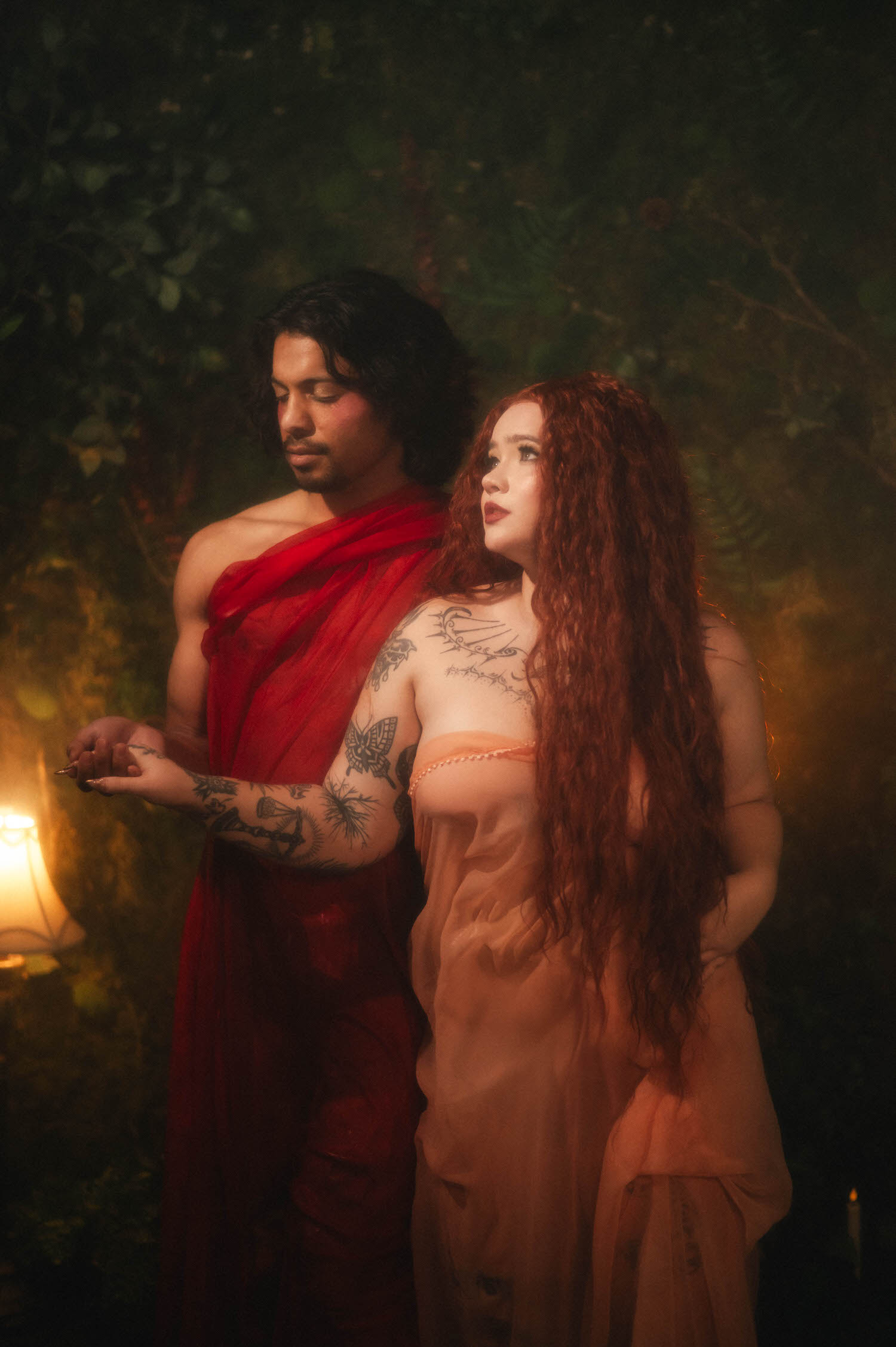
The final look is where this Renaissance boudoir photoshoot leaned hardest into its statue inspired photoshoot roots. Chey wore wet coral silk chiffon draped diagonally across her body, while Finn wore wet red silk in a loose toga style wrap over one shoulder. I’ll explain exactly how I get that wet fabric effect in the next section.
I shot part of this look on a red and gold antique daybed with a fringed vintage lamp and an oval vanity mirror nearby, then moved to a darker, more shadowed set where the wet fabric and skin were doing almost all the work of catching light. In one frame, Chey’s arm extends outward in a gesture that reads exactly like carved drapery on a classical statue. It’s the single image I keep coming back to from this entire session.
What Is the Wet Drapery Technique Behind This Statue Inspired Photoshoot?
The wet drapery technique used in this statue inspired photoshoot has roots in ancient Greek sculpture, where carvers figured out how to make thin, clinging fabric reveal the body underneath rather than hide it. You can see it on the goddess figures from the Parthenon pediment and, most famously, on the Winged Victory of Samothrace, where the marble folds cling to the torso as if the fabric itself is soaked through.
A related but distinct tradition developed centuries later in nineteenth century Italy, where sculptors like Giovanni Strazza and Giuseppe Sanmartino carved marble to look like a sheer veil resting over a face, most famously in Strazza’s Veiled Virgin and Sanmartino’s Veiled Christ. That’s a different carving problem than wet drapery. It’s about the illusion of a thin veil rather than clinging wet fabric. But both traditions share the same obsession: making a rigid, unyielding material read as soft, and using fabric to reveal form instead of concealing it.
For Look Four, I recreated that same effect with actual water instead of a chisel. I used spray bottles to wet the silk and chiffon directly on Chey and Finn’s bodies, which helps the fabric adhere and cling the way sculpted drapery does. It worked without a hitch on set. No last minute troubleshooting, just repeated light misting to keep the fabric clinging as we moved through poses.
This isn’t the first time I’ve built a session around this exact technique. If you want to see another example, I photographed an entire statuesque fine art boudoir session using wet green fabric against a faux rain shower setup. The two shoots make a nice pair if you’re curious how differently the same technique can read depending on the color palette and setting.
How Do You Pose for Theatrical, Yearning Expressions?
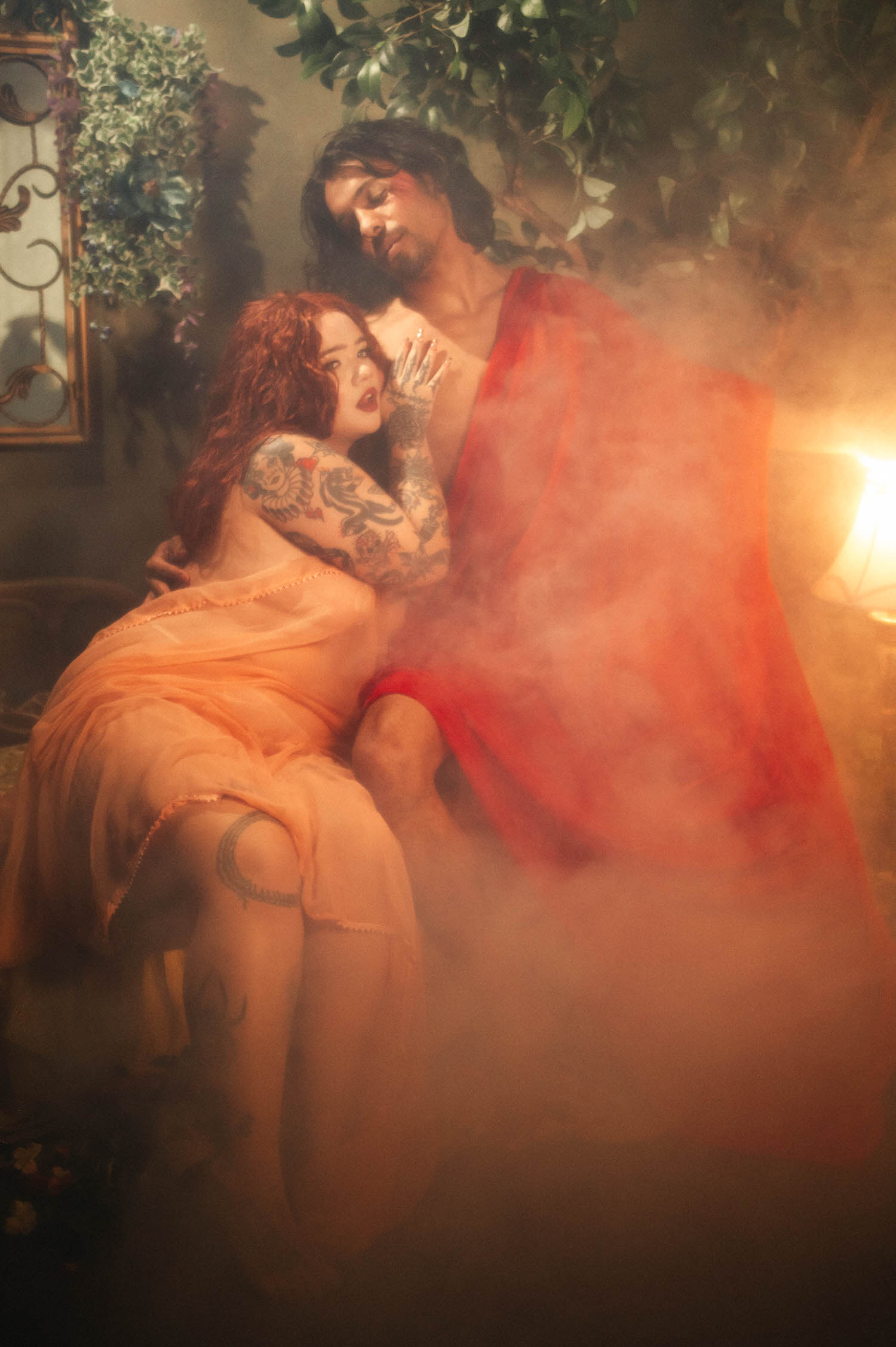
Theatrical, yearning expressions come from slowing everything down and letting the couple hold a moment past the point where it starts to feel natural. Most people’s instinct in front of a camera is to smile or relax, but the posing in this Renaissance boudoir photoshoot asked Chey and Finn to do the opposite: stay in the reach, the almost touch, the parted lips right before a word gets spoken.
The fog did more of that work than any single pose direction I gave. It softened the edges of every frame and gave both of them something to move through rather than stand in front of, which kept the posing from feeling staged even when my direction was specific. I also asked for a lot of slight asymmetry, one shoulder dropped, a hand mid gesture instead of fully closed, because Renaissance and Pre Raphaelite figures are almost never perfectly still.
For more on the art history and styling behind my work, take a look at my Painterly Boudoir Style Guide, my Painterly Boudoir Posing Guide, and my earlier post on fine art boudoir inspired by Pre Raphaelite paintings.
Is Renaissance Boudoir Photography with Royal Lune Photo Inclusive of Queer Couples?
Yes, absolutely! As stated earlier, Chey and Finn are part of the queer community, and they were drawn to this Renaissance boudoir photoshoot concept partly because it gave them room to play with styling outside of traditional couple photos. My studio exists as a queer couples boudoir friendly space and that extends past just being willing to book LGBTQ+ clients.
As a queer person myself, I care deeply about providing a safe and empowering space for all humans, regardless of their gender identity or sexuality. All hair and makeup artists, stylists, florists, and collaborators working along side Royal Lune Photo is LGBTQ+ affirming and a safe space to freely express yourself. Read Catherine’s story of self love as she transitioned with the help of boudoir photography.
Renaissance Boudoir Photoshoot Questions Couples Ask Before Booking
Are There LGBTQ+ Friendly Couples Boudoir Photographers in Dallas?
Yes. Royal Lune Photo is a safe, welcoming space for queer and trans clients, and that welcome isn’t conditional on how a couple identifies. Styling, hair, makeup, and posing direction are never tied to gender or orientation, they’re built around who you and your partner are together. Chey and Finn’s session is one example of that in practice, but it’s the standard for every couple who books with me, not an exception.
What Should Couples Wear for a Renaissance Inspired Photoshoot?
Vintage nightgowns, lace pieces, and draped fabric all work well for a Renaissance inspired photoshoot, along with color palettes that lean warm: such as gold, red, spicey olive, warm tone pinks, ivory, and brown tones. I also love incorporating wet fabric looks for couples who want something closer to classical sculpture. If you’re gathering your own couples boudoir photoshoot ideas, bringing two or three coordinating pieces per person gives us enough variety to move through different moods across the session.
What’s the Difference Between a Typical Boudoir Session and a Fine Art Boudoir Session?
A typical boudoir session usually centers on personal narrative and sensuality, while a fine art boudoir session treats the body more like line, shape, and composition, the way a painter or sculptor would approach a subject. This Renaissance boudoir photoshoot sits firmly in that second category. The wardrobe, lighting, and posing all serve the composition first, and Chey and Finn’s connection comes through inside that same framing.
How Does the Wet Fabric Technique Work During a Real Photoshoot?
The wet fabric technique works by misting silk or chiffon directly onto the body with a spray bottle until the fabric clings and reveals form the way carved drapery does on a statue. For this session, I used spray bottles on both Chey and Finn throughout Look Four, reapplying water as needed to keep the fabric clinging through pose changes. It’s a simple setup, but it delivers one of the most striking effects in my entire portfolio.
Is Couples Boudoir Photography Awkward?
It can feel a little awkward for the first poses as you are getting comfortable in front of the camera. Most couples aren’t used to being photographed in intimate poses together, so a short adjustment period is expected rather than a sign something’s wrong.
By the second or third pose, most couples, Chey and Finn included, settle into it and the awkwardness gives way to something closer to play. As a Dallas Fort Worth boudoir photographer, I build in time at the start of every session specifically for that adjustment period, so no one feels rushed past it. Reference my extensive Couples Boudoir Guide for more on what to expect and tips for how to navigate your upcoming couples boudoir photoshoot.
Ready to Book Your Own Renaissance Boudoir Photoshoot?
If a Renaissance boudoir photoshoot sounds like the kind of session you and your partner have been picturing, I’d love to build one around the two of you as your Dallas Fort Worth boudoir photographer. You might be drawn to the softness of a flowy vintage nightgown, the sculptural drama of the wet fabric look, or a sensual lingerie vibe. Either way, I’ll help translate it into wardrobe, posing, and lighting that fits the two of you specifically, not a template pulled from someone else’s session.
Reach out through my studio to start planning your session, and follow along on Royal Lune Photo Instagram, Royal Lune Studio Instagram, and Royal Lune Photo TikTok for more behind the scenes looks at sessions like this one. You can also browse my Painterly Boudoir Pinterest board for more inspiration before your own session.
If you’re planning a session with your own partner, The Ultimate Couples Boudoir Guide is the best place to start.